

Reuters reports that EU approval for the Saudi PIF EA deal is close. Here is what that would clear, what may still remain, and why ownership changes matter to players.
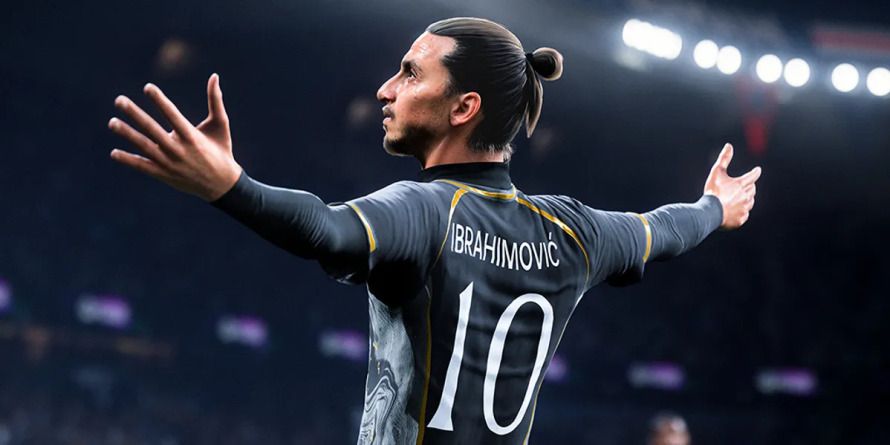
Image: pocketgamer.biz
EU approval is reportedly close, but EA has not changed hands yet
The strongest new development in the Electronic Arts takeover is regulatory: Reuters reports that a group of investors including Saudi Arabia’s Public Investment Fund is set to secure European Union approval for its $55 billion acquisition of EA under the bloc’s foreign subsidy rules. According to Reuters, the European Commission is expected to clear the deal after the end of its preliminary review under the Foreign Subsidies Regulation on July 30, with unconditional EU merger clearance also expected when a separate preliminary review ends on July 22.
That would be a major checkpoint for the EA Saudi acquisition, but it would not mean players wake up the next morning to a different version of EA Sports FC, Battlefield, The Sims, Apex Legends, or the publisher’s other live-service machinery. It would mean one of the most powerful competition regulators in the world is reportedly prepared to let the transaction pass without demanding remedies under the EU processes described by Reuters.
The tension is in the gap between approval momentum and final ownership. Reuters says the European Commission and Electronic Arts declined to comment, while PIF did not respond to emailed requests. So the current state of the Saudi PIF EA deal is still a reported regulatory trajectory, not a closing announcement. For a takeover of this size, that distinction matters.
The corporate side is already lined up behind the $55 billion deal
The proposed Electronic Arts takeover was announced in September 2025 by Saudi Arabia’s Public Investment Fund, Jared Kushner’s Affinity Partners, and private equity firm Silver Lake, according to Reuters and Video Games Chronicle. VGC reports that the transaction values a 93.4% stake in EA at $55 billion, while Reuters describes it as the largest leveraged buyout in history.
EA shareholders approved the acquisition in December 2025, according to VGC. That shareholder vote matters because it means the company’s owners have already accepted the broad corporate premise of the take-private deal. The remaining drama has shifted from boardrooms and shareholder ballots to regulatory clearance and closing conditions.
There is also a useful comparison point for scale, although sources frame it differently. Reuters calls the EA transaction the largest leveraged buyout in history. GameSpot, citing the wider gaming acquisition landscape, says it would be the second-largest gaming buyout after Microsoft’s $75.4 billion acquisition of Activision Blizzard in October 2023. Those claims are not contradictory; they are measuring different categories. One is focused on leveraged buyouts, the other on gaming acquisitions overall.
If completed, the deal would take one of the industry’s biggest third-party publishers private. That is the part players will eventually feel indirectly, through strategy, investment priorities, risk tolerance, and the degree of public scrutiny attached to EA’s decisions.
Brussels is looking at subsidies and competition, not game quality
The EU review described by Reuters has two tracks. The first is the Foreign Subsidies Regulation, or FSR, which is aimed at preventing unfair non-EU subsidies from distorting competition in the 27-country bloc. Reuters reports that the PIF-led investor group is set to secure approval under those subsidy rules after the preliminary review ends on July 30.
The second is EU merger review. Reuters reports that the deal is also expected to receive unconditional clearance under merger rules when that preliminary review ends on July 22. In practical terms, unconditional clearance would mean the Commission is not expected to demand concessions such as divestments or behavioral remedies under those rules, based on the Reuters report.
That is notable because Reuters points to two prior deals involving Middle East companies that faced longer EU processes and remedies: Abu Dhabi state oil firm ADNOC’s acquisition of German chemicals company Covestro, and UAE telecoms group e&’s bid for parts of Czech telecoms company PPF. The reported EA outcome would therefore be a cleaner EU path than those examples, at least under the preliminary reviews described in the Reuters story.
For players, this is less about whether the next Battlefield map has better sightlines or whether FC Ultimate Team changes its economy overnight. EU approval would say regulators did not see enough under those review standards to block or condition the acquisition at this stage. It would not be a judgment that the takeover is good for players, good for workers, or good for EA’s creative direction.
The biggest remaining hurdle may be outside the EU
If Reuters’ EU timeline holds, Brussels may soon stop being the main arena for the deal. The question then becomes what remains elsewhere. A Tech Insider analysis published in June and updated for July 2026 says the transaction had cleared EA’s shareholder vote and U.S. HSR antitrust review, but was still awaiting the U.S. national-security review handled by CFIUS. The same analysis says the original June 30, 2026 long-stop date passed without a close and that the contractual outside date had been pushed to September 28, 2026.
That CFIUS point is important because it addresses a different kind of risk from EU competition review. The Committee on Foreign Investment in the United States examines national-security concerns tied to foreign investment in U.S. businesses. The Reuters report provided in the source material does not say CFIUS has cleared the EA deal. So even if the EU approval EA acquisition reports prove accurate, that would not, by itself, close every regulatory door.
There are also closing mechanics that sit downstream from approvals. Tech Insider says a bondholder tender offer tied to the merger had been extended to line up with the expected close, and it cites a $1 billion reverse break fee. Those details are attributed to Tech Insider’s account of the deal status, and they underline the same broader point: a transaction can look very close while still being governed by deadlines, financing steps, and regulatory signoffs.
This is where the story has the rhythm of a late-game encounter. The EU phase may be a gate about to open, but the run is not finished until every required approval, deadline, and closing condition is satisfied.
EA has promised creative control, while control itself is the issue
GameSpot reports that EA acknowledged in November 2025 there was risk in selling to Saudi Arabia, while saying the company would still “maintain creative control” going forward. That statement is the closest player-facing reassurance in the provided source material, and it should be read carefully. Creative control is a promise about how EA says it will operate. Ownership is about who ultimately holds power over capital, governance, and long-term priorities.
GameSpot also reported, citing The Wall Street Journal, that a majority of EA’s control could shift to Saudi Arabia’s PIF after the purchase is finalized. That is the central pressure point in the Saudi PIF EA deal. Even if individual studio teams keep making the calls on animation cadence, combat feel, live-service pacing, or the next Sims expansion theme, a private ownership structure changes who those teams ultimately answer to.
Players have already reacted to that ownership question. GameSpot reported that the deal prompted protests by cosplayers at EA’s California headquarters. The source material does not establish how broad that protest movement is across EA’s audience, but it does show that some players view the takeover through political and ethical concerns, not only through the familiar lens of whether the next annual sports release is worth buying.
The practical concern for players is accountability. As a public company, EA has had investor calls, public filings, and market pressure attached to major decisions. A private EA would not have the same public-company rhythm. That does not automatically dictate worse games or better games, but it would change the lighting around the stage where those decisions are made.
Saudi Arabia’s gaming push gives the deal a larger shape
The EA deal is part of a wider Saudi investment push into games and sports. Reuters says the transaction represents a major move by PIF in its effort to become a global hub for games and sports, while also fitting Saudi Arabia’s broader diversification from oil into infrastructure, tourism, sports, gaming, and other sectors.
VGC’s timeline shows how the strategy has widened over several years. In April 2022, Saudi Arabia’s Electronic Gaming Development Company purchased a 96% stake in Japanese developer SNK, according to VGC. In September 2025, Saudi-owned firm Qiddiya acquired RTS, co-owner of the Evolution Championship Series, according to VGC. In March 2026, EGDC acquired a 5% stake in Capcom, also according to VGC.
EA is a different scale of prize. Tbreak names EA Sports FC, Battlefield, Apex Legends, and The Sims among the franchises inside the publisher’s portfolio, and Reuters points to the enduring value of blockbuster game franchises as part of the investment logic. For a fund seeking influence across games and sports, EA’s annual football business alone gives the deal a gravity few publishers can match.
There is a counterweight in the reporting. VGC says Saudi Arabia’s investment spree may slow, citing a report that PIF was running low on cash for investments after the EA acquisition. That does not change the reported EU approval path, but it does complicate the idea of limitless buying power. Even a trillion-dollar wealth fund has to decide where the next set-piece begins after writing a $55 billion check.
What players should watch before treating the takeover as finished
For now, players should treat the EU approval EA acquisition story as deal-timing news, not an announcement of changes to games, pricing, platforms, subscriptions, or live-service roadmaps. None of the provided sources reports immediate changes to EA Play, EA Sports FC pricing, Battlefield support, Apex Legends operations, The Sims content, or release calendars tied to the expected EU clearance.
The next dates to watch are the ones Reuters identified: July 22 for the expected EU merger-rule review outcome, and July 30 for the expected FSR clearance. If those pass as reported, attention should turn to any remaining non-EU approvals, especially the CFIUS review described by Tech Insider, and to whether EA or the investor group announces a closing date.
Players should also watch the first post-closing signals if the deal completes. The most meaningful signs will not necessarily be cinematic trailers or executive congratulations. They will be leadership structure, studio investment, layoffs or hiring, franchise cadence, subscription strategy, monetization pressure, and how much EA says publicly once it is no longer operating as a Nasdaq-listed company.
EU approval would bring the EA Saudi acquisition closer to the finish line. It would not answer the harder player questions by itself: who sets the tempo for EA’s biggest series, how much creative independence studios retain in practice, and whether a private EA becomes more patient with development or more aggressive about extracting value from its biggest franchises.