
Electronic Arts is now private after its $55 billion sale to a Saudi-led investor consortium, with Andrew Wilson reshuffling leadership as debt, live services, and major franchises come under new pressure.
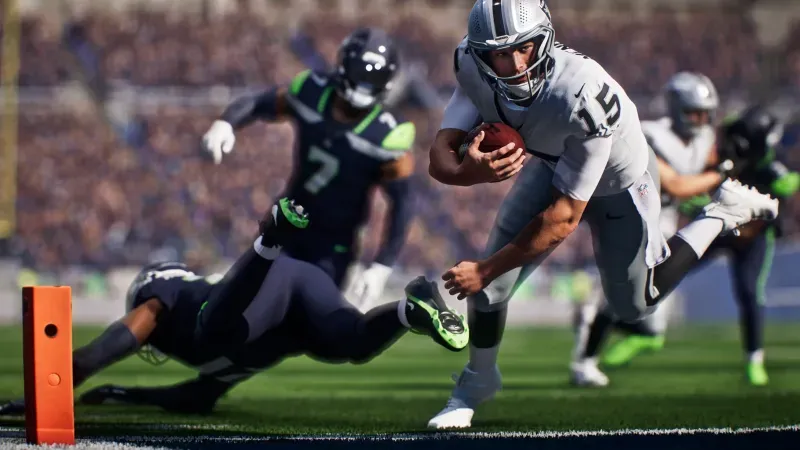
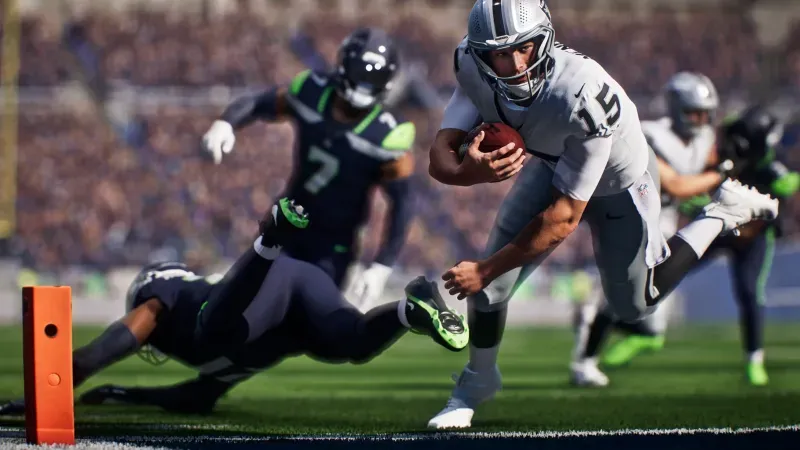
Image: gameinformer.com
EA is private, and the pressure point is debt
The EA acquisition completed this week, turning Electronic Arts into a private company after a $55 billion leveraged buyout led by Saudi Arabia’s Public Investment Fund, with Silver Lake and Affinity Partners also part of the investor consortium. GamesIndustry.biz, CNBC, the BBC, the Los Angeles Times, and GamingOnLinux all report that the deal has now closed, with EA stockholders receiving $210 per share in cash and the company being delisted from Nasdaq.
That is the concrete shift. The tension is how EA operates under new ownership while carrying a much heavier financial structure. The BBC described the transaction as thought to be the largest leveraged buyout in history, and reported that PIF had put $36 billion into the deal while borrowing $20 billion from JPMorgan to close it, with EA taking on the debt. CNBC similarly reported that PIF was borrowing $20 billion and noted analyst concern over the debt burden. The Los Angeles Times framed the completed takeover as loading EA with $20 billion in debt.
EA’s public message is continuity. Andrew Wilson remains chairman and CEO, and his statement in the company’s release said EA is entering the next chapter “from a position of strength” with partners that share its “vision and ambition.” But a private EA is now operating under investors whose incentives are different from public market pressure and whose stated priorities include sports, entertainment, technology investment, AI, and global expansion. For players, the near-term question is less whether the logo changes tomorrow and more whether EA’s release cadence, monetization, live-service staffing, and portfolio breadth start bending toward debt service and lower-risk bets.
Wilson stays, but the operating map has changed
The first visible EA leadership changes are not at the CEO level. GamesIndustry.biz reports that Wilson appointed Cam Weber as chief studios officer and David Tinson as chief operating officer, with both also named company presidents. WN Hub also reported those appointments from Wilson’s employee memo.
Wilson told employees, according to GamesIndustry.biz, that “leading this next phase requires bold creativity and exceptional execution,” and said Weber and Tinson had helped lead EA through transformative moments. The language matters because these are operational appointments, not symbolic boardroom titles. A chief studios officer sits close to the question players care about most: which teams get resources, which franchises get runway, and which projects are treated as strategic pillars rather than expensive experiments. A COO role, meanwhile, is where cost discipline, production execution, and cross-company priorities tend to become practical reality.
The company has not announced studio closures, layoffs, cancellations, changes to content policy, or franchise roadmaps as part of the closing announcement. That absence should not be filled with certainty. The confirmed fact is that Wilson remains in place and has elevated two senior leaders as EA becomes private. The interpretation is that EA is setting up for a phase where creative ambition will be judged against execution, scale, and financial discipline more sharply than before.
The new owners are buying a live-service powerhouse
The Electronic Arts Saudi PIF deal is fundamentally a bet on franchises that already operate at global scale. GamingOnLinux listed Battlefield, EA Sports FC, Apex Legends, Madden NFL, Need for Speed, Dragon Age, The Sims, Titanfall, Plants vs. Zombies, and other EA series as part of the company’s catalogue. The BBC highlighted EA FC, formerly FIFA, The Sims, and Mass Effect, and noted that EA’s football titles from FIFA through EA FC have sold more than 325 million copies since the first release in 1993.
PIF deputy governor and head of international investments Turqi Alnowaiser said in the deal announcement, as quoted by GamesIndustry.biz, that PIF has been a minority investor in EA for more than five years and has “a deep understanding of EA’s unique platform, massive global sports and gaming franchises, and iconic IP.” He also said entertainment and sports are key strategic areas for PIF. GamesIndustry.biz previously reported PIF bought more than $3 billion in EA stock in 2021 and increased its EA stake by 55% in 2023.
That makes EA’s live-service strategy central to the acquisition story. EA’s biggest player-facing businesses are built around recurring engagement: annual sports cycles, Ultimate Team-style economies, shooter seasons, ongoing Sims content, and long-tail communities. None of the closing statements announce a new monetization model or a new release plan. Silver Lake CEO Egon Durban did say the consortium was proud to invest heavily in EA’s growth, including “what AI can do to enhance game development and player experience,” according to GamesIndustry.biz. That is an investor signal, not a product roadmap.
The strategic read is straightforward: the consortium has bought a company whose strongest assets are games that can keep players engaged for years, not one-off launches alone. The risk for players is that live-service games are also where business pressure can be felt fastest, through battle passes, store pricing, limited-time events, progression tuning, and content cadence. No source reports that EA has changed those systems because of the sale. But if leadership is asked to convert a $55 billion acquisition into sustained growth, the live-service layer is the most obvious control panel.
Debt makes safe franchises look even safer
Several sourced reactions point to the same concern: a leveraged buyout can narrow a publisher’s appetite for risk. CNBC reported that analysts previously said the debt burden could push EA to consolidate around its safest franchises, including The Sims, Battlefield, and sports titles, rather than experiment with new IP. Michael Futter of F-Squared told CNBC the debt was unlikely to create a shift in strategy, but would likely see leadership “entrench themselves in the titles they think have the largest revenue potential,” even where those titles carry large risk. He also said he did not know how EA could service the debt without “significant layoffs, studio closures, and possibly IP sell-off.”
The BBC cited Bloomberg’s Jason Schreier as surmising that the deal could lead to “mass layoffs, more aggressive monetization, and other big cost-cutting measures.” The BBC also quoted Christopher Dring of The Game Business saying the nature of the buyout was likely to mean “a very hands-on approach from the investment group.” These are journalist and analyst assessments, not actions EA has announced.
Arrowhead Game Studios CEO Shams Jorjani told the BBC that EA has traditionally had a wide portfolio, from blockbusters to smaller indie titles, and questioned whether new ownership would optimize for “the safe bet” through sequels and mega-franchises over breadth. His concern goes to the heart of EA’s portfolio tension. EA can point to iconic IP across sports, shooters, life simulation, RPGs, racing, and family-friendly series. Debt tends to reward repeatable cash flow. Those two facts do not automatically cancel each other out, but they do create a harsher internal meta for greenlights.
For players hoping for revivals of dormant IP or unusual new bets, the acquisition does not kill those possibilities on paper. It does raise the bar those projects may need to clear. Under this structure, the safest pitch is likely to be a game, expansion, or mode that strengthens an existing community and has a credible path to recurring spending.
Sports, shooters, and The Sims are where players should look first
The major player-facing franchises likely to show the earliest signals are the ones with the largest communities and the clearest commercial machinery. EA Sports FC and Madden sit at the center of EA’s sports strategy. Battlefield remains one of EA’s defining shooter brands. Apex Legends is already a live-service economy built around seasons and cosmetics. The Sims is both a long-running life-simulation platform and, as the BBC noted, a franchise that has drawn concern from fans because of its inclusivity and LGBTQ+ representation.
The concern around The Sims is especially politically charged because of the ownership structure. The BBC reported that Saudi Arabia’s laws can punish consensual same-sex sexual conduct by death or flogging under interpretations of Sharia law. The same report said advocacy group Players Alliance HQ asked gamers to petition local politicians and speak out against the deal, warning that PIF’s majority ownership could influence creative decisions around free speech, gender, LGBTQI+ themes, and related issues. That is an advocacy position, not evidence of a changed EA content policy.
EA has not announced changes to The Sims content, EA Sports FC, Madden, Battlefield, Apex Legends, Dragon Age, Mass Effect, or any other franchise as part of the acquisition closing. There are no sourced changes here to release timing, platforms, pricing, subscriptions, in-game stores, upgrade paths, or server availability. For the average player deciding whether to buy a current EA release, the practical answer is to judge the game in front of you rather than assume immediate disruption.
For engaged players, the smarter watch points are subtler: whether seasonal rewards become more grind-heavy, whether premium currencies become more central to event design, whether sports modes push harder toward repeat spending, whether shooter updates arrive with the staffing needed to maintain balance, and whether single-player or smaller-scale projects receive the same oxygen as mega-franchises. Those are future indicators, not confirmed outcomes.
Jared Kushner, PIF, Silver Lake, and the shape of private EA
The Jared Kushner EA acquisition keyword is not incidental to the public reaction. The consortium includes Affinity Partners, the investment firm founded and led by Jared Kushner, as reported by GamesIndustry.biz, CNBC, the BBC, and GamingOnLinux. Kushner said in the acquisition announcement, according to GamesIndustry.biz, that EA has created stories, characters, and communities that are part of everyday life for hundreds of millions of people, and that Affinity is excited to support the company as it reaches new audiences.
Silver Lake brings a technology-investor lens. PIF brings a stated strategic interest in entertainment and sports, plus an existing history as an EA investor. Affinity brings another private investment voice into the ownership group. The combined ownership structure does not tell players which Battlefield weapon gets nerfed, how Madden packs are priced, or whether The Sims keeps pushing representation. It does tell us the company’s highest-level incentives now sit with a private consortium that paid an enormous price for EA’s ability to generate durable, global engagement.
The strongest confirmed takeaway is that EA’s leadership continuity is paired with ownership discontinuity. Wilson remains, Weber and Tinson gain expanded roles, shareholders are cashed out, Nasdaq trading ends, and EA’s biggest franchises become the core assets of a private company carrying substantial acquisition debt. The strongest unconfirmed question is how much that debt affects people making and playing EA games.
Until EA announces specific product or staffing changes, players should treat claims of immediate franchise overhaul as speculation. But they should also watch the next twelve months closely. In a live-service publisher, strategy rarely arrives as one dramatic statement. It shows up through patch priorities, content pipelines, monetization pressure, community staffing, studio budgets, and which games are allowed to miss a quarter in order to become better.