
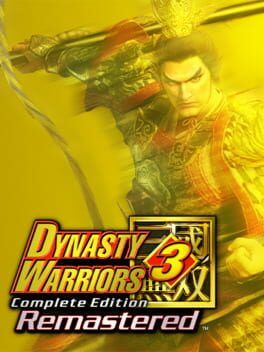

An Unreal Engine 5 revival of a 2001 classic was poised to redefine how Koei Tecmo approaches Musou remasters. Its sudden, indefinite delay says a lot about quality targets, fan expectations, and where the genre is heading on PS5 and the Switch generation.
An Indefinite Delay For A Pivotal Musou Project
Dynasty Warriors 3: Complete Edition Remastered was lining up to be a landmark release for Koei Tecmo and Omega Force. A full Unreal Engine 5 rebuild of the 2001 PlayStation 2 classic, it was meant to arrive on March 19, 2026 across PS5, Xbox Series, PC, Switch, and Switch 2. Just months before launch, producer Tomohiko Sho confirmed an indefinite delay, citing the need to “further improve the quality of the game” so it can “fully satisfy” fans.
In isolation, another delayed remaster might not sound like industry-shaking news. Within the Musou space though, this particular project carries much more weight. It is the first full remaster in Dynasty Warriors history, a technical testbed for Unreal Engine 5, and a barometer for whether that PS2 golden era of Musou can successfully return in modern form.
Why An Unreal Engine 5 Musou Remaster Is A Big Deal
Historically, Dynasty Warriors re-releases have been conservative. On PS2, “Xtreme Legends” and “Empires” were iterative expansions. On later hardware, ports of Dynasty Warriors 7 and 8 added resolution bumps, DLC bundles, and minor balance tweaks. Even spin-offs like Warriors Orochi 3 Ultimate or Samurai Warriors reissues were largely content-plus packages rather than ground-up rebuilds.
By contrast, Dynasty Warriors 3: Complete Edition Remastered is pitched as a full visual and structural overhaul. Official materials talk about officers and battlefields “recreated in beautiful detail” using Unreal Engine 5, with more than 40 playable characters and all stages from both the base game and Xtreme Legends folded into a single package. The promise is not merely nostalgia at higher resolution, but a reimagined presentation of one of the series’ most formative entries.
For Koei Tecmo, this matters on several fronts. First, it is their chance to prove that Musou’s large-scale crowd combat can benefit from a modern general-purpose engine while retaining the responsiveness fans expect. Second, it is being framed as a template: in interviews around the reveal, staff have been clear that future Dynasty Warriors remasters will depend on how this one is received. Getting it right is not just about one game, but about unlocking a new pipeline for revisiting PS2-era Musou.
Reading Between The Lines Of The Producer’s Comments
The official reason for the delay is straightforward. Sho describes this as the first remaster in the series and explicitly links the postponement to the desire to improve quality and “fully satisfy” long-time fans. That wording is telling, especially for a franchise whose re-releases have sometimes been criticized for performance and polish.
Past Musou launches have frequently shipped with frame rate dips, pop-in, or uneven online features that were only partially addressed later. The reception to Dynasty Warriors 9, in particular, made it clear that goodwill has limits when expectations around visuals and performance are not met. In that context, publicly tying a delay to fan satisfaction signals that Koei Tecmo understands the stakes for this revival.
Sho’s emphasis on this being the first remaster also hints at the scope involved. Rebuilding a PS2 Musou title for Unreal Engine 5 is not simple upscaling work. The series’ signature 1 vs 1000 battles demand careful balancing of asset quality, enemy density, and camera readability. Trying to push modern lighting, particle effects, and higher detail character models while maintaining responsive combat and stable performance across PS5 and Switch-class hardware is a meaningful technical challenge.
The fact that the delay is indefinite, rather than a short-dated push, reinforces the idea that the team is adjusting scope and polish targets rather than just reacting to a scheduling hiccup. It suggests that feedback from internal testing or early platform evaluations convinced them that the Musou experience they are aiming for was not yet consistent enough.
How It Compares To Earlier Dynasty Warriors Re-releases
To understand why fans have reacted strongly to this delay, it is worth looking at what previous reissues did and did not deliver.
On PS2, Xtreme Legends add-ons for Dynasty Warriors 3, 4, and 5 were beloved for new officers, Musou modes, and additional historical scenarios, but they ran on the same technology base as the originals. Later “HD” collections, such as Dynasty Warriors 7 and 8 Complete Editions, bumped resolution and bundled DLC yet often left underlying performance and AI quirks largely intact.
Samurai Warriors and Warriors Orochi updates followed similar patterns. More content, broader character rosters, and small conveniences like additional save slots or easier unlock requirements were appreciated, but long-time players got used to the idea that a re-release meant more of the same rather than a foundational improvement.
Dynasty Warriors 3: Complete Edition Remastered sets different expectations. In addition to remade visuals, Koei Tecmo has promoted an “evolved” action system that reexamines how classic Musou mechanics feel under modern controls and display standards. UI and UX are said to be reconsidered. Stories for the seven officers introduced in Xtreme Legends are integrated. This is closer to a reimagining that sits between remaster and remake, which raises the bar for mechanical polish and feature completeness.
What Fans Want Most From A Modern DW3
Veteran players’ wishlists for this remaster have been consistent. Performance is at the top. The original Dynasty Warriors 3 was ambitious for its time but frequently chugged under the weight of large enemy crowds and particle-heavy Musou attacks. Modern Musou fans expect at least a solid 60 frames per second target on PS5 and contemporary PCs, and a stable, well-optimized experience on portable hardware.
Co-op is another pillar. The PS2 version offered split-screen two-player, which was part of its enduring appeal. In today’s landscape, fans want that experience preserved and refined. Clearer UI in split-screen, better enemy visibility, and smart camera behavior are core requests. Some also hope for robust online co-op that respects latency-sensitive action, though that has not been a central focus of the official marketing.
Quality-of-life expectations have grown dramatically since 2001. Veterans want quicker stage restarts, more flexible save and checkpoint options, streamlined officer and weapon management, and clearer tutorialization that does not bog down early missions. Menu navigation and load times are also frequent points of feedback from earlier entries.
Finally, historical scenario depth remains important. Dynasty Warriors 3 is remembered fondly for how it framed key Three Kingdoms battles such as Hu Lao Gate and Chi Bi. Fans want those set pieces preserved and visually enhanced, not simplified. At the same time, there is interest in better surfacing hidden objectives, event triggers, and branching scenarios that were obscure in the original.
The delay creates anxiety because these are precisely the areas where a rushed remaster could disappoint, even with impressive new graphics.
Navigating PS5 Power And The Switch 1/2 Split
Launching across PS5 and both Switch generations amplifies the technical stakes. On Sony’s hardware, players are likely to judge this remaster against modern Musou titles and other large-scale action games that already deliver sharp image quality and responsive performance. Unreal Engine 5 enables advanced features, but it also demands disciplined optimization to keep frame times stable in densely populated battlefields.
On the Switch side, a different challenge emerges. The original Switch will inevitably require more aggressive scaling in resolution and effects, while Switch 2 gives Koei Tecmo a chance to push closer to current-gen standards in handheld or hybrid form. Achieving a consistent experience that still “feels” like the same game across such disparate hardware is nontrivial, especially for an action-heavy series where input latency and visual clarity directly affect play.
Silently, this project is also testing whether cross-gen Musou can finally escape the compromises that have long dogged portable versions. Past Warriors ports on handhelds often featured reduced enemy counts, simplified environments, and lower frame rates. If DW3’s remaster aspires to be a definitive edition, then trimming crowd density or battlefield complexity too far on any platform risks undermining one of the core pillars of the series.
A Signal About The Future Of Musou
In interviews around the reveal, both Sho and Dynasty Warriors IP producer Akihiro Suzuki have framed Dynasty Warriors 3: Complete Edition Remastered as a crucial experiment. They have spoken about the difficulty and cost of reconstructing PS2-era titles to modern standards, noting that significant work is required beyond art upgrades. At the same time, they have acknowledged that interest in this remaster will heavily influence whether other classic entries receive similar treatment.
That context makes the indefinite delay easier to parse. Rushing out a technically inconsistent product would not only disappoint the audience that cares most about this era, it would also weaken the internal case for tackling other fan-favorite entries such as Dynasty Warriors 4 or Samurai Warriors 2. Conversely, taking the time to ship a polished, performant remaster with thoughtfully updated systems could re-establish confidence in the brand’s back catalog.
For the broader Musou genre, this is significant. The last decade saw experimentation with licensed tie-ins and open-world structures. A successful, high-quality return to the tightly designed, stage-based structure of Dynasty Warriors 3 could encourage Koei Tecmo to pursue parallel tracks: forward-looking innovations for new numbered entries and carefully curated revivals for the classics that defined the template.
Why The Delay May Ultimately Help The Series
While an indefinite delay is disappointing, especially for fans who were counting down to March, there are reasons to view this as a constructive move rather than a warning sign. Publicly centering “quality” and “fully satisfying” the core audience suggests that Koei Tecmo understands how important this remaster is to the Musou faithful.
The original Dynasty Warriors 3 holds a special place as the point where the series’ identity solidified: sprawling historical battles, distinct officer playstyles, and a clear sense of tactical flow amid chaos. If this remaster can capture that feeling while delivering performance, co-op, quality-of-life upgrades, and richer presentation that stands comfortably on PS5 and the Switch 2, it will do more than just polish a classic. It will show that Musou’s past can be thoughtfully modernized, and that there is room in the current generation for both new experiments and respectful revivals.
The delay, then, is more than a date change. It is a statement about the standards Koei Tecmo wants its first Unreal Engine 5 Musou remaster to meet, and a quiet test of how ready the genre is to treat its own history with the same ambition it brings to its future.