

Techland’s Restored Land update and new Restored Land Edition push Dying Light: The Beast toward a persistent survival sim. Here’s how the no-respawn world works, why the game is being repackaged, and what it means for long-term value and player retention.
A Zombie Game About Actually Beating The Outbreak
For a decade, Techland has chased a particular fantasy with Dying Light: surviving the worst night of your life, over and over again. Dying Light: The Beast’s new Restored Land update finally flips that pitch. Instead of an endlessly recycling horde, this is a mode where the undead population is finite, loot is finite, and the map can be pushed back toward something like normality.
Crucially, Restored Land is not a paid expansion. It is a free update arriving alongside Dying Light: The Beast Restored Land Edition, a bundle that packages the base game with all post-launch additions. That pairing says a lot about where Techland wants the game to go: from a repeatable checklist of activities to a long haul, high-stakes survival campaign with a clear end state.
What The Persistent World Actually Changes
Restored Land is built on a single bold rule: the world remembers what you do. Techland reworks Castor Woods as a solo-only, hardcore survival space that tracks death, scavenging and territorial control in a way that mirrors systemic survival sims more than traditional action RPGs.
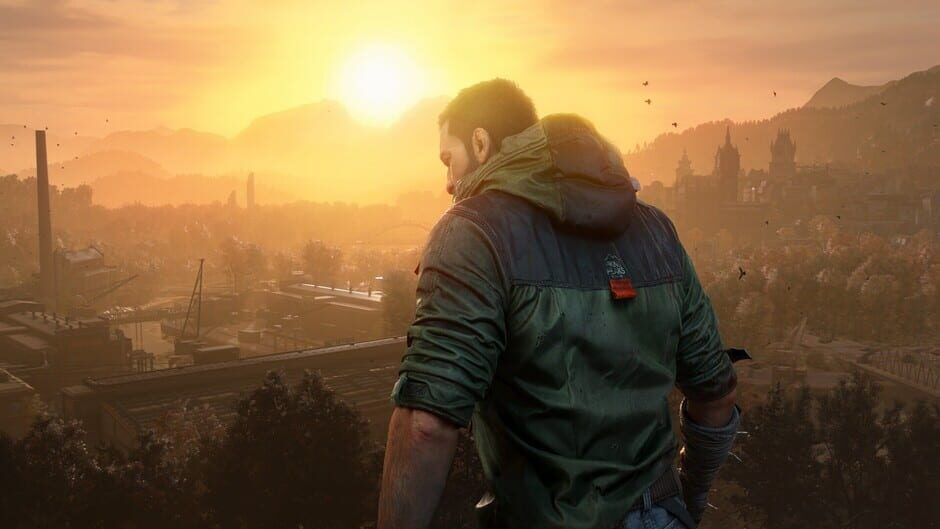
The headline change is that enemies no longer respawn in cleared areas. When you methodically wipe out a pocket of infected, those zombies stay dead. Over time, that work is reflected visually as sections of the map shift from ruined, overrun spaces to something closer to a pre-apocalypse state. Streets that were choked with walkers start to show more human life, and outposts become safer hubs rather than temporary checkpoints destined to reset.
Loot follows the same logic. Supplies do not refresh once you strip a location clean. Every medkit, can of food and scrap of crafting material is pulled from a finite pool in the region. Techland reinforces that scarcity by raising vendor prices and tightening survival systems like hunger. The flashlight even gains a battery mechanic, turning light management into a small but constant tax on your resources.
Activities are also one-and-done. Convoys, dark zones and similar side encounters are treated as consumable content within a single Restored Land run. Once you clear them, they are gone for that save. There is no reloading the same hotspot to farm experience or materials which forces players to think in terms of route planning and opportunity cost instead of simple repetition.
Taken together, these changes transform The Beast from a game about clearing icons on an infinite map into a campaign about careful attrition. Players are nudged to look at Castor Woods as a living place that can be tamed or exhausted depending on their decisions.
One Life, One Run, And Real Stakes
On top of the baseline Restored Land rule set, Techland layers an optional One Life mode. If you opt in, a single death ends the entire run. That permadeath switch pushes the design toward roguelite tension without adopting procedural generation. The world layout is authored, but your path through it is pressured by limited resources and the knowledge that one mistake can erase dozens of hours.
To offset that harshness, Restored Land adds prestige-flavored rewards that only unlock when you complete a run. Techland frames these as recognition items that let other players see you survived the worst the game can throw at you. It is the same retention trick the studio used in prior Dying Light entries with Legendary levels and event cosmetics, but now attached to a distinct survival mode rather than just raw time invested.
There is also a lighter counterweight in the form of Roadkill Rallies. These new vehicular time trials drop you into combat-focused driving challenges where mowing down infected under strict timers becomes its own mini-meta. Finish enough of them and you earn an upgraded, reinforced car that carries back into the wider game. It is a carrot neatly aligned with the stick of scarcity, giving players a way to feel more powerful without undercutting the no-respawn logic elsewhere.
Why Repackage As The Restored Land Edition
Launching Restored Land as a free update on the same day as a new retail edition is a familiar Techland move and a clear retention play.
First, bundling the base game with all past post-launch content plus the new mode creates an obvious entry point for late adopters who may have sat out earlier seasons and events. The Restored Land Edition becomes the recommended SKU, communicating that this is the definitive version of The Beast without asking existing players to buy in again.
Second, the rebrand arrives deep into the game’s life, at a point where traditional DLC drops would struggle to pull back lapsed players. Framing this as a systemic overhaul rather than another side story makes it easier to sell the idea that The Beast is evolving into something more ambitious. For players who bounced off the original loop of respawning encounters, a persistent campaign with a concrete end goal is a different enough pitch to merit a return.
Finally, the edition functions as marketing shorthand for Techland’s broader post-launch roadmap. When you call the bundle Restored Land Edition, you foreground the idea that this is now a game about changing the world and seeing your imprint. That positioning differentiates it from both the original Dying Light and from Dying Light 2’s urban power fantasy, carving out a survival-forward niche inside the same franchise.
Long-Term Value For Current Players
For existing owners, the key question is whether Restored Land delivers new ways to play rather than just more things to do. On paper, it does.
A no-respawn, finite-loot run reframes familiar combat and traversal systems. Parkour is no longer just a flashy way to move between repeatable objectives. Instead it becomes a scouting tool for identifying which areas are worth committing resources to clear and which should be avoided until you are better prepared. Night runs gain extra weight because the risk of death is now tied to the permanence of your progress, especially if you enable One Life.
The mode also gives high-level players something that pure stat inflation cannot: tension. After months or years with a game, it is hard to feel genuinely threatened by its enemies, even as new variants or modifiers appear. Making every consumable and every mistake matter again simulates the freshness of a first playthrough without requiring a brand new campaign.
From a systems perspective, Restored Land capitalizes on the work Techland has already done across previous patches. Earlier updates that rebalanced XP, tweaked enemy behaviors or expanded difficulty options all feed into this mode, which sits atop a more stable foundation than the launch build. The result is a piece of post-launch support that feels cumulative, drawing value from the entire support history rather than existing as an isolated DLC island.
A Better Pitch For Late Adopters
For players who have not touched The Beast at all, the Restored Land Edition simplifies the choice. There is no need to parse multiple DLC packs or decide which cosmetic bundles matter. You buy in once and get the full campaign, the post-launch additions and a survival mode that addresses common critiques of open world bloat and repetition.
The persistent-world structure is especially appealing for people who like survival games but typically bounce off more arcadey loot cycles. Knowing that an area, once cleared, will never repopulate reduces busywork and makes side content feel meaningful. Every detour is an investment in permanently improving the state of the map.
At the same time, the fact that Restored Land is optional preserves approachability. Newcomers can still play the default version of The Beast as a more forgiving action RPG, learning its systems without the pressure of finite resources. Once they are comfortable, the survival mode is waiting as an advanced layer that extends the game’s lifespan.
For Techland, that duality is a retention strategy. It ensures the studio can market The Beast both as an accessible zombie adventure and as a punishing survival sim, capturing a broader audience and giving that audience reasons to stay engaged for months rather than weeks.
Post-Launch Support As A Statement Of Intent
Looking at Restored Land in the context of the broader roadmap, it fits a pattern. Techland has steadily nudged The Beast toward deeper systemic play with updates that introduced tougher difficulty variants, community event structures and refinements to AI and progression. Restored Land is the most aggressive step yet, but it does not come out of nowhere.
The key difference is that this update is less about adding content and more about reinterpreting what is already there. That is a smart form of live support late in a game’s life cycle. Instead of overextending with entirely new regions or factions, Techland takes the existing map, rewires the rules and invites players to look at every space with fresh eyes.
If the mode hits, it could become the template for how Techland handles future projects: large authored worlds that can be recontextualized midstream through systemic updates rather than only through story DLC. It is also a way to keep older games relevant without fragmenting the audience behind paywalls.
Will Restored Land Improve Retention
Measured purely as a feature list, Restored Land adds a lot for the cost of zero dollars. The more interesting question is whether that translates into sustained engagement.
For dedicated players who already enjoy The Beast, the answer is likely yes. A fixed-world, finite-run mode is a strong hook for repeat playthroughs, challenge runs and community races. The no-respawn ruleset is easy to understand and easy to stream or watch, which helps with visibility long after the marketing beat has passed.
For lapsed players, the promise of seeing Castor Woods actually healed over time is more compelling than another weapons pack or limited-time event. It is a narrative of progress that matches the hours invested into a save file, and that emotional payoff is exactly what long-tail live support often lacks.
For late adopters, the Restored Land Edition removes friction and offers a clear identity: this is the version to buy if you want a single purchase that covers everything, including a serious survival mode.
Ultimately, Restored Land signals that Techland is not treating Dying Light: The Beast as a disposable seasonal product. By turning the open world into something you can slowly save instead of endlessly reset, the studio is betting that meaningful permanence is the best way to keep players coming back.