
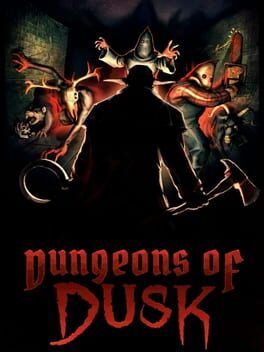
How Dungeons of Dusk turns the cult FPS into a grid‑based RPG, what its combat and progression look like on Switch and Switch 2, and why retro shooter fans should care about this side‑story.
Dungeons of Dusk is not the kind of DUSK follow‑up anyone expected. Instead of bunny‑hopping through blood‑stained farmhouses, you are counting tiles and turns in a first person, grid‑based dungeon crawler. It is a full RPG spin‑off set canonically between the episodes of the cult FPS, coming to both Nintendo Switch and the next‑gen Switch 2 in 2026.
For shooter fans, that might sound like heresy. In practice, it looks like one of the more interesting ways anyone has tried to stretch a boomer shooter universe.
A DUSK Side‑Story Between Episodes
New Blood Interactive and 68k Studios are pitching this very explicitly as “DUSK RPG.” The story is slotted between the episodes of the original FPS, using the same occult Americana, rusted industrial ruins and cultist nightmare imagery that defined DUSK.
Instead of sprinting through wide arenas, you navigate compact, tightly wound dungeons one tile at a time. Every step is a discrete move, every action consumes a turn, and enemies follow the same rules. The rhythm shifts from twitch reflex to careful planning, but the tone is meant to stay pure DUSK, with familiar foes returning alongside new horrors built around the slower, more tactical pace.
Because it lives between DUSK’s main episodes, Dungeons of Dusk can explore side characters, forgotten corners of the setting and the kind of small‑scale horror vignettes that would be hard to fit into a nonstop FPS campaign. The 30‑level main adventure is framed as a pilgrimage through the world’s underbelly, tying into events shooter fans will recognize without requiring you to replay the original first.
Turn‑Based, Grid‑Based Combat In The DUSK Engine
Moment to moment, this is a classic turn‑based dungeon crawler. The world is laid out as a grid and you move in cardinal directions, one tile at a time. When enemies are present, every step, attack, spell or item use advances the turn counter. You watch cultists, scarecrows and other monstrosities respond according to their own movement patterns and attack ranges.
The combat focus shifts from circle strafing to positional play. Luring a melee brute into a narrow corridor so it cannot flank you, stepping back just enough tiles to fire at range, or timing a powerful ability to hit a whole cluster all matter more than pure aim. Because both you and your enemies act on the same grid, learning how different enemy types advance or retreat becomes as important here as learning their tells was in the FPS.
Dungeons of Dusk still leans into brutality. Resource management is tight, healing is limited, and a bad decision several turns ago can snowball into a wipe. That uncompromising feel is what links it to DUSK even though the input speed is slower. Fans of old PC dungeon crawlers will feel at home, but the art, sound design and encounter pacing are clearly tuned to scratch the same itch as a New Blood shooter.
Progression Across A 30‑Floor Campaign
The main campaign spans 30 levels, each structured as a small dungeon with its own enemies, traps and NPCs. Progression is traditional RPG territory. You gain experience from battles, unlock new abilities, and gradually assemble a build that supports your preferred approach. If you want to lean into high risk, high damage melee, you can make gear and stat choices that reward closing the distance. If you prefer methodical ranged combat with crowd control tools, the system supports that too.
NPCs play a bigger role here than they ever could in the breakneck pace of the FPS. You will find survivors, cultists with their own agendas and other strange inhabitants of DUSK’s world, often acting as quest givers or merchants. That structure lets the spin‑off dig a bit deeper into the lore while giving you reasons to backtrack, explore optional branches and chase better rewards.
Because it is a turn‑based game, progression is not just about raw numbers. Unlocking a new active skill or passive perk changes how you read every encounter. A defensive ability that lets you shrug off one big hit might give you the confidence to stand your ground against a boss instead of kiting endlessly. A mobility tool can open up improv tactics, like slipping past an enemy line to target a summoner hiding behind them.
Extra Modes Beyond The Main Dungeon
Alongside the 30‑level campaign, Dungeons of Dusk ships with several extra modes built for replayability.
Endless arena mode strips the structure down to pure combat, throwing increasingly difficult waves of enemies at you in a confined layout. The focus here is on understanding the system deeply, squeezing every advantage out of positioning, turn order and ability cooldowns. It is the closest the game comes to a traditional horde mode, tuned for people who want to theorycraft builds without worrying about story pacing.
Boss rush pulls the biggest encounters out of the campaign and lines them up back to back. That format tests your ability to adapt to different attack patterns and battlefield shapes in quick succession. It should appeal to players who loved mastering DUSK’s bosses and want a version of that mastery feeling expressed through RPG tools rather than raw aim.
Survival mode pushes the endurance angle further. You are given limited resources, a harsh ruleset and asked to go as long as possible before inevitable failure. In a grid‑based dungeon crawler, that can mean agonizing choices about when to spend consumables, when to retreat and how much risk to take for a potential power spike.
Together, these modes turn Dungeons of Dusk into more than a one‑and‑done side‑story. They give system‑driven players ways to stress‑test the combat and progression beyond the scripted campaign.
Why Retro Shooter Fans Should Care
On paper, a grid‑based RPG spin‑off sounds like a strange match for a twitchy, movement‑driven FPS. The hook with Dungeons of Dusk is that it treats DUSK’s universe and attitude as the constant, while experimenting with a completely different way of interacting with it.
For existing DUSK fans, this is a chance to see familiar enemies and locations translated into a slower, more methodical form. That shift highlights different aspects of the same world. Instead of blasting through a slaughter barn in seconds, you are counting tiles between hay bales, checking line of sight, plotting routes around patrols and traps. The dread has room to breathe.
It also lets New Blood serve a slightly different slice of retro nostalgia. Where DUSK channeled 90s FPS energy, Dungeons of Dusk reaches further back to classic first person dungeon crawlers, with their maze maps, secret walls and carefully rationed potions. Plugging those traditions into the DUSK aesthetic gives the spin‑off an identity that is more than “DUSK, but slower.”
For Switch and eventual Switch 2 players in particular, the turn‑based structure is a natural fit. The grid movement makes it easy to play with sticks or a D‑pad, it pauses cleanly between turns for handheld sessions, and it should scale well between the current hardware and Nintendo’s next system without needing pinpoint analog precision. It is the sort of game that should feel just as comfortable docked on a TV as it does chipped away at on a commute.
If you bounced off DUSK because of its speed but loved its look and sound, Dungeons of Dusk could be the way into that universe. If you still boot up DUSK to speedrun levels, the pitch here is a complementary experience instead of a replacement, one that lets you live in that world a little longer and think a little harder about every step you take.
Whether you come for the cult FPS connection or the promise of a brutal, old‑school dungeon crawler, Dungeons of Dusk is shaping up to be one of the most intriguing curiosities on the 2026 Switch and Switch 2 lineup.