
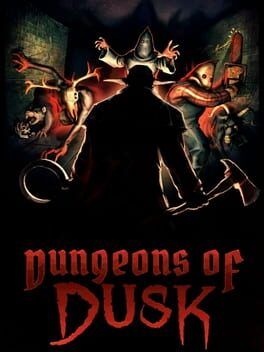
How New Blood’s cult FPS Dusk is being reborn as a gridded, turn-based dungeon crawler for PC and Nintendo Switch platforms, and what it says about shooters flirting with RPG spinoffs.
From twitch reflexes to turn order
Dusk built its reputation on speed. It was all strafing through grain silos, bunny‑hopping around cultists, and circle‑strafing sawblades in grimy arenas. Dungeons of Dusk takes that same rust‑stained universe and asks a very different question: what if every panicked snap decision became a deliberate, turn‑based choice?
Announced during the PC Gaming Show and confirmed for Nintendo Switch, the upcoming Switch successor, and PC, Dungeons of Dusk is a classic grid‑based crawler that slots canonically between the episodes of the original FPS. Instead of sprinting through slaughterhouses in real time, you creep tile by tile through claustrophobic corridors, counting action points and watching enemy patrols. It is still about surviving a hostile, heretical backwoods America, but now survival depends on planning three turns ahead rather than just flicking your mouse a few inches faster.
Remixing Dusk’s enemies into tactical threats
The first thing that jumps out when you see Dungeons of Dusk in motion is how familiar the monsters look even though the game plays completely differently. Possessed farmers, robed cultists, and other low‑poly horrors from Dusk are back, but they are reimagined as pieces in a tabletop puzzle.
In the shooter, a group of pitchfork‑wielding foes was a momentary speed bump. You dashed in, dumped a shotgun blast into the mob, and turned the whole encounter into a spray of red pixels. In the dungeon crawler, those same enemies can box you in on a narrow grid, cutting off escape routes and forcing you to choose between burning limited ammunition or eating a hit while you reposition. Line of sight becomes as important as raw aim. You have time to think, which means the designers have time to be cruel.
Heavier enemies benefit even more from the new format. Riflemen and ranged cultists now control lanes in a way you never worried about when you could simply strafe out of the way. Summoner‑type foes can flood a room over several rounds if you do not prioritize them. Even simple environmental hazards from Dusk, like spinning blades and crushing machinery, are turned into turn‑based traps to be baited, timed, or exploited.
This remix does more than just slow things down. It makes every encounter feel like a tiny tactical puzzle that still carries the same grimy energy and mean streak fans expect from New Blood’s universe.
Old weapons, new rhythms
Dusk’s arsenal is iconic for how punchy and immediate it feels. Dungeons of Dusk keeps that spirit, but each trigger pull is now a conscious commitment on a grid rather than part of an uninterrupted stream.
The trusty shotgun still seems to be the workhorse, but in a turn‑based structure its wide spread becomes a carefully positioned cone that you want to line up through two or three enemies at once. The hunting rifle looks purpose‑built for long corridors, encouraging players to lock down sightlines and pick off problem targets before they close in. Melee tools and close‑range weapons take on a risk‑reward profile, asking you to commit to charging into danger for big damage, then surviving the counterattack phase.
Because you are not constantly weaving and bunny‑hopping, resource management steps into the spotlight. Ammo and healing that you might have blown through in the shooter now need to last across long dungeon floors. The 30 level campaign structure and character progression give space for slower ramping power curves, passive perks, and build decisions that would be invisible in the blur of an FPS run.
In effect, Dungeons of Dusk treats the original’s weapons like a card deck that is being re‑sorted for a new genre. The satisfaction of a well‑timed blast is still there, but success is measured in how efficiently you sequence your tools over multiple turns rather than how fast you can clear a room.
Preserving Dusk’s atmosphere in a slower game
Pulling Dusk out of real time could have ruined its mood. The original’s tension lives in frantic audio stingers, jump scares around blind corners, and the ever‑present sense that you are one hit away from death if you miss a beat. Early footage of Dungeons of Dusk suggests the team is approaching this problem by doubling down on everything except speed.
The low‑fi, crunchy visual style carries over, complete with jagged models, thick darkness, and lighting that looks like it was ripped off a late‑90s PC. That aesthetic actually works surprisingly well in a gridded dungeon. Each tile feels like a little diorama of rural horror, and the slower pace gives you more time to soak in the grime. Sound design remains heavy and oppressive, with guttural cultist chants and chugging industrial ambience filling the dead air between turns.
Most importantly, the layout philosophy appears intact. Levels are not just straight hallways filled with disconnected fights. They twist and loop back on themselves, hide secrets, and tempt you with side passages that might hold a new weapon or just another pack of monsters. NPCs and light role playing encounters are sprinkled through these layouts, hinting at a broader picture of Dusk’s world that the breakneck shooter only ever suggested.
The result is something that feels faithful without being derivative. You recognize the same sickly skies and rotting barns, but now they serve as the backdrop for a different flavour of dread, the kind that grows as you watch the turn counter tick up and your supplies tick down.
Platforms, modes, and structure
Dungeons of Dusk is planned for PC via Steam and GOG, with Linux and macOS support, alongside console versions for Nintendo Switch and Nintendo’s next system. Mobile and other consoles are also on the slate from New Blood and 68k Studios, but the focus of the initial reveal has been on PC and Nintendo’s hybrid machines, where grid crawlers already have a strong audience.
The campaign spans 30 levels and leans into progression. You carry a growing pool of abilities and gear through the story, meet NPCs, and make choices that influence how you tackle later floors. On top of that is a suite of side modes built to stretch the combat system in different directions. Endless arena challenges you to survive as long as possible against escalating waves. Boss rush strips away exploration and throws you into back‑to‑back set piece encounters. Survival modes pile on time and resource pressure, asking how long you can hold out when the odds are stacked.
On Switch and Switch 2, Dungeons of Dusk looks like a natural fit for handheld play. Turns give you obvious break points, and the clear grid combined with chunky low‑resolution art should scale well on a smaller screen. On PC, keyboard controls and mouse targeting offer a direct, old school dungeon crawler feel, closer to the games Dungeons of Dusk is quietly paying homage to.
Dusk and the wider FPS‑to‑RPG experiment
Dungeons of Dusk is not happening in a vacuum. Over the past few years, FPS series have grown more comfortable experimenting with side genres once their core identity is solid. Dusk itself already played with this idea through DUSK ’82, a 2D puzzle spin on the shooter’s combat language. Elsewhere, fans have seen shooters branch into tactics, deckbuilders, and more traditional RPGs.
What makes Dungeons of Dusk stand out in this wave is how directly it translates the feel of a boomer shooter into a format more often associated with slow, cerebral dungeon crawls from the early PC era. Instead of just borrowing a logo and some character names, it sits canonically between episodes of the main game and treats its combat sandbox as sacred material to be rearranged, not replaced.
This sort of spin off also speaks to how much modern players are willing to follow a strong tone across genres. Dusk fans are not just attached to the act of circle‑strafing; they like its bleak rural horror, its soundtrack, and its gleeful cruelty. A turn‑based RPG can emphasize different aspects of that tone, like long‑term attrition and unsettling exploration, while still giving space to the same bestial enemies and filthy barns.
If Dungeons of Dusk lands, it may encourage more developers to view their shooters as universes rather than just mechanics. The same enemies and weapons that make sense in a 90s‑style FPS can become the backbone for tactics games, grid crawlers, or narrative RPGs, provided the teams behind them are as willing as New Blood and 68k Studios to rethink how those elements fit together.
Worthy of the name?
For now, Dungeons of Dusk looks like an unusually bold pitch: a canonical chapter in one of the defining boomer shooters of the last decade, recast as a slow, meticulous dungeon crawl. It keeps the same grime‑soaked enemies and chunky weapons, but asks you to experience them in a new rhythm, one turn at a time.
Whether you came to Dusk for its twitch shooting or its unsettling world, this spin off is worth watching as it marches toward its 2026 launch on PC and Nintendo’s current and next‑generation Switch hardware. If nothing else, it proves that the line between shooter and RPG is thinner than it looks when you are staring down a cultist in the dark.