
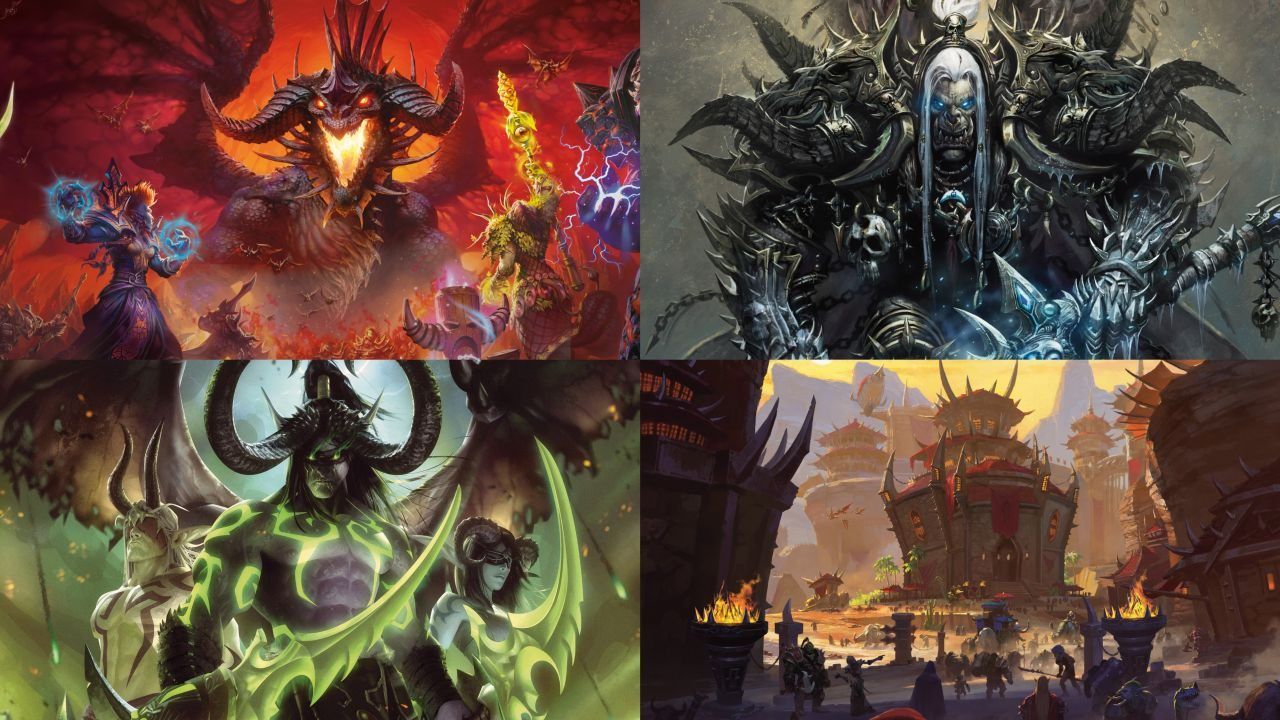
A systems-focused look at how Dungeons & Dragons: World of Warcraft translates Azeroth, raids, dungeons, classes, professions, factions, and boss phases into tabletop rules.
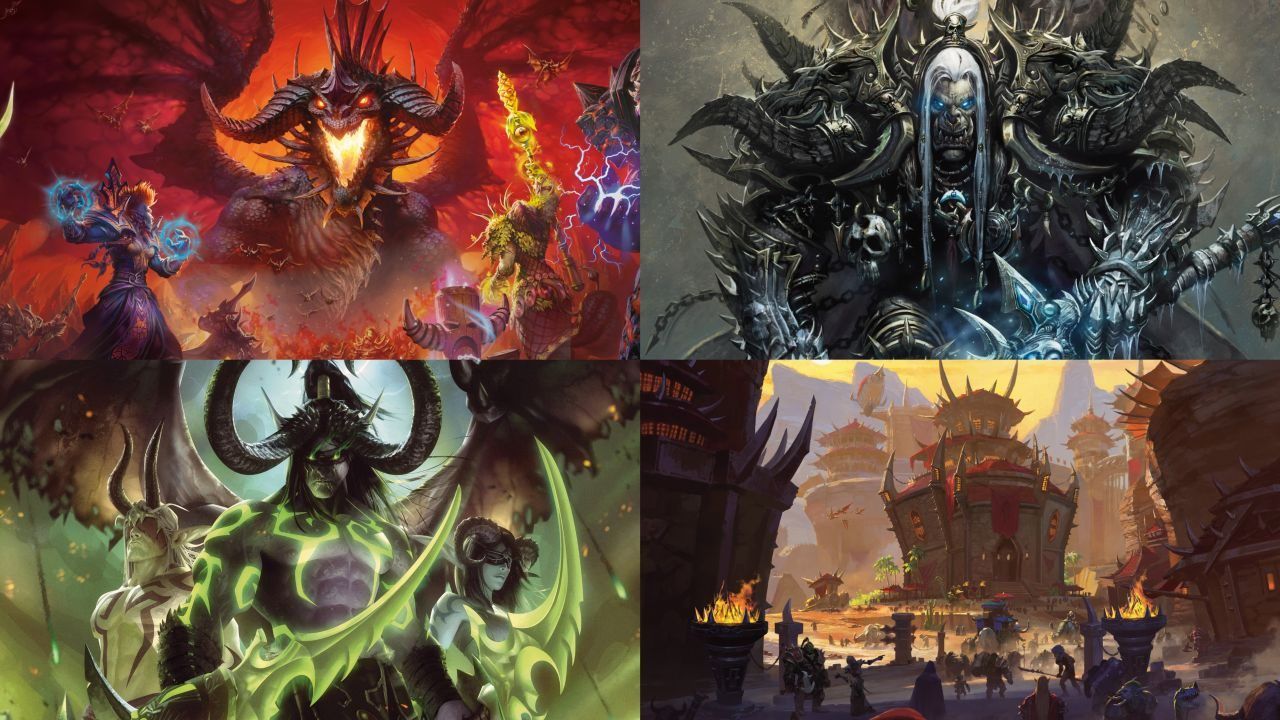
Image: de.ign.com
Azeroth is becoming D&D, and the hard part is the dungeon run
Dungeons & Dragons: World of Warcraft is scheduled for release on November 17, 2026, according to TechRaptor and Dungeons & Dragons Fan, and the central design challenge is now clearer: Wizards of the Coast is trying to make Azeroth work at a table without flattening World of Warcraft into a tour of familiar names. The book is being positioned as the first D&D Universes Beyond crossover product, per Dungeons & Dragons Fan and Polygon, which makes it both a Warcraft adaptation and a test case for how far current D&D can stretch around another game’s identity.
The strongest confirmed design signal is combat structure. Polygon reported from a virtual press conference that senior game designer Joey Haeck described boss fights using and expanding the mythic monster ideas introduced in 2020’s Mythic Odysseys of Theros. In that older D&D model, a creature reduced to zero hit points can return with refreshed health and new abilities. Haeck told Polygon that the World of Warcraft book includes mythic creatures “as low as CR 4” and higher-level mythics that can refresh more than once, creating longer fights where the table has to adjust as the encounter changes.
That is the right pressure point for a D&D WoW preview because it addresses the part of World of Warcraft that cannot be solved by lore alone. Azeroth is recognizable because of Stormwind, Orgrimmar, elves, orcs, murlocs, paladins, and the Lich King, but WoW’s strongest group memories often come from learning a boss, wiping, reading a phase transition, and finally executing. If Dungeons & Dragons: World of Warcraft can make those shifts legible in turn-based tabletop play, MMO fans may have a reason to watch the release even if they do not normally buy campaign settings.
The book treats dungeons as spaces to solve, not corridors to clear
The dungeon list is the most concrete look yet at how the World of Warcraft tabletop RPG will handle Azeroth’s geography. TechRaptor, after speaking with members of the design team, reported that the book includes Deadmines and Shadowfang Keep for levels 1 to 4, Blackfathom Deeps for levels 5 to 10, Scarlet Monastery across level bands, Dire Maul for levels 11 to 16, and Azjol-Nerub for levels 17 to 20. TechRaptor’s list also names “Dragonflights” at levels 17 to 20. Dungeons & Dragons Fan and EN World, drawing on revealed preview details, instead list Anoxia’s Lair among the high-level dungeon options. That discrepancy is worth flagging because the public preview trail does not line up cleanly on every title.
The important design thread is consistent, though. TechRaptor reported that the original MMO layouts, often built around forward motion and combat pacing, have been altered for tabletop play. Deadmines and Blackfathom Deeps were described as examples where side passages and extra corridors have been added so a party can choose approaches rather than simply move from pull to pull. For Deadmines, TechRaptor says the designers suggested routes that let players approach the Defias Brotherhood differently, including disguise-based play.
That is a major translation choice. In World of Warcraft, a dungeon group is usually optimizing route, threat, cooldowns, and boss execution. In D&D, the party can parley, scout, split attention, impersonate enemies, retreat, or turn a faction against itself. A straight MMO conversion would risk turning D&D into a slower version of tab-target combat. The reported map changes suggest Wizards is preserving the dungeon as a progression scaffold while giving players the agency tabletop needs.
Scarlet Monastery and Dire Maul appear to be another example of that philosophy. TechRaptor reported that these larger dungeon complexes are being restored as something closer to mega-dungeons, with related areas unified so groups can explore them as larger spaces or in multiple visits. For DMs, that gives the book a practical campaign spine. For WoW players, it raises a more interesting prospect than nostalgia: familiar places may become less predictable when stealth, negotiation, faction play, and bad rest decisions can alter the state of the map.
Boss phases are the clearest bridge between raid design and D&D rules
The mythic monster approach is the most mechanically direct answer to a long-standing D&D problem: solo monsters can lose to the action economy. CBR, which also attended a preview event, framed the return of mythic rules around that exact issue, noting that D&D’s Legendary and Lair Actions were created to help bosses act outside their own turns. The World of Warcraft crossover adds another layer by giving major monsters phase-like durability and new moves after they are first brought down.
For Warcraft players, that sounds familiar because it resembles the rhythm of raid and dungeon bosses changing tactics mid-fight. Polygon reported that Haeck explicitly connected the new book’s boss design to World of Warcraft encounters where bosses shift tactics, unleash new powers, or summon adds as the fight progresses. Polygon also reported that Dungeons & Dragons: World of Warcraft includes guidance for everything from the intro-level Deadmines to Icecrown Citadel, with the latter appearing as a digital adventure accompanying the book.
That accompanying Icecrown Citadel detail matters because TechRaptor separately reported that the sourcebook itself does not include a full adventure. Instead, it is described as a “toybox” with cities, regions, residents, dungeons, quest hooks, NPCs, and monsters. Those two reports are not necessarily in conflict. The book appears to be a campaign setting and toolkit, while Icecrown Citadel is described by Polygon as a separate digital adventure attached to the release ecosystem.
From a systems perspective, mythic bosses are also a safer D&D fit than trying to import MMO rotations wholesale. A tabletop group does not need a threat meter or damage parser to feel a boss escalate. It needs visible state changes, meaningful choices after the turn order is established, and enough encounter endurance for class features to matter. The confirmed mythic rules point to that goal. The open question is pacing. A multi-refresh boss can create drama, but at a table it can also lengthen combat significantly if the encounter lacks changing objectives, terrain, adds, or social stakes.
Classes, species, and specs aim to let WoW players recognize their mains
Character translation is where the previews become more fragmented. ScreenRant, reporting from a press event, says Dungeons & Dragons: World of Warcraft includes 16 new species, more than 25 new magic items, more than 40 new spells, rules for 13 WoW classes, nine new and revised subclasses, and more than 40 specializations. Dungeons & Dragons Fan reports different numerical details, saying the book includes 11 species, nine subclasses, 60 spells, 15 monsters, 26 magic items, and 23 factions. Because those numbers conflict, the safest reading is that Wizards has previewed a large player-options package, but the exact public count varies by report and may depend on how each outlet categorizes lineages, specializations, revisions, or final book contents.
The broad design direction is clearer than the arithmetic. Dungeons & Dragons Fan reports that Wizards has said every World of Warcraft race will be included, naming options such as Dracthyr, Pandaren, Earthen, Kul Tiran, Vulpera, Haranir, orcs, and elves. The same report says the elf options receive elemental lineages to reflect Azeroth’s distinct elf types. If accurate, that suggests the book is trying to model Warcraft ancestry at a more granular level than a simple “elf equals elf” conversion.
The class side appears to use D&D’s chassis rather than rebuild World of Warcraft from scratch. Dungeons & Dragons Fan reports that Wizards confirmed guidelines for playing every WoW class through Player’s Handbook material, with new subclasses used to capture specific identities such as Death Knight, Shadow Priest, and Demon Hunter. The report gives Death Knight as an example built around the Paladin class rather than as a separate full class.
That is a sensible compromise, though it will be the first place many MMO players scrutinize the book. WoW class identity is built from resource loops, cooldown timing, spec roles, and talent choices. D&D class identity is built from action economy, limited-use features, subclass progression, spell lists, and party roles that are looser than MMO trinity design. A Death Knight mapped through Paladin can capture armor, oath-like power, smites, and necrotic flavor. It may not capture runic power or disease maintenance in the way a longtime Unholy player expects. The value will depend on whether the subclasses and specializations give enough build texture without making the table track an MMO rotation by hand.
Professions, factions, and renown could make Azeroth feel playable between fights
The previews also point beyond combat. ScreenRant reported that the book introduces World of Warcraft professions into Dungeons & Dragons and includes new information on renown, professions, monsters, and creatures of Azeroth. TechRaptor likewise says its preview conversation covered how WoW mechanics like Professions and Factions/Renowns will be translated to tabletop RPGs.
Those systems may be especially important for MMO fans who are curious but tabletop-hesitant. In World of Warcraft, progression is not limited to leveling a character. Players build reputation, chase recipes, gather materials, unlock vendors, craft gear, and move through faction arcs. D&D already has downtime and tool proficiencies, but they are often table-dependent. A Warcraft book that formalizes professions and renown could give players familiar long-term goals between dungeons, especially if the systems connect to quest rewards, faction access, crafting, and region identity.
TechRaptor reported that Azeroth is broken into zones matched by level, and principal game designer and project lead James Wyatt answered “Yes, absolutely” when asked whether that supports player-led exploration into more dangerous territory. That is a small but revealing confirmation. Zone level in an MMO often functions as a guided path. At a table, it can become a risk signal. A low-level group can choose to push into a lethal region, bargain for protection, flee from threats, or accept a quest that outpaces their current build.
That is where the Azeroth Dungeons and Dragons adaptation could become interesting for people who have never rolled initiative. The appeal is not only, “You can visit a place you know.” It is that a tabletop version can let the party change the order of approach, fail sideways, and create consequences the MMO cannot fully simulate. Polygon reported one example of those consequences: the book offers narrative suggestions such as new monsters moving into a dungeon if the party leaves to rest. That is a very D&D answer to a WoW habit. You can hearth out, but the world may not wait politely.
This release is also a business test for D&D’s Universes Beyond future
Polygon frames Dungeons & Dragons: World of Warcraft as a major strategic shift because it brings D&D closer to Magic: The Gathering’s Universes Beyond licensing model, a model Polygon describes as controversial but highly profitable. Dungeons & Dragons Fan also identifies the book as the first product in the new D&D Universes Beyond line and says it was produced in tandem with Blizzard Entertainment.
That business context changes how to read the preview. This is not a one-off curiosity buried in the schedule. It is a flagship crossover using one of PC gaming’s most recognizable fantasy settings to test whether D&D can absorb outside brands while still feeling like D&D. EN World noticed a different side of that rollout, observing in September that several early previews came through D&D influencers, including some who said they had limited World of Warcraft knowledge. EN World also noted that BlizzCon had passed with no mention of the book at that time. That is not proof of a problem, but it does show an unusual audience question: is this being marketed first to D&D tables, WoW players, or both?
For tabletop veterans, the attraction is a dense setting with dungeons, factions, species, subclasses, spells, monsters, and magic items. For WoW players, the pitch is less automatic. Buying a sourcebook is different from queueing for a dungeon, and D&D requires a group, a Dungeon Master, scheduling, and comfort with rules negotiation. The reported design choices suggest Wizards understands that name recognition alone will not carry the adaptation. Boss phases, class mapping, professions, renown, zone danger, and revised dungeon maps are all attempts to translate play patterns rather than simply import lore.
The unanswered questions are practical ones. The provided sources confirm the November 17, 2026 release date, and Dungeons & Dragons Fan reports pre-orders through local game stores, D&D Beyond, and Amazon. The sources provided here do not confirm a price. They also do not provide final page count, full table of contents, or a complete official count that reconciles the conflicting species, spell, item, and dungeon numbers reported across outlets.
Who should keep an eye on the D&D World of Warcraft book
If you already play D&D and have any attachment to Warcraft, Dungeons & Dragons: World of Warcraft looks like a substantial setting release rather than a thin licensed skin, based on the reported dungeons, character options, professions, factions, and boss rules. The lack of a full adventure inside the book, as reported by TechRaptor, is important. DMs should expect a toolkit and setting framework, with Icecrown Citadel described by Polygon as a digital adventure accompanying the book, rather than one hardcover campaign that carries a group from first level to endgame.
If you are a WoW player who does not usually play tabletop RPGs, the most promising reason to watch is how familiar MMO structures are being reworked into choices that happen at the table. Deadmines with alternate approaches, Scarlet Monastery and Dire Maul as larger explorable complexes, mythic bosses with phase changes, and professions or renown as longer-term progression all speak to recognizable Warcraft habits. They also ask you to enjoy a different pace, one where a single dungeon room can become a negotiation, a failed stealth plan, or a consequence that follows the party next session.
The cautious advice is to wait for final previews if your interest depends on a specific main, race, class, or raid fantasy. The current reporting supports the existence of broad class guidelines, many species, subclasses, spells, magic items, factions, professions, and dungeon material, but the exact counts differ between ScreenRant and Dungeons & Dragons Fan. If your buy decision turns on Demon Hunter depth, Death Knight mechanics, Haranir support, or which high-level dungeon is actually in the book, final official listings will matter.
Still, the adaptation’s early shape is coherent. Wizards appears to be treating Azeroth as a progression ecosystem: zones create risk, factions create allegiance, professions create downtime goals, dungeons create routes and consequences, and bosses create escalating mechanical set pieces. That is the right foundation for a D&D World of Warcraft crossover. The release now has to prove that those systems remain playable when a real table, with real schedules and wildly inventive players, starts pulling Azeroth apart one quest hook at a time.