
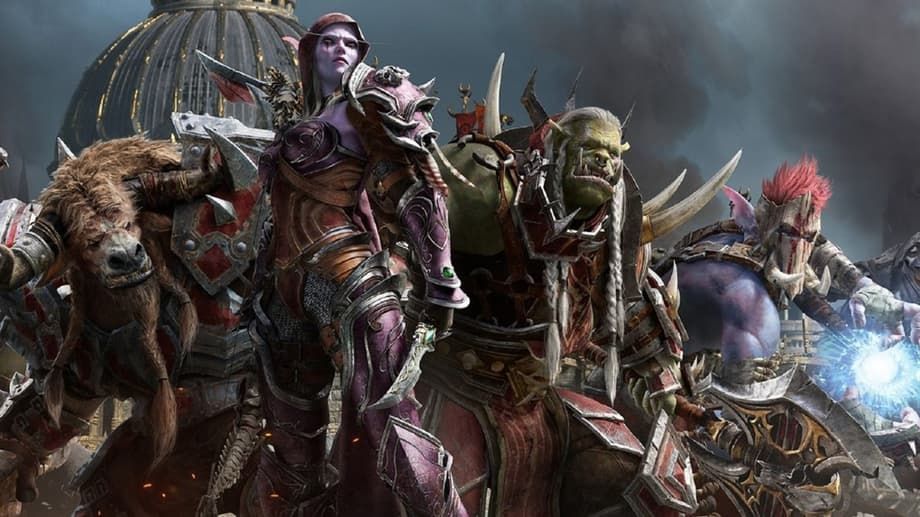
Wizards of the Coast has confirmed Dungeons & Dragons: World of Warcraft as D&D's first Universes Beyond sourcebook, with Azeroth rules, dungeons, factions, and a broader roadmap that includes Dark Sun, Greyhawk, Ravenloft, and more.
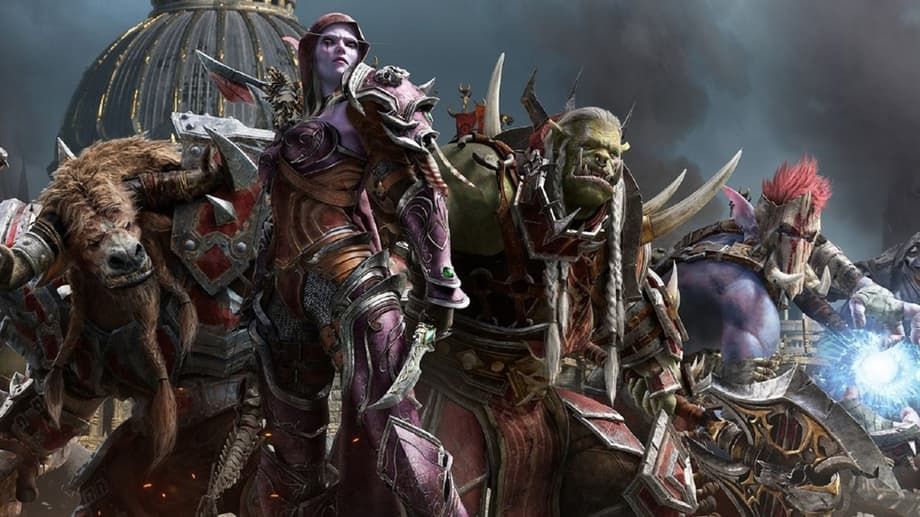
Image: gamefragger.com
Azeroth is becoming an official D&D destination in November
Wizards of the Coast has confirmed Dungeons & Dragons: World of Warcraft, a 256-page tabletop sourcebook that brings Blizzard’s MMO setting into D&D as the first entry in the roleplaying game’s own Universes Beyond line. According to reporting from Polygon, MonsterVine, ComicBook.com, and GamesReviews following Wizards’ Gen Con 2026 announcements, the Dungeons and Dragons World of Warcraft crossover opens for preorder on July 30, enters early access on November 3, and gets a wider release on November 17.
That is the concrete news at the center of a much larger roadmap. Wizards is applying a crossover label already associated with Magic: The Gathering to D&D, while also promising renewed attention for core tabletop settings such as Dark Sun, Greyhawk, Dragonlance, Ravenloft, and Eberron. Dan Ayoub, Head of Dungeons & Dragons, framed the strategy in a Business Wire announcement by saying that Universes Beyond expands D&D into worlds “like World of Warcraft” while the team also revisits core D&D settings including Dark Sun, Dragonlance, and Greyhawk.
The tension is clear: Wizards is using one of gaming’s most recognizable fantasy worlds to launch a new crossover program, but it is also trying to reassure longtime D&D players that legacy settings are still on the table. For players, dungeon masters, and World of Warcraft fans, the useful question is no longer whether the D&D Warcraft Universes Beyond book is real. It is how much of Azeroth it actually lets a table play, how those MMO systems survive translation to fifth edition play, and which details are still missing before anyone commits to a campaign plan.
The sourcebook is built around character conversion, dungeons, and faction play
The confirmed feature list positions Dungeons & Dragons: World of Warcraft as a broad gameplay expansion rather than a small licensed adventure box. MonsterVine reports that the book contains 11 new species, including the Haranir, nine subclasses including Death Knights, Demon Hunters, and Shadow Priest, iconic locations across Azeroth, World of Warcraft non-player characters, seven dungeons, 30 dungeon boss stat blocks, more than 60 new spells, and more than 50 new monsters. ComicBook.com adds that the book includes 23 factions, 26 World of Warcraft-inspired magic items, professions, mounts, and companion creatures.
Polygon’s account gives the clearest design intent. Principal game designer James Wyatt said during a virtual press conference that the book’s approach is to present all World of Warcraft classes and specializations and explain how to build those characters using either the Player’s Handbook, new rules in this book, or a combination of both. That is an important systems note. The promise is not simply a list of Azeroth-flavored subclasses. The book is being framed as a conversion guide for the fantasy of playing a WoW main or alt at the D&D table.
There is one detail readers should treat carefully because the sources describe the subclass count in slightly different ways. MonsterVine says the book includes nine subclasses. Polygon and ComicBook.com specify six entirely new subclasses and three updated versions for the newer D&D ruleset, which still totals nine. That is not a true contradiction, but it changes expectations. Players should not assume every WoW class becomes a wholly new subclass. Some will be represented through existing Player’s Handbook tools, some through updated D&D material, and some through new rules.
Azeroth’s campaign pitch is high-level, dungeon-heavy, and lore-forward
The book appears designed to satisfy two different play patterns: the player who wants to recreate a familiar World of Warcraft character build, and the dungeon master who wants recognizable Azeroth locations with encounter-ready material. Polygon reports that the book covers iconic locations including Orgrimmar and Icecrown Citadel, with stat blocks for major figures such as Jaina Proudmoore and Arthas Menethil. MonsterVine also reports that the related map pack focuses on Icecrown Citadel.
The Icecrown emphasis is practical as well as nostalgic. Polygon says the Icecrown Citadel map pack includes access to a digital adventure built to take a five-person party from level 16 to 20. That detail tells experienced D&D players a lot. This is not only low-level onboarding material for new adventurers arriving in Elwynn Forest or Durotar. At least one companion adventure is aimed at late-tier play, where boss design, legendary villains, and encounter balance are notoriously demanding in fifth edition.
The dungeon numbers are also unusually direct for a licensed setting announcement. Seven dungeons and 30 boss stat blocks suggest Wizards wants groups to run Azeroth as a chain of discrete, recognizable challenges rather than rely entirely on a lore gazetteer. For a dungeon master, that can shorten prep time if the encounters are well tuned. For players, it raises the central adaptation question: World of Warcraft’s combat language depends on cooldowns, threat, roles, aggro, loot cadence, interrupts, and repeated boss attempts. D&D’s drama comes from resource attrition, bounded action economy, improvisation, and consequences that usually do not reset with a corpse run. The sources confirm new subsystems for professions, renown rewards, mounts, and companions, but they do not yet show enough rules text to judge how deeply the book bends D&D toward MMO structure.
Universes Beyond brings Magic’s crossover logic to D&D
The name Universes Beyond is deliberate. Polygon connects D&D’s new crossover program to Magic: The Gathering’s highly successful licensed sets, noting that Magic brought in $1.72 billion in annual revenue in fiscal year 2025 and that much of its recent success has been attributed to Universes Beyond releases tied to franchises such as Final Fantasy, Marvel, and Avatar: The Last Airbender. Polygon also notes that those crossovers have frustrated some dedicated Magic fans, even as they have sold strongly.
D&D has crossed into other media before, but the scope here is different. Polygon’s pre-announcement leak report recalled earlier fifth edition products based on Stranger Things and Rick and Morty, along with D&D sourcebooks for Magic settings such as Ravnica, Theros, and Strixhaven. Those Magic worlds sit inside Wizards of the Coast’s own corporate ecosystem. World of Warcraft brings in Blizzard’s fantasy universe as an external brand with its own lore gravity, class identities, faction politics, and player expectations.
There is also tabletop history behind the collaboration. Polygon reported before the official reveal that Warcraft had earlier D&D-derived tabletop adaptations through Sword & Sorcery Studios: Warcraft: The Roleplaying Game in 2003 and World of Warcraft: The Roleplaying Game in 2005, both tied to third-edition-era rules rather than a Wizards-published fifth edition line. GamesReviews similarly describes this new book as Warcraft’s first return to tabletop roleplaying in roughly two decades. The new collaboration therefore serves two audiences at once: players who remember those older OGL-era books, and WoW players whose only Azeroth progression path has been digital.
The 2026 and 2027 roadmap is broader than the Warcraft reveal
The Dungeons and Dragons roadmap 2026 discussion at Gen Con did not stop with Azeroth. MonsterVine reports that Wizards outlined several releases and initiatives, including D&D Icons, Arcana Unleashed, Deadfall, and future setting work. According to MonsterVine and Polygon, franchise creative director Kara Kenna described D&D Icons as an initiative that brings legendary creators together with the current design team to shape future content. Reported participants include Joe Manganiello as chief creative officer for the initiative, Luke Gygax working in Greyhawk, Margaret Weis and Tracy Hickman connected to Dragonlance, and R.A. Salvatore tied to The Legend of Drizzt.
On the rules and adventure side, MonsterVine reports that senior designer Amanda Hamon described Arcana Unleashed as hosted by Alustriel Silverhand and themed around the eight schools of magic. MonsterVine also reports that Deadfall is positioned as a dark reflection, with a high-level campaign for characters from level 11 to 20 that sends players into Thay for magical espionage against the lich Szass Tam. That puts another high-level campaign track beside the Warcraft Icecrown material, suggesting Wizards is leaning into late-game D&D after years of player demand for campaigns that support upper-tier characters.
The 2027 roadmap also includes setting revival and outside studio support. Polygon reports that executive producer Greg Bilsland said players should not have to wait decades for returns to settings such as Eberron, Ravenloft, or Dark Sun, and that Wizards will work with third-party publishers on official physical and digital D&D releases. Polygon identifies Ghostfire Gaming as developing an official Ravenloft book for 2027, Visionary Productions as working on an Eberron adventure featuring the Lord of Blades for 2028, and Kobold Press as developing new Forgotten Realms material. MonsterVine separately reports that Dark Sun is part of the 2027 Season of Survival and that Bilsland described it as D&D’s first mature-rated setting.
Editions, accessories, and availability details players can act on
The release plan is specific enough for interested players to make a timing decision, but incomplete enough that waiting remains sensible for some tables. MonsterVine reports three book formats: Standard, Hobby Store Exclusive, and Collector’s Edition. ComicBook.com also identifies a Standard Edition, Hobby Edition, and Collector’s Edition, and says the launch lineup includes an Azeroth Map Pack, a World of Warcraft DM screen, and miniatures. Polygon reports Hasbro is releasing a small line of miniatures including Arthas Menethil and Illidan Stormrage, while MonsterVine says the miniature sets are not featured in the book itself.
GamesReviews reports that the standard rulebook will be available physically and digitally through D&D Beyond, and that early access is tied to local game store purchases or D&D Beyond’s Master Tier subscription. Because that detail comes through GamesReviews’ account of the announcement rather than a full storefront listing in the provided materials, readers should verify access terms before buying if the two-week early window is the deciding factor.
The biggest missing practical detail is price. None of the provided source material gives a confirmed MSRP for the standard book, digital edition, Collector’s Edition, DM screen, map pack, or miniature sets. The sources also do not provide full previews of species traits, subclass mechanics, faction rewards, profession rules, boss stat blocks, or the exact contents of each edition. If your group mainly wants lore and ready-made Azeroth encounters, the confirmed dungeon, monster, spell, and location counts already make the book worth tracking. If your group is waiting for a precise Death Knight, Demon Hunter, Shadow Priest, Pandaren, Draenei, or Haranir build, the smarter move is to wait for rules previews before planning a campaign around those mechanics.
The unanswered design questions are the real test of the collaboration
The World of Warcraft D&D collaboration fits surprisingly cleanly on paper. Azeroth already runs on party roles, dungeon bosses, named factions, legendary villains, zone identities, professions, mounts, pets, and repeatable progression. Those are all ideas D&D can understand. The challenge is that D&D understands them at a different speed and with different consequences.
For character builders, the first test will be whether the new and updated subclasses capture WoW’s class fantasies without flattening D&D’s party balance. Death Knights need durability, necromantic pressure, and martial identity. Demon Hunters need mobility and transformation without simply becoming a better monk or rogue. Shadow Priests need psychic, necrotic, and spiritual pressure that feels distinct from existing cleric, warlock, and sorcerer options. For dungeon masters, the tougher test may be boss design. Thirty boss stat blocks sound generous, but D&D bosses often struggle unless they have strong action economy, meaningful lairs, minions, phases, or objectives beyond reducing hit points.
The roadmap context makes the stakes larger. If Dungeons & Dragons: World of Warcraft succeeds, Universes Beyond gives Wizards a template for future licensed sourcebooks. If it disappoints, it risks confirming the fear that crossover branding can outrun table-ready design. For now, the confirmed news is strong: D&D is getting an official Azeroth sourcebook this year with a substantial page count, player options, monsters, dungeons, factions, accessories, and a November release plan. The part worth waiting on is the part that will decide whether this becomes a durable campaign setting at the table: the actual rules.