
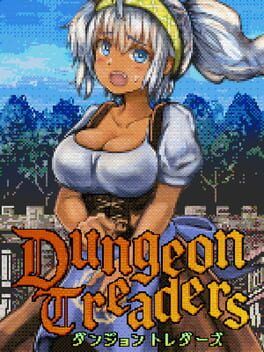

Dungeon Treaders drew attention during Steam Next Fest by mixing Wizardry-style party building with strange humor, custom assets, vocal J-pop, cats, traps, and modern pacing tweaks.
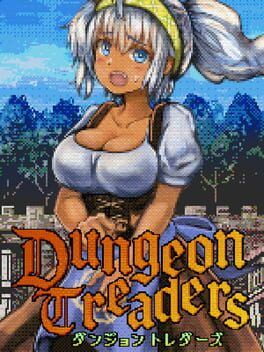
Image: IGDB
Store links: Dungeon Treaders on Steam
A Next Fest DRPG with an unusually loud identity
Dungeon Treaders emerged from the October 2026 Steam Next Fest as one of the more distinctive finds for first-person dungeon crawler fans, according to Shacknews’ November 6 preview. The concrete hook is simple: Studio Kobako is making a Wizardry-inspired dungeon crawler RPG, but the demo described by Shacknews does not present itself with the usual dour stone corridors and hushed menace. It opens with familiar DRPG routines, then immediately starts bending expectations through oddball presentation, custom assets, vocal music, and party interactions that turn even basic class roles into comedy.
That tension is the reason the Dungeon Treaders demo is worth watching if it returns or expands after Next Fest. The game appears to understand the old form: race, class, portrait, first-person dungeon movement, trap handling, rats as early enemies, and party management. Shacknews’ preview frames it as a game that starts “by the book” before its stranger personality takes over. For a niche whose most dedicated players often judge a new entry by mapping feel, attrition, party composition, and the quality of its dungeon interactions, that is a meaningful pitch. Dungeon Treaders is drawing attention because it seems interested in the structure of classic dungeon crawling, not only the nostalgia of it.
There are still hard limits on what can be said. The available source material supports that Dungeon Treaders had a Steam Next Fest demo in October 2026 and that Shacknews played enough to report on its character creation, early combat, music, party chatter, trap interactions, and fatigue or healing systems. It does not provide a final release date, price, supported platforms beyond the Steam demo context, system requirements, total party size, full class list, campaign length, or whether the demo will remain available after the festival window.
The first signal is character creation, not combat
For RPG players, the most revealing part of a DRPG demo is often the character builder. Shacknews reports that Dungeon Treaders begins in typical Wizardry fashion by having the player build a main character through race, class, and portrait selection. That is important because Wizardry-style design usually places long-term consequences early. Race and class are not cosmetics in this tradition; they shape what a party can safely attempt, how it handles traps, how it recovers between fights, and how punishing a bad decision feels two floors later.
The preview’s standout detail is that one selectable race is Cat. Shacknews also notes that nearly half of the demo’s available portraits are realistic cat drawings. That is silly on its face, but it also suggests Dungeon Treaders is putting mechanical and tonal weight behind what could have been a throwaway gag. The cat is not only a portrait option in the previewer’s account. A cat character can occupy a functional party role.
That matters for anyone approaching a future Dungeon Treaders demo with a completionist or build-testing mindset. If the demo returns, character creation should be treated as the first system to examine. Players should look for how races differ statistically, whether class access is restricted, how portraits and custom assets behave, and whether unusual race choices trigger unique dialogue or mechanical complications. Shacknews’ experience with a cat thief suggests the game is willing to let character identity affect how information is delivered, which is a strong sign for players who enjoy party-building consequences rather than purely numerical optimization.
The cat thief detail says a lot about player trust
The most revealing system anecdote in the Shacknews preview concerns traps. The writer created a cat thief because the race’s stat spread seemed to fit the class. In a traditional first-person dungeon crawler, the thief is a practical cornerstone: identify traps, disarm traps, reduce the party’s exposure to hidden punishment, and keep exploration moving. Dungeon Treaders appears to keep that role intact, but then complicates it with the fact that cats do not speak human language.
According to Shacknews, when the cat thief was responsible for trap work, the feedback came through variations of “meow,” while the rest of the party offered guesses and advice. The previewer described having to trust the cat as the professional without being able to interpret the message in the usual way. That is an excellent example of Dungeon Treaders’ design personality because it ties comedy directly to risk. The joke is not separated from the dungeon crawl. It interrupts the flow of a key survival task.
For players, that creates an interesting question if the Dungeon Treaders demo returns in expanded form: does the gag remain readable after repetition, or does it become an actual information-management layer? A one-off joke is charming. A repeatable system needs patterns, consequences, and fairness. If cat speech has consistent meanings, players may learn to parse it like a strange language. If it is intentionally opaque, then the game is asking players to accept uncertainty in a role usually valued for certainty. Shacknews’ preview does not answer how deep that system goes, but the existence of the interaction is enough to make Dungeon Treaders stand out among dungeon crawler RPG demos that rely only on familiar trap prompts.
Modern pacing choices may make the crawl less brittle
Dungeon crawler fans often want danger, but not every player wants the older loop of retreating after every bad fight. Shacknews reports that Dungeon Treaders includes a post-fight healing and fatigue system that lets players push through battles without constantly returning to the surface after rough encounters. That is one of the more important mechanical details in the preview because it points to a specific design priority: preserving attrition without making every stumble a hard reset.
In classic DRPG structure, the dungeon is a resource puzzle. Health, spells, inventory space, trap tolerance, and player attention all degrade. If Dungeon Treaders is using fatigue and post-fight recovery to smooth that curve, it could make the demo more inviting for players who love mapping and party planning but bounce off older dungeon crawlers’ harsher early-game economy. The key will be balance. Too much automatic recovery can flatten danger. Too little can make the fatigue layer feel cosmetic. Shacknews’ account is positive on the feel of movement and pacing, but the source does not provide numbers, formulas, or long-term progression data.
The preview also notes an off-kilter camera angle that makes dungeon movement feel different even for players familiar with the genre. Camera presentation can sound secondary, but in first-person dungeon crawling it changes how players read space. A slight visual skew can add identity, disorientation, or energy, depending on execution. Shacknews says moving around feels good, which is encouraging, but players sensitive to grid movement, camera tilt, or navigation clarity should use any future Dungeon Treaders demo to test comfort early rather than assuming the presentation is purely cosmetic.
The music is part of the design pitch
One of Dungeon Treaders’ biggest departures from genre expectation is its music. Shacknews reports that the early battle sequence uses an original J-pop vocal track performed by an up-and-coming VTuber, with English lyrics about the “selfish perversion” of DRPG heroes. The preview describes the choice as startling against what players might expect from a dungeon crawler, where ambiance, low percussion, and oppressive atmosphere are more common.
That musical choice will likely divide players, and that division is worth acknowledging plainly. For some DRPG fans, strong vocal music and constant personality can make the dungeon feel alive. For others, it may compete with the meditative rhythm of mapping, checking walls, counting steps, and managing party status. Shacknews also reports that Dungeon Treaders supports custom music files for custom background music, though the previewer suggests players may not want to replace the original soundtrack once they hear what the game is doing.
The custom asset support extends beyond music. Shacknews says players can upload custom character assets, with the usual practical caveat that players need to deal with dimensions and setup. That feature is a natural fit for the DRPG audience, where players often bring their own party concepts, tabletop characters, or themed runs. If the Dungeon Treaders demo returns, build-focused players should test how robust those custom options are, but they should also give the default presentation a fair pass. Based on Shacknews’ account, the soundtrack and portraits are not incidental decoration. They are part of how Studio Kobako is differentiating the game.
A small niche gives strange games room to stand out
The broader context around Dungeon Treaders is that first-person dungeon crawlers remain a niche inside the larger RPG market. Shacknews’ previewer says they routinely seek out DRPGs during Steam Next Fest and have only been “kind of successful” because the genre is limited in number. The same preview also notes that skipping games with AI disclosures made that search harder for this genre during Next Fest. That is one outlet’s reported browsing experience rather than a market study, but it captures the practical reality for players: if you are specifically looking for grid-like, party-building, Wizardry-descended dungeon crawlers, every promising demo gets extra scrutiny.
The Reddit source material provided for this assignment is not about Dungeon Treaders, so it should not be treated as evidence of interest in this game. It does, however, show how broadly players use the phrase “dungeon crawling,” with commenters naming everything from Legend of Grimrock to Dark Souls, Dragon’s Dogma: Dark Arisen, Diablo 2, Grim Dawn, Path of Exile, and Labyrinth of Refrain. That breadth creates a discovery problem for a game like Dungeon Treaders. A player searching for a dungeon crawler RPG may want real-time action, loot grinding, puzzle rooms, tactical party management, or old-school first-person mapping. Dungeon Treaders, as described by Shacknews, sits closer to the Wizardry and DRPG branch, even as its presentation pushes against that branch’s stern reputation.
That makes its Next Fest reception interesting. Dungeon Treaders is not drawing attention because the source material promises a massive feature list or a famous license. It is drawing attention because the demo reportedly communicates identity quickly. Race and class selection, custom portraits, cat party members, trap dialogue, party chatter, off-angle movement, post-fight recovery, fatigue, and vocal battle music all appear before any claims about endgame depth or campaign scale. For a niche audience trained to evaluate systems fast, that is an efficient first impression.
If the demo returns, test the systems instead of rushing the vibe
Players interested in a future Dungeon Treaders demo should go in with the right questions. The confirmed Next Fest preview suggests a game with real affection for old DRPG structure and a willingness to be strange. What remains unconfirmed is how far those ideas extend beyond the demo slice. Shacknews does not report the full class roster, dungeon count, progression ceiling, release window, monetization, localization scope, controller support, or final platform list.
The most useful way to approach the demo, if it returns or expands, is to test decisions that could affect a full playthrough. Try a conventional race and class combination, then try something stranger like the cat thief example Shacknews described. Listen for whether party chatter repeats too often or meaningfully reacts to your setup. Pay attention to how fatigue and post-fight healing alter your willingness to continue deeper. Check whether custom portraits and music are easy enough to use for a long-term party. Most of all, test whether the game’s jokes remain connected to mechanics, because that connection is what made the Shacknews preview notable.
Dungeon Treaders currently looks like a promising curiosity rather than a fully measurable RPG proposition. The Dungeon Treaders Next Fest showing, as reported by Shacknews, gives dungeon crawler fans concrete reasons to keep it on their radar: familiar bones, unusual presentation, and systems that seem eager to make party choices matter in playful ways. Until Studio Kobako or a storefront listing provides fuller release details, the smart position is cautious interest. Wishlist it if Wizardry-style dungeon crawling with a bolder personality sounds appealing, but wait for a returning Dungeon Treaders demo or expanded public build before making assumptions about long-term depth.