
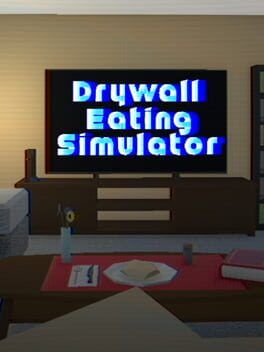

How Drywall Eating Simulator fits into the rise of weird, work-adjacent sims, why it blew up with streamers, and where patches have helped or hurt its messy, crunchy charm.
Drywall Eating Simulator sounds like a throwaway joke, the kind of thing you see in a meme tweet and then never think about again. Instead, it has landed squarely in the growing wave of “mundane job / absurd sim” games that keep going viral on PC and streaming platforms. It is not just about eating drywall. It is about being trapped in an endless loop of irritating neighbors, small‑scale life hassles, and the cathartic release of literally ripping through the walls of the place that stresses you out.
The setup is simple. You wander a dingy apartment complex in first person, dealing with a rotating cast of people whose entire purpose appears to be to waste your time. A meter quietly tracks your rising frustration. When your “Stress Buddy” fills up, specific wall sections glow and become edible. Chomping through them lets you vent, reveals shortcuts, and opens up new parts of the building. It is equal parts walking sim, adventure game, and punchline.
Underneath that punchline, though, is the same appeal that turned games like House Flipper, PowerWash Simulator, OnlyCans, and even Goat Simulator into streaming darlings. They take something recognizable and routine, then twist it just enough that it becomes surreal. PowerWash Simulator makes cleaning a driveway feel like a spa day for the brain. OnlyCans leans on faux‑thirst marketing until the simple act of opening a can becomes a parody of itself. Goat Simulator takes open‑world chaos and filters it through something as dumb as a goat that simply will not obey physics. Drywall Eating Simulator slots neatly into that lineage by translating everyday micro‑aggressions into a physical, crunchy mechanic.
That makes it perfect fodder for streams. The core loop is inherently relatable and visual: you get annoyed, the walls light up, you bite a hole straight through your surroundings. Streamers can milk that escalation, exaggerate their frustration along with the Stress Buddy, and then deliver the payoff in a shower of plaster. It is a game that does not require much explanation. Viewers understand the joke the second they see someone gnaw a human‑sized tunnel through their living‑room wall, and the apartment setting makes it easy to project your own landlord and neighbor horror stories onto every scene.
Drywall Eating Simulator also taps into the same quietly bleak humor that helps other mundane sims stand out. Where many job‑adjacent sims are about tidying, optimizing, or making money, Peripheral Playbox leans into the idea that sometimes the only thing you can control is how you choose to break things. You do not get a paycheck for your drywall diet. You get temporary relief and a slightly different path to the next inconvenience. It is catharsis as a dead end, which lands surprisingly hard when you chain together a few levels of petty annoyances and slightly pathetic victories.
The problem is that the game around that strong central idea still feels held together with duct tape and putty. Early on, players bumped into technical issues and progression problems that undercut the vibes entirely. Siliconera’s early impressions describe sluggish camera controls on handheld PCs like Steam Deck, to the point where basic exploration felt like steering through molasses. On a laptop the same sections were smooth enough to be unremarkable, which suggests that optimization and sensitivity tuning were not a priority for portable hardware. For a game that asks you to comb every hallway and room for the next annoyance trigger, wrestling the camera is a fast way to turn comedy into chore.
Bugs and softlocks were another recurring complaint. The first couple of levels are built around a “talk to everyone, poke everything” structure, which is fine until flags fail to trigger or the game simply forgets to update your objective. Drywall Eating Simulator tries to keep you on track with a Questlog text file that lists basic goals and hints. When it works, it gives just enough structure to keep the aimless wandering from feeling completely random. When it desyncs and never updates after an event, it leaves you circling the same corridors, wondering whether you missed a door or the game just broke.
To the developer’s credit, patches have improved some of the worst rough spots. Early updates addressed the most critical softlocks, especially in the first two levels, and made the edible walls more visually distinct. In the launch version, it was easy to assume you could chew through any surface, then get confused when only certain wall tiles counted as “food.” With better color contrast, clearer highlighting, and a more consistent glow effect when the Stress Buddy fills, the path forward is less opaque. The opening stretch now plays closer to what it wants to be: a scruffy, weird little adventure with occasional drywall feasts instead of a bug hunt.
The issues are not entirely gone, though. Later levels still have a reputation for misbehaving, with reports of hard locks and broken progression logic especially around the fourth area. The joke wears thinner there as repetition ramps up. You have already internalized the loop of “annoyance, stress, bite wall” and the game struggles to introduce new twists at the same pace that its glitches test your patience. Where something like Goat Simulator leans into physics chaos so that every bug becomes content, Drywall Eating Simulator presents itself more as a structured narrative experience. That means a broken trigger is not funny. It is just a dead end.
There is also a broader pacing issue that no patch has fully solved yet. Mundane sims tend to succeed when they either embrace meditative repetition or become reactive toy boxes. PowerWash Simulator is about slow, incremental satisfaction. House Flipper is a grind but one with steady, visible improvement. Goat Simulator and OnlyCans are the opposite, depending on surprise and escalating absurdity. Drywall Eating Simulator tries to sit in the middle, pacing its jokes and frustrations across discrete levels with set objectives. When it cannot keep that rhythm, downtime between laughs stretches out and the core gag of eating drywall does not quite have enough variety to carry the slack.
Even so, it fits into a trend that clearly is not going away. Niche sims thrive on PC and streaming platforms because they are cheap to make, highly memeable, and easy to share in short clips. They promise an instantly understandable hook that social media can latch onto in a sentence or a GIF. At the same time, they offer enough depth or weirdness that a two‑hour stream can find unexpected moments beyond the initial joke. Drywall Eating Simulator is a case study in what happens when that balance teeters. The hook and the mood are strong enough to fuel clips and highlight reels, but the underlying structure needs to be just as sturdy as the walls you are devouring.
If Peripheral Playbox keeps iterating, the game could settle into a comfortable spot alongside its oddball peers. Better performance tuning for handheld PCs would go a long way, especially given how many streamers like to capture footage directly from devices like Steam Deck. More robust fail‑safes around quest triggers and clearer feedback when you have actually exhausted a level’s events would also help nudge players away from frustration toward the kind of exasperated laughter the premise deserves. There is a version of Drywall Eating Simulator where each bitten wall feels like a punchline rather than a symptom of a shaky build.
As it stands today, it is a fascinating, uneven entry in the mundane absurd sim wave. It gets the emotional texture right, from the cloying politeness of neighbors who talk too long to the sick satisfaction of seeing your stress physically carved out of the environment. It just struggles to make the act of reaching those moments feel consistently smooth. In a genre built on turning everyday tedium into something strangely satisfying, Drywall Eating Simulator understands the assignment conceptually. The remaining work is making sure the plaster holds together long enough for the joke to fully land.