
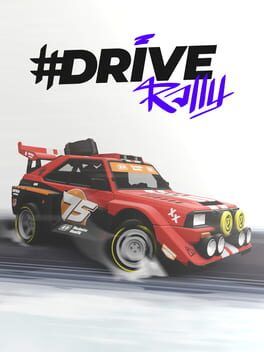

We break down #Drive Rally’s arcade handling, console content offering, and how it stacks up against classics like Sega Rally and Colin McRae to see if it fills today’s rally racing gap.
A 90s Rally Fantasy Comes To Consoles
#Drive Rally has finally pulled off the dusty PC track and slid onto consoles, bringing its stylized 1990s rally fantasy to PlayStation, Xbox, and Switch. It is pitched as a throwback to Sega Rally and early Colin McRae, with a focus on bright visuals, exaggerated drifts, and short stage blasts rather than hardcore simulation. The question is whether its handling and content offering are strong enough to make it more than a nostalgic novelty in a crowded racing market.
Handling: Accessible Arcade First, Nuance Second
The core of #Drive Rally is its handling model, which very clearly sits on the arcade side of the spectrum. Cars have light, snappy steering, generous grip, and an eagerness to slide. You can throw a car into a corner, tap the brakes or lift, and it will happily rotate into a long, controllable drift. Weight transfer is present enough to feel satisfying when you link corners, but it is not punitive. The game wants you to stay in that flow state of constant slides and boost-like acceleration rather than punish you for imperfect inputs.
What stands out is how approachable the package is for newcomers. On standard assists, the cars feel glued to the road, with forgiving braking distances and wide slip angles before things go wrong. Experienced players can start to find more nuance by dialling down assists, pushing for cleaner lines, and shaving seconds off time trial runs. It is still nowhere near Dirt Rally levels of depth, but there is just enough subtlety in how different surfaces and weather conditions affect grip to encourage replaying stages.
If you are coming directly from something like EA Sports WRC or Dirt Rally, #Drive Rally will feel floaty and almost toy-like at first. Once you adjust your expectations and lean into its cartoonish sense of speed, it clicks. The handling is closer to Sega Rally or OutRun 2 than to modern sims. You are meant to react fast, trust the co-driver calls, and snap the car into slides rather than carefully feathering throttle and steering.
Rally Stages And Surface Variety
The stage design supports this arcade-first approach. Courses are short to medium-length, typically built around a handful of memorable corners, jumps, and visual landmarks instead of real-world rally routes copied meter for meter. They are designed to be repeated until you are chaining drifts by muscle memory.
Surface variety covers the rally staples: tarmac, loose gravel, dust, mud, and snow. Each has a distinct feel, though the differences are exaggerated for clarity. On gravel, the rear starts to break loose earlier, encouraging big entries and long drifts. Snow widens stopping distances and makes even gentle bends feel risky if you push too hard. Tarmac gives the highest grip and rewards cleaner, more traditional racing lines. It is a simplified model, but it serves the pace and readability that an arcade racer needs.
Weather effects are largely visual but help with atmosphere. Heavy rain or snowstorms change the vibe of a stage and slightly tweak traction, but you are not managing tire compounds or realistic degradation. #Drive Rally wants you to think in terms of high-speed improvisation, not engineering.
Co-Drivers And Personality
A big part of the game’s feel comes from its co-drivers. Rather than dry pace notes, #Drive Rally uses talkative, stylized copilots who inject running commentary as you race. They blend actual rally calls with banter and context, leaning into the 90s arcade presentation.
The result is a game that constantly talks to you, which will either charm or annoy depending on your tolerance. On the positive side, the chatter helps less experienced players anticipate corners and creates a more character-driven experience than most rally titles. On the negative side, the repetition starts to show when you grind stages for better times, and some players will likely turn voice volume down once they have internalized the layouts.
Cars And Customization
The car roster is not on the scale of a Forza or WRC title, but it hits the right nostalgic notes. Vehicles are clearly inspired by real 80s and 90s rally legends without using official licenses. Boxy hatchbacks, wedge-shaped Group B monsters, and chunky sedans all show up with exaggerated proportions and bold liveries that match the stylized art.
Each class has a different character, with slower early cars emphasizing stability and later machines feeling much more tail-happy and demanding. Tuning is minimal and geared toward quick tweaks rather than deep setup work. You can adjust broad parameters to nudge a car toward more stability or more rotation, but there is no granular suspension or differential tuning to get lost in. Cosmetic customization is similarly straightforward, focused on colors and liveries rather than building a fully personalized machine from scratch.
This light approach fits the arcade philosophy but also caps long-term engagement for players who enjoy building and optimizing cars over dozens of hours.
Modes And Content Offering On Consoles
On consoles, #Drive Rally arrives as a mostly feature-parity build compared to its PC version, including its main campaign mode and single race options. The campaign has you working through themed events across different regions and biomes, unlocking cars and stages as you go. Events tend to stick to classic rally structures: point-to-point runs and time-based rankings rather than full-blown championship weekends.
Beyond the campaign, single-stage time trials are the real heart of the experience. The game pushes you to replay your favorite routes to shave milliseconds off your times, learn better entry speeds, and perfect drift timing. For pickup-and-play console sessions, it works well, especially on handheld Switch where short runs slot comfortably into commute or couch breaks.
What you will not find are the deeper systems that anchor long-term progression in other racers. There is no career-building meta with team management, sponsor contracts, or car reliability systems. Online functionality is centered around leaderboards rather than robust competitive multiplayer structures. Local or split-screen play is not the headline feature, which might disappoint those hoping for couch rivalry.
On the technical side, #Drive Rally fares reasonably well on consoles. The stylized visuals are not overly demanding, so performance on PlayStation and Xbox is solid, with smooth frame rates that keep the sense of speed intact. On Switch, there are compromises in resolution and effects quality, but the game remains playable and appealing in handheld mode. The art style does a lot of work to hide the cutbacks.
How It Stacks Up To Classic Rally Racers
Comparisons to Sega Rally, Colin McRae, and the original Dirt games are baked into #Drive Rally’s DNA. Those classics were easy to pick up but surprisingly deep once you started chasing tenths. They also struck a balance between authentic rally structure and arcade accessibility.
#Drive Rally successfully captures the surface-level feel of that era. The bright colors, bold UI, and drifty handling immediately evoke the Sega Rally energy. Stages are built to be memorable, not strictly realistic, and the soundscape of engine notes and co-driver calls channels that mid-90s arcade cabinet spirit.
Where it falls short of the classics is in depth and structure. Sega Rally and early Colin McRae titles had tighter, more demanding physics once you climbed the difficulty ladder, and their championship modes stitched individual stages into meaningful campaigns. #Drive Rally instead feels like a series of stylish highlight reels. Fun to repeat, satisfying to master in the short term, but not as cohesive when you zoom out.
That said, comparisons to modern sim-adjacent rally games are not entirely fair. Against heavyweights like EA Sports WRC or the Dirt Rally series, #Drive Rally is more of a side dish than a direct competitor. It is built for players who want the nostalgia of old-school rally vibes without the commitment of learning every nuance of modern physics models.
Does It Fill A Gap In Today’s Racing Market?
The rally space today is dominated by two poles: serious, licensed sims on one end and ultra-casual mobile racers on the other. There are indie arcade rally games in the mix, but relatively few sit specifically in the lane #Drive Rally is targeting, especially on consoles. Its pitch is clear: capture the exciting, approachable spirit of 90s arcade rally within a modern indie package.
To a point, it succeeds. For players who miss the days when you could jump into Sega Rally for ten minutes, carve through a few colorful tracks, and feel like a hero, #Drive Rally scratches that itch. It offers a low-friction entry point for newcomers, especially on Switch where its pick-up-and-play design is a natural fit. On PlayStation and Xbox, it works well as a palette cleanser between heavier racing or action games.
However, the same simplicity that makes it approachable also limits its staying power. With a relatively modest car list, streamlined customization, and a campaign structure that leans more on repetition than variety, dedicated racing fans may run out of reasons to return once they have climbed the leaderboards on their favorite stages. In a market where even arcade racers increasingly layer on progression systems and live updates, #Drive Rally feels conservative.
So does it fill a gap? For a specific audience, yes. If what you want is a breezy, console-friendly arcade rally game with strong 90s vibes, pick-up-and-play handling, and enough nuance to keep time trial fans engaged for a while, #Drive Rally lands right where the current big-budget scene does not go. If you are looking for a modern successor to Sega Rally or Colin McRae in terms of both feel and content depth, this is more of a stylish tribute than a full replacement.
Verdict
On consoles, #Drive Rally is an enjoyable, personality-rich rally throwback with handling that prioritizes fun over fidelity. It evokes classic arcade greats through its drifty physics, vibrant presentation, and bite-sized stages, and it makes a strong case as a secondary racer for your library rather than your mainstay.
If you come in knowing that this is a light, flashy rally experience focused on sliding and stage repetition rather than simulation and long careers, it can absolutely earn a spot on your console’s racing rotation. Just do not expect it to be the definitive answer for fans still chasing the high of their favorite classic rally games.