
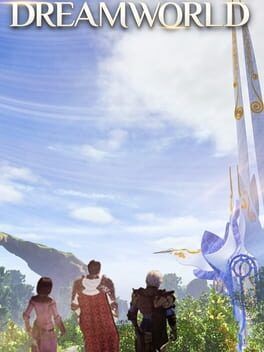

After years of drama, the “infinite sandbox MMO” DreamWorld has actually launched on Steam Early Access. Here’s what is really live, why skepticism remains high, and what players should watch before calling this a comeback.
DreamWorld actually did it.
After years of drama, viral Reddit threads and missed promises, the self‑described “infinite sandbox MMO” has arrived on Steam Early Access with its March 10 launch window intact. For a project that many in the MMO community had written off as vaporware, simply existing on Valve’s storefront is a plot twist.
But an appearance on Steam is not the same as vindication. Between a rocky Kickstarter legacy, low initial player counts and persistent questions about scope and tech, DreamWorld’s comeback attempt is very much a work in progress.
From infamous Kickstarter to second Early Access run
DreamWorld’s story has been circulating in MMO circles since 2021, when the team pitched it as “the last game you’ll ever play.” The promise was a single, shared, infinite world where everyone could build, battle and explore together. It was the kind of aspirational pitch that lights up crowdfunding pages and immediately raises eyebrows among veteran MMO players.
The game did reach an Early Access state before, in 2022, via direct download on PC. That build drew criticism for bugs, performance issues and rough features that did not match the confident marketing. Controversies around the Kickstarter, accusations about overpromising and questions about development practices only compounded the community’s distrust.
The Steam launch in March 2026 is effectively DreamWorld’s second shot at an Early Access debut, this time with a much larger spotlight and a formal partnership with publisher MARBLEX to help carry it onto Valve’s platform.
What’s actually live on Steam right now
The Steam Early Access build presents DreamWorld as a creative‑first sandbox MMO. The pitch focuses less on traditional questing and more on building and social play.
Players spawn into a single, shared world that is procedurally generated and designed to expand as the population grows. There are no conventional server shards; everyone logs into the same universe. Within that world, you can claim land, build structures using robust in‑game tools, explore new biomes and interact with other players.
Combat, farming and crafting systems are present but currently play a supporting role. The developers emphasize that this is an Early Access work in progress, with the initial experience skewing toward a creative mode where you experiment with tools more than chase traditional MMO progression.
One of the most heavily promoted features is DreamWorld’s generative AI integration. Players can type text prompts to have the game generate 3D objects that slot into their builds. On paper, that gives ambitious creators a shortcut to filling out their towns, dungeons or social hubs without traditional modeling experience.
On the technical side, DreamWorld now runs in Unreal Engine 5, with the team promising that their architecture allows thousands of players to share the same world simultaneously. Steam store and community messaging repeatedly stress that this is an evolving platform where systems and performance are expected to change significantly over time.
A quiet launch and mixed early reception
For a game that once dominated MMO discourse, DreamWorld’s actual Steam launch has been surprisingly low‑key.
Public data shows a modest all‑time concurrent player peak hovering in the mid‑double digits around launch week, a far cry from the “millions of players” language that once surfaced in the game’s marketing. User reviews on Steam settled into the “Mixed” range early on, reflecting a split between curious builders and frustrated skeptics.
Players who are positive about the experience tend to highlight the building toolkit and the sheer size of the procedurally generated world. They describe an appealing blank‑canvas feel once you get past the initial onboarding, especially if you are mainly interested in constructing elaborate spaces with friends.
Criticisms, however, are frequent and specific. Reports of poor optimization, performance dips and unstable frame rates are common, particularly in more crowded areas or larger builds. Some players also note that a surprising amount of land appears to have been claimed already, making it harder for new arrivals to find desirable spots.
That last point, land distribution, is particularly sensitive in a game that leans on creation and ownership as selling points. When prime real estate feels locked down early, concerns quickly spread about long‑term viability for latecomers.
The controversy that never really went away
The current build cannot be separated from DreamWorld’s history. Years of criticism have left a mark on how every new announcement is received.
The original Kickstarter and early marketing leaned hard on ambitious language about “infinite” worlds, all players in a single shard and AI systems that would do the work of massive teams. Community sleuthing, YouTube breakdowns and Reddit megathreads picked apart early prototypes and trailers, accusing the project of overselling its progress and underdelivering on technical claims.
Subsequent delays and a relatively quiet communication style only fed suspicions that the game would never get close to the pitch. Even with the 2022 Early Access attempt, many players came away feeling that the gap between promise and reality was still too wide.
Now, with the MARBLEX partnership and a renewed push onto Steam, DreamWorld is trying to frame the last four years as a slow but steady march to this point. Official messaging emphasizes that the game has been in continuous development with community testers and that the Steam build is just a new chapter rather than a fresh start.
For players who watched the drama unfold from the beginning, that framing does not erase the old questions. Can a small team really maintain a single‑shard MMO at scale? How much of the “infinite world powered by AI” idea is truly realized under load and how much is marketing shorthand for procedural generation plus some content tools?
Early Access as shield and opportunity
On Steam, DreamWorld leans heavily on the Early Access label. The store page explicitly calls the current version a work in progress, with a roadmap that includes expanded combat, more activities, better onboarding and continued AI tool improvements.
Used well, Early Access can be a powerful structure for an MMO like this. A slow but steady ramp‑up in players gives the developers room to test server architecture, iterate on systems and let word of mouth rebuild trust if the experience improves. The team has an official Discord and community channels where they say they are taking feedback and shaping priorities.
At the same time, “it is Early Access” can easily become an all‑purpose shield against criticism. When basic performance, UX clarity or core systems feel unfinished years into a project, players are less forgiving of rough edges. The MMO space is full of early access sandboxes that never moved meaningfully forward before quietly winding down.
DreamWorld’s challenge is to prove that this is a true staging phase on the way to a more feature‑complete MMO, not a final resting state where the game lingers indefinitely while expectations are quietly lowered.
What players should watch before calling it a comeback
If you are intrigued by the concept but wary of the history, there are specific signals to keep an eye on before you treat DreamWorld as a genuine redemption story.
First, watch the update cadence and substance. Regular patches that tackle performance, polish basic UI flows and expand gameplay loops will matter more than flashy trailer beats. Early Access success stories usually show clear, transparent iteration over their first six to twelve months on Steam.
Second, pay close attention to communication. How often does the team check in on Steam, social channels and Discord? Are patch notes detailed, and do they acknowledge common criticism from reviews and community posts? A project trying to move beyond controversy needs openness much more than it needs another cinematic trailer.
Third, track how the single‑shard and AI promises hold up over time. As (and if) concurrents grow, does the world remain stable and responsive? Do AI‑generated assets feel like meaningful creative tools or are they a novelty that most players ignore after a few sessions? The answers to those questions will say a lot about whether DreamWorld’s core tech pitch was realistic.
Fourth, keep an eye on how land and ownership are handled. If new players continue to struggle to find space they are happy with, especially without paying extra or grinding excessively, frustration will build quickly. A creation‑centered MMO lives or dies on whether late adopters feel they still have room to make their mark.
Finally, look at retention rather than launch spikes. DreamWorld’s initial Steam peak is small, but what really matters is whether a stable, engaged core community forms around the game. If the concurrent player graph flattens into the low double digits and stays there despite updates, it will be hard to argue that the project has truly turned the corner.
A cautious verdict for now
DreamWorld’s presence on Steam Early Access is a milestone for a project that many assumed would never reach this point. It is proof of persistence, but not yet proof of concept.
What exists today is a niche, creative‑focused sandbox with some interesting building tools, ambitious tech claims and clear performance and trust issues. For builders who enjoy experimenting in rough but evolving worlds, it may already be worth a look, especially if you are comfortable with Early Access caveats.
For everyone else, caution still makes sense. DreamWorld has crossed the threshold from promise to product, but it now has to survive on updates, transparency and the day‑to‑day experience of players rather than big promises. Whether that is enough to rewrite its reputation is a question the next year of development will answer more clearly than any launch day headline ever could.