
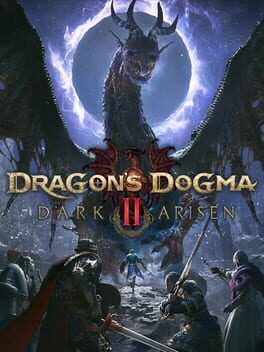

Capcom’s Dark Arisen expansion turns Dragon’s Dogma 2 into a colder, harsher and more replayable adventure, with the frozen region of Norgan, 12 Lost Rites dungeon trials, deeper character creation, and a new endgame loop built around the Fallen Dragon.
A Colder Second Act For Dragon’s Dogma 2
Dragon’s Dogma 2: Dark Arisen is pitched by Capcom as more than a mission pack. It is a full second act for the Arisen, set after the core story, that folds a new region, a bespoke endgame loop and a refreshed character creator back into the existing world. Director Hideaki Itsuno and producer Yoshiaki Hirabayashi describe three pillars for the expansion: a new narrative in Norgan, 12 challenge dungeons called Lost Rites and expanded customization for the Arisen and their main Pawn.
All of it is designed to be tackled with your existing save. Your current Arisen, Pawn roster and progression carry forward, turning Dark Arisen into a late-game escalation rather than a detached side story.
Norgan: The Forsaken Dominion
The centerpiece is Norgan, a long-abandoned northern territory cut off from Vermund’s warmer pastures. Visually it is a hard contrast to the base game, all frozen valleys, ruined fortresses and pale skies. Norgan is built around the Fallen Dragon, a twisted, undying counterpart to the Dragon that anchored the main campaign. You pursue its mystery alongside Eir, an enigmatic new character who drives much of the expansion’s story.
Structurally Norgan plays like a self-contained region layered on top of the existing map. Expect a new hub settlement, surrounding wilderness, bespoke dungeons and side quests that spiral out from your hunt for relics tied to the Fallen Dragon. Capcom describes a Relic Expedition Cycle: you venture into the wilds to track relics, bring them back for appraisal, then use the weapons, armor pieces or skill unlocks they reveal to push deeper into Norgan’s harsher corners.
What makes the region interesting is how it leans into environmental hostility. Norgan’s frigid climate affects visibility and traversal, and monster compositions have been tuned around it. Packs of beasts hunt in snowy whiteouts, flying enemies are harder to track against the sky and towering remnants of ancient structures create vertical arenas that show off Dragon’s Dogma 2’s climbing and knockback systems. It feels less like a simple ice biome and more like a laboratory for late-game combat scenarios.
The Fallen Dragon and Eir
Dark Arisen orbits the Fallen Dragon, a heartless, unkillable creature whose presence twists the land. Unlike the climactic Dragon of the base game, this entity is positioned as an ongoing threat that underpins your entire time in Norgan. Eir, the mysterious woman you track across the region, has her own agenda tied to the Fallen Dragon and gradually reveals why these relics matter and how previous generations of Arisen failed or succeeded against it.
Narratively the expansion is less about a single final showdown and more about uncovering the history of past Arisen, their relics and the forces that shaped Norgan’s downfall. Expect new lore logs, NPC lines and quest chains that fold back into what you already know about the Dragon cycle, without retconning the main story’s core beats.
Lost Rites: 12 Dungeon Challenges For Veterans
Outside Norgan, Dark Arisen injects challenge content directly into the existing world with the Lost Rites dungeons. These are 12 unique instanced areas scattered across Vermund and Battahl, framed as trials laid down by an entity called the Pathfinder.
Each Lost Rites dungeon is built around a specific combat or exploration gimmick. One might emphasize cramped corridors and heavy-armor enemies, pushing you to master guard breaks and stamina management. Another might use vertical shaft arenas with harpies and lesser dragons that demand creative Pawn commands and ranged options. Others lean on traps, environmental hazards or waves of mixed enemy types that test how well you understand vocation synergies.
Capcom stresses that these are not simple copy-pasted caves. Layouts are bespoke, enemy spawns are hand-tuned and rewards are some of the most desirable in the game. The fiction frames the gear you find as weapons and armor once carried by past Arisen, left dormant until you claim them. That means Lost Rites doubles as an endgame gear hunt, not just a proving ground.
For players who hit level cap and were left only with roaming monster hunts, these dungeons give focused, repeatable objectives. They invite experimentation with alternate vocations and party builds, since you can re-enter them to chase faster clears, different drops or self-imposed challenges.
Expanded Character Customization
The original Dragon’s Dogma 2 character creator was already robust, but Dark Arisen broadens it further. Capcom highlights new hairstyles and tattoo options for both the Arisen and their main Pawn, plus deeper facial construction tweaks drawn from feedback after launch.
In practice this means more variety in silhouettes and face shapes, as well as additional sliders and presets that make it easier to hit specific archetypes. If you wanted a scarred veteran with elaborate ink, a high-fantasy noble with elaborate hair or a Pawn whose look mirrors your own more closely, the tools are now there.
Importantly, these options are not locked to fresh saves. You can revisit barber and customization services in-game to rework your existing characters using the expanded toolkit. That encourages returning players to refresh their party’s look as they step into Norgan and the Lost Rites dungeons, reinforcing the sense of a new chapter rather than a disconnected DLC detour.
How Dark Arisen Changes The Flow Of The Base Game
Dark Arisen is woven carefully into the campaign’s structure. It is post-game content by intent; you bring your established Arisen into Norgan with their current level, vocation mastery and quest history intact. Norgan itself, the Relic Expedition Cycle and the Fallen Dragon storyline act as a new spine for your late-game sessions, while the Lost Rites dungeons stitch into familiar regions to give you reasons to revisit earlier zones with a maxed-out toolkit.
The result is a more circular progression loop. You scour Norgan for relics, return with upgraded gear and skills, then tackle Lost Rites dungeons in the base world, which in turn prepare you for deeper relic hunts and tougher encounters tied directly to the Fallen Dragon. This loop extends the life of late-game builds and makes min-maxing vocations, augments and equipment feel newly relevant.
From a systems perspective the expansion also raises the ceiling on what your Arisen can reasonably handle. Late-game enemies sport new resistances and attack patterns that pressure you to experiment with relic-boosted skills or gear from Lost Rites. Pawns are given more situations to demonstrate advanced behavior, whether that means coordinating staggers on towering beasts in Norgan’s ruins or managing crowd control in the Pathfinder’s tight corridors.
A True Endgame Package For Arisen Veterans
Taken together, Dark Arisen turns Dragon’s Dogma 2 into a more complete package. Norgan provides a fresh landmass with a mood of its own, the Fallen Dragon and Eir bring a darker, more introspective story about the legacy of Arisen, Lost Rites dungeons give high-level players bespoke challenges across the old map and expanded character customization lets you reintroduce your Arisen as they enter this new chapter.
For players who loved the feel of Dragon’s Dogma 2 but wished for more post-game structure, Dark Arisen is positioned as that definitive expansion. It does not reset your journey so much as knot a new, colder thread through it, pushing your existing Arisen to see just how far their legend can stretch.