
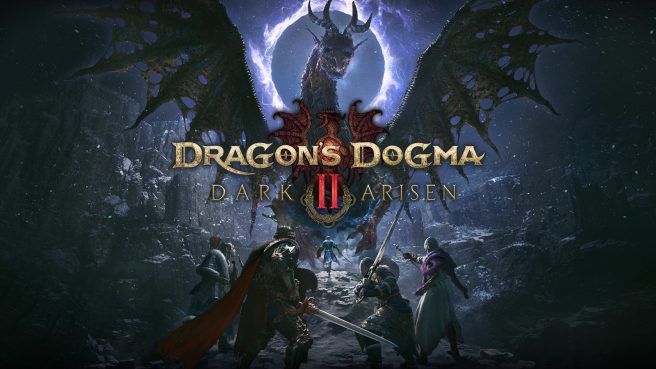
Capcom says Dragon's Dogma 2: Dark Arisen targets 30 FPS on Switch 2, with frame generation used for 60 FPS-equivalent visuals. Here's what that says about performance expectations and future third-party ports.
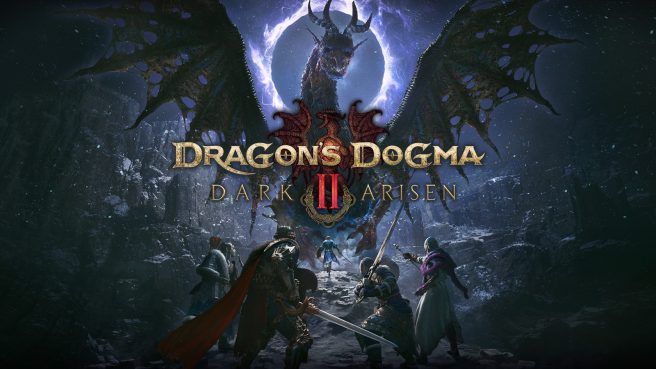
Image: nintendoeverything.com
Capcom is using frame generation to sell smoothness on Switch 2
Capcom producer Naoto Oyama has confirmed that the Switch 2 version of Dragon's Dogma 2: Dark Arisen targets 30 frames per second in both handheld and TV modes, with a frame generation option used to create visuals Capcom describes as equivalent to 60 FPS. The detail comes from an interview with Famitsu, translated and reported by Nintendo Everything and Nintendo Life, and it immediately reframes what players should expect from Dragon's Dogma 2 performance on Nintendo's new hardware.
The important distinction is that Capcom is not saying the Switch 2 version renders a native 60 frames per second. Oyama described the base frame rate as 30 FPS, then explained that frame generation interpolates additional frames between those rendered frames. In practical terms, the image may look smoother in motion, but the game is still built on a 30 FPS foundation.
That creates the tension around Dragon's Dogma 2 Switch 2. Capcom is bringing one of its more demanding open-world action RPGs to a portable Nintendo console, but it is doing so with a technique that improves perceived motion while carrying tradeoffs. Oyama acknowledged that interpolation can struggle in certain situations and that Capcom has confirmed cases where slight ghosting remains. The final release will let players turn the feature on or off at any time, according to the translated interview. The demo version discussed in the interview had frame generation fixed on.
A 60 FPS-equivalent image is different from a 60 FPS game
Frame generation is easy to misunderstand because the marketing language lands close to what players want to hear: 60 FPS. Oyama's explanation, as translated by Nintendo Life via Nintendo Everything, is more precise. The technology calculates what would happen if another frame existed between two rendered frames, then inserts that interpolated image into the output. Capcom's pitch is that the entire presentation can feel like 60 FPS, even though the game is producing new rendered frames at a 30 FPS target.
That distinction matters in an action RPG built around reaction, spacing, and the weight of commitment. Dragon's Dogma 2 combat is about reading large enemies, climbing into danger, timing evasive movement, and accepting the chaos of pawns, monsters, terrain, and spell effects all crashing into the same encounter. Smoother camera motion can make those fights easier to parse, especially when a cyclopean set-piece fills the screen and the player is trying to keep orientation. But generated frames do not automatically reduce the time between input and a newly rendered game state.
Notebookcheck, reporting from Tokyo Game Show 2026 coverage and citing comments from Oyama, said players may encounter artifacts or higher latency with this kind of technique, while also noting that the studio has optimized performance to minimize input lag. That is the core tradeoff. Frame generation can make the road, the cloak, the monster's swing, and the camera pan look cleaner. It cannot be treated as the same thing as a game designed and rendered at a native 60 FPS from the ground up.
Capcom appears to understand that distinction, which is why the toggle is important. Players who prefer visual fluidity can use frame generation. Players sensitive to ghosting, artifacting, or input feel can disable it and fall back to the 30 FPS target.
The earlier 30 FPS reports were not wrong, but the picture changed
Before the Famitsu interview circulated, the Switch 2 version had already been described in 30 FPS terms. Shane the Gamer reported that Capcom showed Dragon's Dogma 2: Dark Arisen to press at Gamescom, where a handheld boss-fight demo was locked to 30 FPS according to a hands-on from T3. That report also listed an October 9, 2026 launch and said the release was coming to PC, PS5, Xbox Series X|S, and Switch 2, with a standalone price of $29.99 attributed to Game Rant.
The newer Capcom comments do not erase that earlier performance picture. They clarify it. The base target remains 30 FPS in handheld and TV modes, according to Oyama. Frame generation is layered on top for players who want a smoother-looking presentation. In other words, the Switch 2 port is not moving from a 30 FPS target to a native 60 FPS target. It is offering a 30 FPS target with an optional visual interpolation path.
There is also a small naming wrinkle in the reporting. Nintendo Everything's headline and quoted material refer to Dragon's Dogma 2 and Dragon's Dogma 2: Dark Arisen, while one line in its article text drops the “2” when describing the Switch 2 version. The surrounding coverage from Nintendo Life, Notebookcheck, and Shane the Gamer all frames the release as Dragon's Dogma 2: Dark Arisen. Based on the provided source material, the performance discussion concerns the Switch 2 version of Dragon's Dogma 2: Dark Arisen.
Capcom's first Switch 2 frame generation game is a signal to other publishers
Nintendo Everything reports that this is the first Capcom game on Switch 2 to use frame generation. Nintendo Life also notes Oyama described it as the first time Capcom has added the technology to one of its Switch 2 games. That makes Dragon's Dogma 2: Dark Arisen a test case, not only for Capcom's porting pipeline, but for how third-party publishers talk about ambitious Switch 2 conversions.
The likely pattern is starting to come into focus through the supplied reports. Notebookcheck says Stellar Blade is another upcoming Switch 2 release using frame interpolation, and Nintendo Life also points to Stellar Blade as a recent example. If major third-party games use frame generation to bridge the gap between demanding current-generation design and Switch 2's hybrid form factor, players will need to read performance claims more carefully than they did in the old binary of 30 FPS versus 60 FPS.
For publishers, the incentive is obvious. A 30 FPS base target may be more achievable for large open-world or high-fidelity action games on a portable system, while frame generation gives trailers, demos, and docked play a smoother apparent cadence. For players, the risk is equally plain. A 60 FPS-equivalent label can blur the difference between native responsiveness and interpolated motion unless developers are as direct as Oyama was about the base frame rate, the toggle, and the artifacts.
That transparency may become the new standard players should demand from Switch 2 third-party ports: state the base frame rate, state whether frame generation is optional, state whether handheld and TV modes differ, and explain known side effects. Capcom has provided several of those answers here. Resolution remains less clear in the provided material.
Resolution, upscaling, and the unanswered technical questions
The sources give a stronger picture of frame rate than resolution. Notebookcheck reports that the publisher had earlier indicated the port aims for a 2K graphical output on Switch 2, but native resolutions in docked and handheld modes are not clear. The same report says Dragon's Dogma 2 uses DLSS like other Capcom RE Engine projects on Switch 2, while also describing the frame generation implementation as FSR frame generation and an FSR 3.1-related feature.
Those details point to a layered technical approach: render at a manageable base performance target, use upscaling to reach the output image, then use frame generation to smooth perceived motion. The provided sources do not include a full Capcom technical breakdown of internal resolution, docked-versus-handheld pixel counts, or whether every visual setting remains consistent across modes. They also do not include independent frame-time analysis of the final game.
For an action game, the missing data is not academic. A locked 30 FPS with consistent frame pacing can feel better than an unstable higher target. A clean upscale can preserve enemy readability during night fights, spell effects, and crowded ambushes. A poor interpolation pass can smear motion at the exact moment the player needs to read a monster's tell. Oyama's admission of slight ghosting is useful because it sets expectations before launch, but the final judgment depends on how often those artifacts appear during real exploration and combat, not only in a show-floor demo.
Capcom's decision to allow players to switch frame generation off in the final product is the practical safeguard. It gives the port a performance preference rather than a single forced presentation, which is especially valuable in a game where comfort, camera motion, and combat timing all shape the experience.
Buying guidance before the October release
Based on the supplied reporting, Dragon's Dogma 2: Dark Arisen is scheduled for October 9, 2026, with Shane the Gamer reporting a $29.99 standalone price attributed to Game Rant and platforms listed as PC, PS5, Xbox Series X|S, and Switch 2. Nintendo Life also reports that a character creator and storage app is already available on the Switch 2 eShop, allowing players to create characters and transfer them to the full game when it arrives.
If you are deciding whether to buy on Switch 2, the clearest confirmed fact is that Capcom is targeting 30 FPS as the base in both handheld and TV play. The frame generation option is for players who prefer a smoother-looking image and are willing to accept possible ghosting or other interpolation artifacts. If you are sensitive to input latency, fast camera motion, or visual artifacts, the toggle should be central to your decision.
The open question is how the final build behaves outside curated demos. Notebookcheck notes that Dragon's Dogma 2 is demanding on PS5 and Xbox, which makes the Switch 2 port technically interesting but also raises the bar for scrutiny. The smartest move for cautious players is to wait for final performance testing that measures frame pacing, input feel, image quality, and how the frame generation toggle behaves in dense battles and open-world traversal.
For Switch 2 Capcom support, this is a notable marker. Dragon's Dogma 2 frame generation shows how publishers may bring heavier games to Nintendo's hybrid hardware without promising native 60 FPS rendering. If the implementation is clean, it could widen the lane for future Switch 2 third-party ports. If the artifacts or latency are too visible, it will become a reminder that generated smoothness is still a compromise players can feel when the fight closes in.