
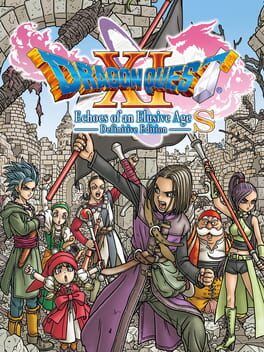

A fresh Taiwan rating has Dragon Quest XI S fans watching Switch 2 closely. Here is what the leak likely means, what upgrades the RPG most needs on new hardware, how a potential upgrade path could work, and why the timing near Dragon Quest Day matters.
A new Taiwan ratings board listing has quietly turned Dragon Quest XI S: Echoes of an Elusive Age – Definitive Edition into one of the most interesting early Switch 2 "watch" titles. The classification specifically mentions Nintendo’s next system, effectively outing a version of the game that Square Enix has not announced yet. Ratings leaks are not always a guarantee of imminent release, but in the current context of Switch 2 preparations and Dragon Quest’s own calendar, this one carries more weight than usual.
The original Nintendo Switch release of Dragon Quest XI S in 2019 was already a generous package. It brought the full adventure to portable hardware with orchestrated music, expanded character vignettes, the retro 2D mode based on the 3DS version, and Japanese voice acting. All of that content is expected to carry over, since the Taiwan listing does not reference any subtitle suggesting a new edition. That makes this feel like a targeted technical upgrade, not a DLC laden relaunch.
Technically, Dragon Quest XI S is one of the clearest candidates to benefit from a new Switch platform. On the current Switch, the game holds up artistically thanks to Toriyama’s bold character designs and the clean, colorful aesthetic, but the underlying resolution and performance often show the limits of the hardware. Image quality in 3D mode can look soft, especially docked, with noticeable aliasing and a dynamic resolution that dips in busy scenes. Handheld play fairs better due to the smaller screen yet still relies on aggressive resolution scaling.
A Switch 2 version could attack those compromises directly. A locked or near locked 1080p output in handheld mode would immediately sharpen towns and battle scenes, helping Akira Toriyama’s art pop the way it does on higher end platforms. Docked, players would reasonably hope for something in the 1440p to 4K range, depending on how conservative Square Enix wants to be with their target. Even if the studio pursues a dynamic solution, the floor should be far higher than on the original system.
Beyond resolution, Dragon Quest XI S would benefit dramatically from more consistent performance. The turn based combat is playable even when frame rates stumble, but exploration stutters and camera panning in detailed areas can be distracting. A stable 60 frames per second would be the ideal scenario, bringing the Switch 2 release in line with other modern versions and giving menus, battles, and field traversal a noticeably more responsive feel. If Square Enix prioritizes visual bells and whistles and opts to cap at 30 frames, the community will expect that cap to be rock solid.
There is also room for cleaner assets and post processing. Texture quality on foliage, stonework, and clothing is one of the more obvious places where the current Switch version trails the PlayStation, Xbox, and PC ports. Higher resolution textures, coupled with better texture filtering and refined anti aliasing, would make long vistas over Erdrea look far closer to the versions fans saw on more powerful consoles. Improved draw distance and less aggressive level of detail swaps would help towns and fields feel alive without objects popping into existence near the player.
Importantly, any Switch 2 upgrade needs to respect what makes the S version special. The 2D mode is a massive nostalgic hook, and on stronger hardware it should be possible to switch between 2D and 3D with less loading friction, if Square Enix is willing to touch that part of the game. Faster load times in general, aided by solid state storage, are another easy win. Even without new dungeons or story content, reducing the wait between battles, fast travel points, and cutscenes would reshape the feel of this long RPG.
The lingering question for existing owners is whether they should expect a paid or free path into a Switch 2 upgrade. Historically, Square Enix has not settled on one single approach. Dragon Quest XI itself has an unusual history: the original release on PS4 and 3DS was followed by Dragon Quest XI S on Switch with substantial additions, then that definitive version was released on other platforms as a standalone purchase. Owners of the original had to buy the S edition again if they wanted the expanded content. That precedent leans toward a paid release rather than a no strings attached next gen patch.
At the same time, platform level expectations have shifted. Players on other ecosystems have grown accustomed to free upgrade paths or low cost upgrade tickets when a game crosses generations. Because this potential Dragon Quest XI S release appears to be the same content set wrapped in higher specs, a full priced standalone product could be a hard sell for players who already bought it once on Switch. A more palatable scenario would be a modestly priced upgrade option for existing digital owners and a standard priced complete edition for newcomers. Physical collectors might see a new print run that quietly replaces the old SKU at retail.
There is also a question of save data and progression. If Nintendo facilitates easy save transfer from original Switch to Switch 2, pressure will increase on publishers to treat upgrades as continuations rather than resets. For an RPG that can easily stretch past 100 hours, the promise that your old save will carry forward into the enhanced version could be a bigger selling point than any single visual upgrade.
What makes the Taiwan rating particularly interesting is its timing relative to Dragon Quest Day. Celebrated each year in late May, Dragon Quest Day is when Square Enix often acknowledges the series, shares updates, or at least drops small teases about what is next. With enthusiasm already building around the eventual launch of Dragon Quest XII and long fan requests for updates on other projects, a Switch 2 version of Dragon Quest XI S could slot in as a crowd pleasing announcement that keeps the brand active on Nintendo hardware.
A Dragon Quest XI S upgrade also neatly ties Nintendo’s upcoming system to one of Japan’s most important RPG franchises in a low risk way. The game is finished, critically acclaimed, and already has an established audience on Switch. Bringing it forward to Switch 2 in a cleaner, sharper form would give early adopters a hefty single player RPG option while the next new entry in the series continues its longer development cycle. Doing so around Dragon Quest Day would give Square Enix and Nintendo a natural marketing hook and a date that longtime fans immediately recognize.
Ultimately, the Taiwan rating stops short of a formal announcement, but it fits into a broader pattern of early Switch 2 software leaks appearing ahead of schedule. For Dragon Quest XI S specifically, the hardware jump offers clear, tangible benefits without the need for radical redesign. Higher resolution, tighter performance, better textures, faster loading and a respectful carryover of all the Definitive Edition content would be enough to justify its place in the Switch 2 launch window conversation.
Whether it arrives as a free upgrade, a discounted enhancement, or a separate purchase, this listing strongly suggests that Dragon Quest XI S will not be left behind when Nintendo moves forward with its next system. If Square Enix does choose to pull back the curtain around Dragon Quest Day, fans may not be waiting much longer to see how this beloved adventure will look and feel on new hardware.