
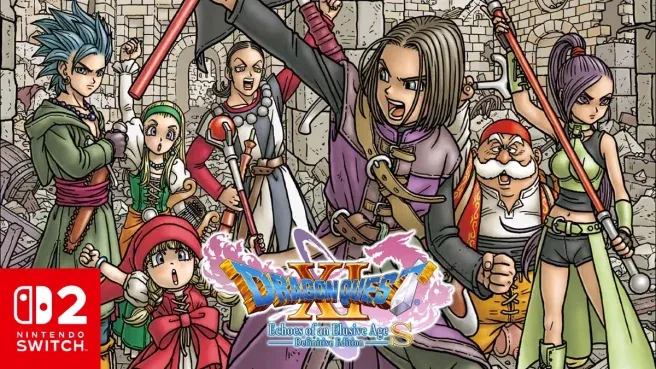
Square Enix has detailed Dragon Quest XI S Switch 2 performance modes, but the 60 FPS and 1440p targets come with no save transfer, no upgrade path, and unchanged content.
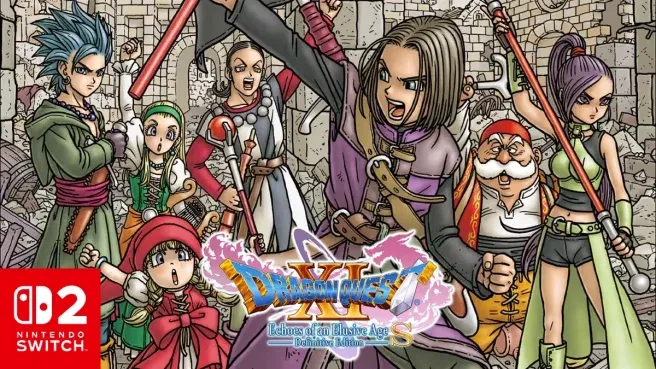
Image: nintendoeverything.com
Square Enix confirms the tradeoff: 60 FPS or 1440p
Dragon Quest XI S: Echoes of an Elusive Age - Definitive Edition will give Nintendo Switch 2 players two rendering modes, and Square Enix has now put numbers on both. According to the official Dragon Quest XI S FAQ cited by Nintendo Life, Performance Priority Mode targets 1080p at 60 FPS, while Quality Priority Mode targets 1440p at 30 FPS.
That is the clearest technical detail yet for the Dragon Quest XI S Switch 2 release, and it immediately frames the purchase decision. This is not being presented as a content expansion, a new edition with extra quests, or an upgrade for existing Switch owners. Square Enix’s own FAQ, as quoted by Nintendo Life, says the game content remains the same, with differences coming from rendering specifications based on the new hardware’s processing power.
For players who remember the original Switch version as a strong portable adaptation with obvious visual compromises, the new figures are meaningful. A 60 FPS mode would change the feel of camera movement, field traversal, menus, and turn-based combat presentation across a very long RPG. A 1440p mode gives docked players a sharper image at the cost of the higher frame rate. The tension is that those improvements arrive inside a separate Switch 2 release with no save transfer and no upgrade pack.
How the Dragon Quest 11 Switch 2 frame rate changes the feel of Erdrea
The most practical improvement is the Dragon Quest 11 Switch 2 frame rate option. Performance Priority Mode’s 1080p and 60 FPS target should make the game feel smoother during exploration, town navigation, battle transitions, and camera pans. Dragon Quest XI S is turn-based, so 60 FPS is not about competitive reaction time. It is about comfort across dozens of hours, especially in a game built around repeated travel, monster encounters, crafting stops, party management, and revisiting locations as the adventure opens up.
That distinction matters for returning players. Dragon Quest XI S asks for patience in a good way: you spend time reading NPC dialogue, checking shops, rotating party members, filling out character builders, and cleaning up side quests. A smoother frame rate does not rewrite those systems, but it can reduce friction in the routine parts of a completionist playthrough. When you are combing towns for recipe books or moving between camps to refine equipment, a steadier presentation can make the old pilgrimage feel fresher.
There is also useful context from the Switch community. A 2019 GBAtemp thread for an unofficial Dragon Quest XI S 60 FPS mod described the original Switch game as normally running at 30 FPS and claimed the mod could hit 60 FPS most of the time in handheld mode with overclocking, while noting that stable performance in towns could require more GPU overclocking. That is not an official benchmark and it should not be treated as a recommendation, but it shows that 60 FPS has been a long-standing wish among technically minded players. The Switch 2 release turns that wish into an official mode, without the risks or compromises of unofficial modification.
Dragon Quest XI S resolution is clearer, but handheld details are still incomplete
The Dragon Quest XI S resolution split is straightforward on paper: 1080p in Performance Priority Mode and 1440p in Quality Priority Mode. Nintendo Everything reports the same figures from Square Enix’s updated information and notes that Square Enix did not specify any differences between docked and handheld play.
That missing distinction is important. Nintendo Everything also notes that the Nintendo Switch 2 screen maxes out at 1080p. If the Switch 2 display itself is limited to 1080p, the 1440p Quality Priority Mode naturally reads as a docked-display benefit rather than something handheld users can fully see as native panel detail. Square Enix has not, based on the provided reports, explained whether handheld mode uses identical internal targets, dynamic scaling, different power behavior, or the same menu options with output constrained by the screen.
For handheld-first players, that makes Performance Priority Mode the cleaner expectation. On the Switch 2 screen, a 1080p image paired with a 60 FPS target is a direct match for the display resolution mentioned by Nintendo Everything. Quality Priority Mode may still have image-quality benefits depending on how the game renders and scales, but the sources do not confirm those implementation details. Until Square Enix publishes docked and handheld breakdowns, buyers should avoid assuming that the 1440p mode will transform portable play in the same way it may improve a TV or monitor setup.
The returning-player problem: no save transfer, no upgrade pack, same content
The sharpest catch is not the technology. It is ownership. Nintendo Life reports that Square Enix has previously confirmed there are no plans to sell an upgrade pack from the Nintendo Switch version to the Nintendo Switch 2 version. Nintendo Everything likewise reports that players cannot transfer save data from the Switch 1 release, and says existing Switch owners will need to buy the Switch 2 version again at $40.
That matters more for Dragon Quest XI S than it would for a short action game. A full playthrough can stretch across a large campaign, optional activities, character growth choices, crafting, and postgame goals. Losing save continuity means returning players are not moving an established Luminary and party onto new hardware. They are starting over, even if their old file still holds unfinished quests, rare equipment, or a carefully developed party build.
Square Enix’s FAQ language, as quoted by Nintendo Life, also confirms that the content remains the same. That keeps the value proposition narrow. The Switch 2 version is a technical refresh with selectable performance and image-quality priorities, not a new content package. For players who already finished the game on Switch, the question is whether smoother performance or sharper docked output is worth paying again. For players who abandoned an old Switch save halfway through, the lack of transfer may be the deciding factor against returning immediately.
Physical buyers and preservation-minded fans have another caveat
NintendoReporters reports that the physical version has been confirmed as a Game-Key Card. That detail will not affect every buyer, but it is relevant for collectors and players who prefer self-contained physical releases. A Game-Key Card typically changes the practical meaning of buying a boxed copy, since the card functions as access rather than the complete game data in the way traditional cartridges are often understood by collectors.
The provided sources do not give full download-size requirements, regional packaging details, or long-term access terms for this Dragon Quest XI S Switch 2 release. Because of that, the safe guidance is simple: if the physical format matters to you, check the final retail packaging and official store page before purchase. The same caution applies to anyone buying for offline travel or long-term library preservation.
This caveat sits alongside the no-upgrade policy. Square Enix is offering a technically improved Switch 2 version, but the surrounding purchase structure is less friendly to existing owners than an upgrade-pack model would have been. That does not make the release useless, especially for newcomers, but it makes the decision more conditional.
Is this the definitive console version to buy in 2026?
Based on the reported Switch 2 details alone, the answer depends on where you are starting from. For newcomers who want Dragon Quest XI S on Nintendo hardware, the Switch 2 version is positioned as the cleanest Nintendo console option in 2026: same Definitive Edition content, a 60 FPS performance mode, and a 1440p quality mode for sharper output when image clarity is the priority. Nintendo Life reports that it launches for Switch 2 on September 24, 2026.
For returning Switch players, it is harder to call this the definitive purchase without qualifications. The Dragon Quest Switch 2 performance improvements are real on the spec sheet, but the lack of save transfer means your previous progress stays behind. The lack of an upgrade path means prior ownership does not reduce the cost. The unchanged content means there is no new questline, party feature, or story incentive in the information Square Enix has provided through the official FAQ.
The practical read is that Dragon Quest XI S Switch 2 is strongest for three groups: first-time players, fans who specifically want a smoother replay on Nintendo hardware, and docked players who value a higher-resolution console presentation. Handheld users should look closely at the 1080p screen limitation and wait for direct portable impressions if image quality is the main reason to rebuy. Completionists with an unfinished Switch save should be especially cautious, because the improved frame rate will not carry their old checklist, party builds, or late-game progress into the new version.