

How the PS5 remake’s hand-crafted diorama look, rebuilt UI, and new story beats aim to modernize one of Dragon Quest’s most intimidating adventures.
Dragon Quest VII has always been the strange giant of the series. On PS1 it was a sprawling, sometimes glacial epic that could take well over 100 hours just to see the credits. The 3DS remake helped, but it still carried the weight of its labyrinthine dungeons, dense text, and slow early game.
Dragon Quest VII Reimagined on PS5 is trying to keep the heart of that adventure while stripping away as much friction as possible. Ahead of launch, the remake already feels less like a straight port and more like a full-scale rethink built for players who grew up on Dragon Quest XI and modern JRPG conveniences.
A world that looks like a living diorama
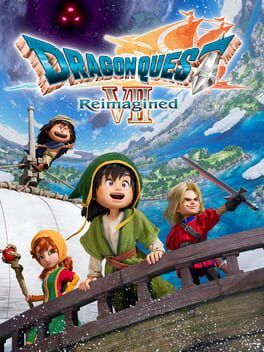
The first thing that separates Reimagined from previous versions is its striking toybox aesthetic. Rather than chasing the 2D-HD look of Dragon Quest III HD-2D Remake, this project leans into a miniature diorama style that makes every town, ruin, and ship deck feel like it was built on a hobbyist’s desk.
Characters and monsters are based on hand-crafted figures that were physically modeled before being scanned into the game. It gives Akira Toriyama’s designs a tactile quality you do not usually see in JRPGs. Armor reads like painted plastic, cloth has shallow, deliberate folds, and the seams on monster figurines are just noticeable enough to sell the illusion that someone could pick them up and pose them.
Environments are built to match that feel. Villages look like layered sets, complete with chunky rooftops and painted-on clouds in the distance. Caverns and ruins lean on depth-of-field and vignette effects to make it seem like the camera is hovering above a table. When the party moves, subtle tilt and focus shifts reinforce that these are miniature worlds carefully composed rather than endless open fields.
The effect is nostalgic without simply copying the PS1 geometry. For returning players, landmarks are instantly recognizable yet dressed in a level of detail that makes each island feel new again. For newcomers, it looks like a modern, clean take that stands apart from other big-budget RPGs on PS5.
UI that finally respects your time
If there is one thing both fans and skeptics agree on, it is that classic Dragon Quest VII made you work for everything. Menus could be clunky, quest objectives buried in walls of text, and job management required a lot of trial and error. Reimagined tackles this directly with a UI and UX overhaul that is more Dragon Quest XI than PS1 throwback.
On PS5, core commands are now mapped cleanly to controller inputs, with quick access to the map, party status, and vocation details. The new interface uses clear fonts and generous spacing so that even dense menus, like class boards and skill lists, are easy to parse on a couch.
Quest and story tracking has seen some of the most important changes. The game’s time-hopping structure remains, but the UI now surfaces which island, era, and main objective you are currently dealing with. Important NPC hints are highlighted in a dedicated log so you do not have to remember every line of dialogue just to figure out where the next shard might be hidden.
Combat also benefits from the revamp. Turn order, buff and debuff status, and enemy targeting are all presented more clearly, and the battle interface aligns closely with the visual presentation. Portraits, skill icons, and effect indicators are brighter and more expressive, which helps during longer dungeon runs when fatigue can set in.
All of this is underpinned by streamlined speed options. Battle animations can be set to faster styles without losing their charm, and text speed and auto-advance settings help cut down on dead time between big story beats. The goal is not to rush players through, but to trim away the friction that used to make Dragon Quest VII feel like homework.
New story threads in a familiar tapestry
Square Enix is not treating Reimagined as a one-to-one rebuild of the PS1 script. Instead, the team is adding new storylines while trimming and restructuring others to create a more focused narrative flow.
One of the headline additions, highlighted in recent interviews, is a new scenario that reunites the hero with an older Kiefer. In the original, Kiefer’s departure was a pivotal moment that left a lasting hole in the party and the story. Reimagined turns that emotional beat into something more fully explored by giving players a chance to see what his choice meant years later.
There are also smaller, structural changes that aim to make each island arc feel more self-contained while clarifying how its resolution feeds into the larger mystery of the world. The game still plays out as a chain of vignettes across time, but dialogue cuts, added scenes, and better signposting smooth over some of the original’s narrative rough edges.
Veterans can expect side character spotlights to benefit the most from these revisions. NPCs who once appeared briefly and vanished may now have an extra scene or two to reinforce their role, while some of the more obtuse story flags have been adjusted so that players are less likely to get lost between shard hunts.
The key promise is that none of this discards what made Dragon Quest VII special. Instead, it is meant to make the emotional throughline easier to follow, particularly for players coming in from Dragon Quest XI, where character arcs and pacing set a higher bar for the series.
Rebalancing a notorious marathon
Length has always been the elephant in the room. Even fans who adore Dragon Quest VII will warn newcomers that it takes dozens of hours before the world fully opens up. Reimagined does not try to turn it into a brisk 30-hour adventure, but its rebalancing is designed to make those hours feel more intentional.
Early-game pacing has been a clear focus. Experience curves and gold rewards have been tuned so that you spend less time grinding just to meet basic stat checks. The vocation system, which defines how your heroes grow, has been adjusted to surface useful skills a bit earlier and reduce the sense of “dead time” while leveling less immediately powerful classes.
Dungeon layouts now benefit from the overhead view and diorama camera, which make navigation more intuitive. Clearer signposting, subtle environmental hints, and more readable mini-maps should cut down on the wandering that once padded playtime. The result is that each island arc can retain its narrative scope without relying on sheer repetition.
Optional content still exists for players who want to get lost in it, but the main path is better delineated. With autosave improvements and more generous manual save points, it is easier to treat Dragon Quest VII Reimagined as an RPG you can dip into for a couple of hours at a time instead of needing marathon sessions.
A PS5-first Dragon Quest VII for new players
On PS5, the diorama art style gets the advantage of crisp resolution and stable performance. Character models look especially sharp in motion, where the mix of toy-like materials and expressive animations gives battles a Saturday-morning energy without sacrificing the weight of big spells and special attacks.
The remake includes full voice acting for main story scenes, which helps sell the personalities of Arus, Maribel, Kiefer, and later companions like Ruff, Sir Mervyn, and Aishe. Combined with the updated camera work and more cinematic framing, story sequences feel closer to Dragon Quest XI than to the static PS1 cutscenes.
For players trying the free demo on PS5, the opening hours already offer a taste of how these elements come together. Early island arcs play much faster, yet the sense of discovery when uncovering a new past or future version of a location is as strong as ever. Demo saves carry over to the full game, and there is even an exclusive costume for Maribel as a small reward for getting in early.
Preserving a classic while preparing it for the next generation
Dragon Quest VII Reimagined is not just a graphical upgrade or a nostalgia play. By pairing the handcrafted diorama look with deep UI, pacing, and story adjustments, Square Enix is trying to turn one of its most daunting RPGs into something more approachable without dulling its identity.
For purists, the question will be how much of the original challenge and meandering charm survives the streamlining. For everyone who has bounced off Dragon Quest VII in the past, the PS5 version is shaping up to be the first one that invites you in rather than dares you to endure it.
If the full game can maintain the balance the demo hints at, Dragon Quest VII Reimagined could quietly become the definitive way to experience one of the most ambitious entries in the series, and a strong bridge between the classic era of Dragon Quest and whatever comes next on PS5.