
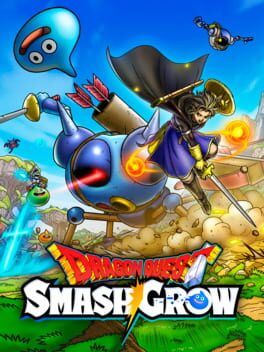

Square Enix’s roguelite Dragon Quest Smash/Grow opens pre-registration on iOS and Android, aiming to turn Survivors-style runs into a long‑tail mobile live service. Here is how the structure fits the series, what we know about gacha and onboarding, and whether this looks like a smart move for the brand on phones.
Square Enix has officially opened pre-registration for Dragon Quest Smash/Grow, a free-to-play roguelite RPG coming to iOS and Android in 2026. Co-developed with KLabGames, it is the latest attempt to fuse a major Japanese RPG brand with the “bullet heaven” Survivors-style formula that has quietly become one of mobile’s most reliable genres.
From a market perspective, Smash/Grow is less about chasing Vampire Survivors directly and more about finding a format that can live next to Dragon Quest Tact and Dragon Quest Champions as a lighter, more session-based pillar in Square Enix’s mobile portfolio. The question is whether the structure, monetization and onboarding are aligned enough to keep both Dragon Quest loyalists and Survivors fans around long term.
A Survivors-style loop that still feels like Dragon Quest
On paper, Smash/Grow is pitched as “Dragon Quest meets Vampire Survivors.” In practice, it looks closer to an auto-attacking, arena-based roguelite that tries hard to retain the cadence of a traditional Dragon Quest adventure.
Runs are built around short, discrete encounters instead of a single sprawling battlefield. You drop into a small arena, waves of slimes, drackies and other familiar monsters swarm in, and your character auto-attacks while you steer, kite enemies and trigger special abilities. Clear the arena and you move on to the next segment, repeating the process as you accumulate growth crystals to pick new Blessings.
Those Blessings are the core of the roguelite loop. They function like randomized power-ups that enhance skills, stats or signature attacks, letting you assemble a different build every run. Stacking wide-area spells, homing shots or defensive buffs gives the same escalating power fantasy as a Survivors run, but the encounter-based structure keeps it readable on a phone and closer to the “battle by battle” feel of the main series.
Visually, Smash/Grow leans heavily on classic Dragon Quest iconography. Monsters, heroes and interface elements all channel Akira Toriyama’s art style and the familiar “blue box” Dragon Quest UI language. Big, screen-filling coup de grâce moves act as both a mechanical payoff for a successful run and a piece of fan service, calling back to high-impact limit-style attacks from the numbered games.
The result is a loop that is very friendly to mobile play patterns. Encounters are short enough to fit into a commute, the auto-attacking and strong visual clarity suit one-handed control, and the run-based structure provides a natural framework for dailies, quests and live ops events.
Pre-registration incentives and what they hint at
Pre-registration is live on both the App Store and Google Play, with a global launch targeted for later in the year. The broad messaging is focused on accessibility and spectacle, but the pre-registration campaign hands a few clues about how the economy might be framed.
Square Enix is offering 10 Premium Transmuter Vouchers for players who sign up early, enough for a 10-pull when the game goes live. That immediately establishes a gacha layer on top of the roguelite runs, and the terminology suggests a system built around “transmuting” items or characters rather than straight banner pulls.
In mobile terms, that first free 10-pull is a standard tactic to jump-start session one. It lessens early friction, seeds players with at least one or two higher-rarity units or gear pieces and nudges them toward engaging with the summoning UI without immediately pushing a purchase.
The promise of co-op quests and a roster of partners hints that collection will sit at the heart of progression. Building a party of up to three companions is not just a design nod to classic Dragon Quest; it gives the gacha layer room to breathe, since each run can showcase multiple units and builds.
If Smash/Grow follows KLab’s prior work on titles like Captain Tsubasa: Dream Team and Love Live!, players can likely expect a familiar mix of:
Paid gems that convert into summon currency
Multiple banners cycling event-limited heroes or weapons
An account-level progression system that increases power and unlocks new content over time
Because runs are self-contained but feed into persistent growth, there is also space for secondary monetization channels such as battle passes tied to seasonal events, stamina accelerants or bundles that target midcore players investing in specific builds.
Monetization questions the beta will need to answer
So far, Smash/Grow has only been positioned publicly as a free-to-play title with summoning. The press materials and early coverage stop short of spelling out important details that will determine its long-term health.
One big unknown is how critical high-rarity companions or gear will be to clearing later content. Survivors-style games can be sensitive to power curves; if late-game co-op or boss encounters are tuned around premium units, free players can quickly feel walled off. On the other hand, if most of the power comes from in-run Blessings and skillful play, the gacha layer might feel more like collection than compulsion.
The other open question is stamina. Arena-based roguelites map cleanly onto energy systems, but too much gating can break the pick-up-and-play feel these games rely on. A generous stamina cap, or modes that don’t consume energy for shorter runs, would help keep Smash/Grow aligned with the “one more run” loop that makes Vampire Survivors and its peers sticky.
Event cadence will also matter. Dragon Quest fans are used to anniversary campaigns, crossover events and nostalgia-driven banners. Smash/Grow’s format makes it easy to design time-limited encounter sets featuring specific bosses and themed Blessings, but if every event leans heavily on limited units tied to high-spend banners, that can push the game out of the comfortable middle tier into a more aggressive monetization posture.
Onboarding: can Smash/Grow serve as a Dragon Quest gateway?
Onboarding is where Smash/Grow could quietly have the biggest impact on the wider brand.
Survivors-style games are easy to grasp even if you have never touched a JRPG. Move your character, watch attacks fire automatically, pick new abilities as you level. Layering Dragon Quest’s monsters, heroes and music on top of that creates a low-friction entry point for players who might never commit to a 60-hour console RPG.
If Square Enix wants Smash/Grow to function as a gateway, the first-session experience will need to be tuned for clarity and generosity.
A clear, guided first run that shows how Blessings, growth crystals and coup de grâce attacks fit together is crucial. The pre-registration 10-pull also needs to be staged so that new players immediately feel the upgrade. Dropping an SSR-tier unit into the second or third tutorial run, and letting players feel the jump from base kit to powered-up build, is the sort of thing that makes the loop “click.”
The narrative wrapper is another key part of onboarding. The premise of rifts in space-time pulling together heroes and monsters from across the series is efficient from a content perspective, but it also allows Smash/Grow to introduce iconic characters and locations in bite-sized pieces. Done well, that can double as a highlight reel that nudges curious mobile players toward mainline releases on console, PC and other mobile ports.
Accessibility also matters in markets outside Japan. Clear localization, readable UI on smaller screens and well-tuned difficulty for early encounters will determine whether Smash/Grow feels like a welcoming side dish or another dense gacha RPG.
A smart brand play on phones, if expectations are realistic
Framed as a mobile market move, Dragon Quest Smash/Grow looks like a logical, relatively low-risk expansion of the brand rather than a revolutionary swing.
The Survivors-style structure is already a proven fit for touchscreens and short play sessions. Using it as a container for Dragon Quest’s monsters and music is a clever way to keep the series visible between larger premium releases while tapping into a format that has strong retention potential.
Co-developing with KLab gives Square Enix a partner experienced in live-operated, collection-heavy mobile games. That should help with cadence, event design and the day-to-day realities of running a global gacha-driven title.
The main risk is not whether Smash/Grow can find an audience, but where it lands on the spectrum between fan-friendly spin-off and aggressively monetized live service. Dragon Quest’s mobile history includes both experiments that quietly sunset and long-running successes, and players are more conscious than ever of gacha pressure and grind.
If Square Enix keeps the power curve manageable for free players, structures its passes and banners around optional optimization rather than hard gates and ensures onboarding feels generous, Smash/Grow has a strong chance to become a steady mid-tier earner that reinforces the Dragon Quest ecosystem.
If the monetization leans too hard into limited units, narrow windows and stamina choke points, the game risks becoming another short-lived spin-off in a crowded mobile field.
With pre-registration now live and a launch window on the horizon, Smash/Grow is worth watching both as a bellwether for Square Enix’s current mobile strategy and as a test of how far the Dragon Quest brand can stretch into lightweight, run-based design without losing its soul.