
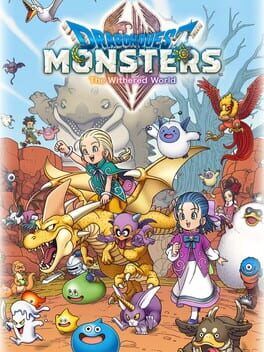
Square Enix’s latest Dragon Quest Monsters: The Withered World details clarify how Witherwood, synthesis, recruitment, and Bianca and Nera’s perks shape the opening hours.
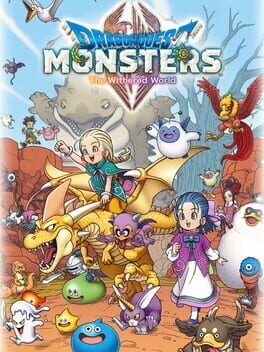
Image: IGDB
Store links: Dragon Quest Monsters: The Withered World on Steam
Witherwood starts as a tutorial, but its systems push you toward long-term planning
Square Enix’s newest Dragon Quest Monsters: The Withered World update puts the early game into clearer focus: players will begin by choosing Bianca or Nera, build a monster roster in Witherwood, establish Witherwood Castle as a growing hub, then unlock synthesis only after clearing specific early milestones. That structure creates the first real planning question before players even reach the breeding lab: which protagonist’s recruitment bias and battle support better fits the team you want to build?
According to details shared by Square Enix and reported by Gematsu, Siliconera, MonsterVine, GamersHeroes, and Techtroduce, Dragon Quest Monsters: The Withered World stars Bianca and Nera from Dragon Quest V: Hand of the Heavenly Bride. A mysterious fairy transports them to Witherwood, where they search for Leaves of Life to cure their sick fathers. The complication is mechanical as well as narrative: dark forces have drained the land’s living energy, and the pair must become monster wranglers to restore the conditions needed for those leaves to grow again.
That setup matters because the opening region is being designed around restoration, recruitment, and gradual access to systems rather than immediate full freedom. Witherwood Castle begins with basic services such as an Item Shop and a Paddock for tamed monsters, Siliconera reports from Square Enix’s announcement. As the story advances, it expands to include Tony’s Trials for scouting rewards, villagers who lend monsters for Monster Matchmaking synthesis, and an Accessory Workshop for improving monster accessories. In progression terms, the hub is the measuring stick for the opening hours: the more the world recovers, the more build tools the player gains.
Bianca and Nera are a party-building choice, not a cosmetic one
The most important confirmed character distinction is that Bianca and Nera do not recruit the same kinds of monsters with equal ease. Square Enix’s screenshots, as reported by Siliconera, show Bianca has an easier time befriending Beast, Dragon, and Undead family monsters. Nera is favored toward Material, Nature, and Slime family monsters. The sources describe these as easier recruitment targets, not exclusive pools, so players should not read the choice as a hard lockout from other families.
Their Wrangler’s Spirit Battle Perks further separate them. Siliconera cites English screenshots showing Bianca’s occasional effects as all allies healed to full HP, all enemies bedazzled, attack raised for all allies, and defense lowered for all enemies. Nera’s listed occasional perks are allies’ MP slightly restored, dead allies resurrected, defense raised for all allies, and negative statuses removed from all allies.
That gives the Dragon Quest Monsters Bianca Nera perks a clear early identity. Bianca looks tilted toward tempo and pressure: healing spikes, attack boosts, enemy disruption, and defense reduction all support aggressive parties that want to end fights before attrition catches up. Her favored families also include Dragon and Beast monsters, families that many players will instinctively associate with direct offense, although Square Enix has not provided full family-wide stat or talent tables in these materials.
Nera’s revealed perks read as more conservative and sustain-oriented. MP restoration, resurrection, defense boosts, and status cleansing are all effects that help a team survive long routes, awkward dungeon states, or fights where a key monster gets disabled. Her favored families, Slime, Nature, and Material, also signal a different early recruitment path. The safe conclusion is not that one protagonist is better, but that the protagonist choice sets your first scouting incentives and your backup plan when battles turn messy.
The first monster comes from Fluffy, then recruitment opens in several directions
Before the player has a roster to optimize, Dragon Quest Monsters: The Withered World uses Fluffy, Bianca and Nera’s mascot-like assistant, to assign a starting monster through a short quiz. Square Enix says the first monster depends on the player’s answers, and Gematsu’s translated details add that there is “no need to overthink things.” Siliconera notes that one screenshot from this process showed the player receiving a new kind of dragon.
After that, recruitment expands through several confirmed routes. Gematsu and MonsterVine report that players can use a Show of Force during combat to attempt to befriend enemy monsters. Square Enix also says monsters can be scouted directly while exploring, and that on rare occasions a monster may ask to join after battle. GamersHeroes similarly describes the ability to scout monsters on the fly while moving through the field.
For players familiar with monster-collecting RPGs, the notable piece is how recruitment sits beside Bianca and Nera’s favored families. The Withered World synthesis path eventually depends on a steady supply of eligible monsters, but the opening hours appear to give players multiple ways to fill gaps rather than relying on one capture mechanic. If Bianca makes Dragons easier to bring in, that does not remove the need to watch field spawns, time-of-day behavior, and post-battle opportunities. If Nera has an easier route into Slimes or Nature monsters, she still benefits from routing exploration efficiently once Witherwood’s traversal tools come online.
Witherwood’s day-night shifts make the opening region a scouting puzzle
The first main area, Witherwood, is divided into sub-areas that change as day shifts to night, according to MonsterVine and GamersHeroes. Some monsters appear only at particular times, and others alter their behavior depending on the cycle. For a Dragon Quest Monsters opening region, that is a meaningful early pressure point: players who rush through the first map may miss recruitment windows, while players who revisit zones at different times will likely see a broader pool of candidates.
The Waterwing Can is the key restoration tool in this loop. MonsterVine reports that using it on a withered Root of Creation creates a fast-travel destination and grants access to healing, party adjustments, synthesis, and time changes. GamersHeroes describes revived Roots of Creation as unlocking fast travel and a one-stop set of services for healing, party management, synthesizing, and changing the time.
Those functions are practical, but they also set a rhythm. Restore a Root, gain a safer anchor point, change the time to check alternate monster spawns, then return to the field with a different recruitment goal. MonsterVine also says watering Lifebuds grants permanent passive bonuses, including increased experience gains. Dungeons contain treasure and mini medals, while powerful monsters can appear with a red aura as a warning. That last detail is a classic RPG signal: the game is willing to put dangerous targets near the player early, but it is also giving a visual cue that discretion may be part of good routing.
The unanswered question is how generous those passive bonuses and time changes will be in practice. Square Enix has confirmed the systems, but the provided materials do not specify exact XP bonus values, how often time-gated monsters rotate, or whether red-aura monsters are intended as early challenge kills, comeback targets, or both.
Synthesis is gated behind two early victories
The Withered World synthesis system will not be available from the first screen. Before Bianca and Nera can synthesize monsters, they must defeat Enorman in a Joint Battle and win Category G at the Battle Arena, according to MonsterVine and GamersHeroes. Only then can players combine two monsters at level 10 or above, with the resulting child monster inheriting parental Talents.
That gate is important because it gives the opening roster a defined job. Early monsters are not disposable placeholders if their Talents feed into the first synthesis chain. At the same time, the level 10 requirement encourages players to spend enough time battling and scouting before rushing to fuse away recruits. The first synthesis decisions will likely be shaped by which monsters players found through Fluffy’s quiz, favored-family recruitment, time-of-day scouting, and any Monster Matchmaking access available through villagers at Witherwood Castle.
Joint Battles add another wrinkle. MonsterVine reports that during these fights, the chosen protagonist commands the main party while the other controls reserves. That makes the Bianca-or-Nera choice mechanically relevant even when both characters are present in the story. The player’s selected lead handles the active team, while the partner’s side of the roster still matters as support infrastructure.
The sources do not provide a full synthesis chart, Talent inheritance rules, or examples of child monsters created from specific parents. What is confirmed is enough to establish the early progression spine: recruit, restore, clear Enorman and Category G, then begin using synthesis to move from a collected roster into a built roster.
Witherwood Castle’s expansion points to a slower, systems-first opening
Witherwood Castle is positioned as more than a place to shop between excursions. Square Enix’s announcement, as summarized by Siliconera, says the hub starts with an Item Shop and Paddock, then later adds an Accessory Workshop, Tony’s Trials, and villagers who enable Monster Matchmaking synthesis. MonsterVine also notes that those services expand as players progress.
For a systems-focused player, the hub rollout tells us how Square Enix and developer TOSE are pacing the early game. First, players learn recruitment and field scouting. Then they gain stable infrastructure for storage, trials, equipment improvement, and synthesis options. Finally, those systems prepare the team for the next region, Pays de l’Oseille, which MonsterVine identifies as the area after the initial synthesis unlock.
That progression also softens the risk of making the Bianca or Nera choice feel punishing. Because Witherwood Castle eventually supports matchmaking and accessory upgrades, early favored families should influence the path of least resistance rather than permanently define the entire campaign. Still, players who care about efficiency will likely want to align protagonist choice with their first desired families. Bianca should make early Beast, Dragon, and Undead plans smoother. Nera should make Material, Nature, and Slime starts smoother.
The practical advice from the confirmed details is simple: do not treat the protagonist selection as a pure story preference if you already know the kinds of monsters you want to prioritize. Treat it as your first build decision, then use the opening region’s time changes and restoration nodes to broaden the roster before committing monsters to synthesis.
Release date, platforms, price, and what is still unclear
Dragon Quest Monsters: The Withered World is scheduled for a simultaneous worldwide release on December 3, 2026. Gematsu identifies Square Enix as publisher and developer, with TOSE also listed as developer. Reported platforms include Nintendo Switch, Nintendo Switch 2, PlayStation 5, Xbox Series X|S, and PC, according to MonsterVine and Techtroduce. Siliconera’s wording lists Xbox Series X without the S, while other coverage uses Xbox Series X|S, so readers watching the Xbox version should check the official store listing for exact compatibility before purchasing.
MonsterVine reports the Standard Edition price as $59.99. The provided source material does not include performance targets, PC requirements, upgrade-path details between Switch and Switch 2, or edition comparisons beyond that standard price reference. Those are the main practical unknowns for players deciding where to play, especially because monster-collecting RPGs can involve long sessions of menu use, field scouting, and repeated synthesis routing.
For now, the strongest confirmed takeaway is that The Withered World’s opening hours are built around interlocking progression systems rather than a single capture loop. The Witherwood region teaches scouting across time-of-day changes, Roots of Creation turn restoration into fast travel and party management, Lifebuds add permanent passive gains, and synthesis waits until the player has proven the first roster through Enorman and Battle Arena Category G. Bianca and Nera sit at the center of that structure, shaping which monster families come easiest and which emergency battle effects can save a run before the real synthesis planning begins.