
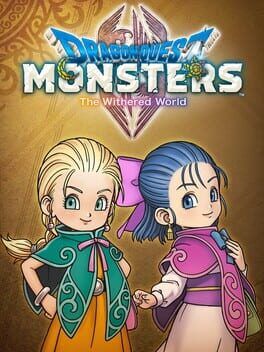
Square Enix’s latest reveal for Dragon Quest Monsters: The Withered World explains the Witherwood kingdom, Thespidor, King Withers, Scruffy, Taiboku, Lushland, the Waterwing Can, and the monster systems fans should track before launch.
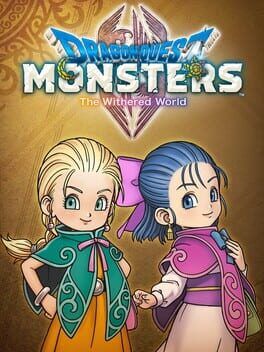
Image: IGDB
Store links: Dragon Quest Monsters: The Withered World on Steam
Square Enix puts Witherwood at the center of the next Dragon Quest Monsters loop
Square Enix has issued a new batch of details for Dragon Quest Monsters: The Withered World, and the strongest reveal is that the Kingdom of Witherwood is being framed as both a story crisis and a progression space. According to the publisher’s August update, reported by Nintendo Everything and other outlets, Bianca and Nera travel to Witherwood, a land that was once lush and fertile under the protection of the Archeagles, only to find it damaged by dark forces and by Meteocite crystals that absorb people’s despair and drain the land’s life energy.
That gives the sequel a clearer shape before launch. Dragon Quest Monsters fans already knew this would be a monster-wrangling RPG, but the Witherwood kingdom reveal ties its familiar recruiting, raising, and synthesis priorities to an environmental restoration premise. Square Enix says players will listen to locals, destroy Meteocite, and work to restore peace. The tension is that the reveal makes Witherwood sound central to the adventure without yet explaining how linear, open, or repeatable that restoration structure will be.
The update also names several figures tied to the kingdom and its problems: Thespidor, King Withers, Ed, and Scruffy. Alongside those characters, Square Enix has detailed the regions Taiboku and Lushland, a field artifact called the Waterwing Can, and some new ways exploration will feed into monster growth. For a series where the value of a location often comes down to what it lets you recruit, synthesize, and prepare for next, those are the details worth watching.
Witherwood is a dying kingdom, and Meteocite gives its quests a concrete target
The Witherwood kingdom setup is direct: Bianca and Nera arrive in a land whose natural abundance has collapsed. Nintendo Everything’s publication of Square Enix’s description says the land once flourished thanks to the Archeagles, but “forces of darkness” have since taken root. Meteocite crystals are the visible expression of that corruption, absorbing despair and draining life from the land.
That matters for how the game may pace its quests, because Square Enix is describing a problem players can act on rather than a purely atmospheric curse. The publisher’s wording says players will hear the pleas of locals, destroy Meteocite, and restore peace. That suggests Witherwood’s townspeople and regions are being used to point players toward local objectives, although Square Enix has not provided a full quest structure, chapter layout, or map flow in the materials available here.
There is also a lore hook under the practical one. The Archeagles are named as the former protectors of Witherwood, but the update does not yet explain what happened to that protection, whether the Archeagles are recruitable monsters, story guardians, bosses, or something else entirely. For completion-minded RPG players, that is an open thread worth filing away, because Dragon Quest Monsters games often turn story nouns into roster goals, synthesis targets, or late-game encounters. That connection is possible, not confirmed.
Thespidor, King Withers, Ed, and Scruffy define the kingdom’s human and monster-facing stakes
The August reveal gives Witherwood a clearer cast. Square Enix describes Thespidor, voiced by Feliks Mathur, as “The Elusive Misdirector of the Tragedian Players” and the “showrunner of the darkness below.” The key confirmed fact is that Thespidor created the Meteocite crystals, while his motives remain unclear. Square Enix also says he will appear repeatedly throughout the adventure, placing him closer to a recurring antagonist or manipulator than a single-location boss, at least based on current wording.
King Withers, voiced by Kim Durham, is the monarch of Witherwood. Square Enix describes him as solemn but dependable, a king who asks Bianca and Nera to save his kingdom and then helps them on their quest. The same description adds a tonal wrinkle: despite his gloomy look, King Withers uses jokes to lift his subjects’ spirits. That is recognizably Dragon Quest, where a grim premise can still share space with wordplay and character comedy.
The reveal also introduces Ed and Scruffy. Ed, voiced by Vinay Lad, is described as a self-styled “living legend” of the monster-wrangling world who first appears in Witherwood Castle and wants to show off in front of the protagonists. Scruffy, voiced by Tobias Weatherburn according to Console Creatures and GamersHeroes, is Ed’s partner in mischief and a born prankster said to hail from Pays de l’Oseille. Together, Ed and Scruffy appear positioned as a lighter counterweight to Thespidor’s menace and King Withers’ royal burden.
For searchers tracking “Thespidor, King Withers, Scruffy, Taiboku” as part of the latest Dragon Quest Monsters: The Withered World reveal, the important distinction is this: Square Enix has confirmed character roles, voice actors, and starting context for Ed in Witherwood Castle, but it has not confirmed whether Ed functions as a rival wrangler, tutorial figure, recurring party-adjacent character, or eventual battle opponent.
Taiboku and Lushland show how Witherwood’s regions will vary in theme and traversal rewards
MonsterVine reports that Witherwood will include multiple regions with distinct visual themes, including Taiboku and Lushland. Taiboku is described as an area filled with bamboo groves and rice paddies, while Lushland features massive fruits and vegetables. Those names are useful because they move Witherwood from a single withered aesthetic into a broader kingdom with biomes that can support different monster populations, dungeon tilesets, and collection routes.
Square Enix’s latest screenshots, as summarized by Console Creatures, also point to areas that include plains, snowy mountains, desert-like environments, and other biome variation, though the named August locations in the provided reports are Taiboku and Lushland. MonsterVine further notes that players will find caves and towers functioning as dungeons during the adventure. That mix matters in a Monsters game because terrain diversity usually affects practical questions: which monsters appear, when stronger variants begin showing up, and where players can safely grind before synthesizing a new team.
The reveal includes one particularly player-friendly exploration signal. MonsterVine reports that some strong enemies will be marked by an ominous, swirling aura, giving players a warning before they commit to a fight. That is a small detail with large consequences for party-building. If Dragon Quest Monsters: The Withered World expects players to experiment with underleveled recruits, fresh synthesis results, and reserve swaps, then clearly marked danger enemies can reduce blind punishment while preserving the thrill of testing a build early.
The Waterwing Can links exploration, healing, synthesis, and hidden monster discovery
The most systems-relevant object in the reveal is the Waterwing Can. Nintendo Everything describes it as a special artifact that will become a valuable tool for players, while MonsterVine reports more specifically that it is tied to restoring Roots of Creation and Lifebuds. Once restored, those locations can heal monsters and help synthesize new ones. The Waterwing Can can also draw monsters out of suspicious bushes, creating another exploration path for finding creatures.
That is the clearest bridge between Witherwood’s restoration story and the Dragon Quest Monsters progression loop. Healing points affect how deep players can push into regions before retreating. Synthesis access affects when a roster can pivot from early captures into planned builds. Bush interactions affect encounter discovery, which is critical in a game where one missing creature can become the bottleneck for a desired fusion chain.
The wider systems context comes from Square Enix’s earlier July information, reported by Gematsu. Dragon Quest Monsters: The Withered World lets monster wranglers field up to four monsters in the active party and keep four more in reserve, for eight monsters carried at once. Players can issue direct orders or assign general strategies. Monsters have spells, abilities, and Traits, while Bianca and Nera each have a once-per-battle Wrangler’s Spirit effect with different benefits: Bianca’s heals HP and raises attack power, while Nera’s restores MP and raises defense.
Gematsu also reported that the game features over 500 monsters across eight families, with ranks from G to X, small or large sizes, and individual personalities. Recruitment begins through battle, including a Show of Force attempt, while some defeated monsters may ask to join after a win. Monsters earn experience, level up, and can gain Talent Points for up to three Talents. Against that background, the Waterwing Can sounds less like a simple field item and more like a routing tool, although Square Enix has not yet shown the full rules for Roots of Creation, Lifebuds, or synthesis availability.
The new monsters are early roster clues, not final build answers
The latest Witherwood update arrives after Square Enix’s July screenshot batch, which MonsterVine said showed three Dragon Quest Monsters new monsters: Slime Balls, Bamboo Badboy, and Groovy Grouse. Those appeared alongside familiar creatures such as Golem, Stump Chump, and Mud Mannequin. The August materials highlighted in the provided sources focus more on characters, regions, and mechanics than on naming another full set of recruitable creatures, but Taiboku’s bamboo theme makes Bamboo Badboy newly relevant as players start mapping likely habitat and roster logic.
For series fans, a monster name is rarely valuable in isolation. Its family, rank, size, personality, Traits, Talents, and synthesis recipes determine whether it becomes early-game filler, a specialist support option, a fusion ingredient, or a long-term favorite. Gematsu’s July systems report confirms the game’s broad categorization framework, but the provided materials do not list the family, rank, size, Traits, Talents, or synthesis paths for Slime Balls, Bamboo Badboy, or Groovy Grouse.
That leaves the current reveal in a productive middle state. We know Dragon Quest Monsters: The Withered World is aiming for a large roster, with over 500 monsters according to Square Enix via Gematsu. We know exploration will include hidden monster discovery through suspicious bushes via the Waterwing Can, according to MonsterVine. We know strong enemies will be visually flagged. What remains unannounced is the information build planners crave: encounter tables, synthesis trees, inheritance rules, post-game availability, and whether any Witherwood-specific monsters become missable or gated by restoration progress.
Launch timing is clear, but platform-specific buying questions remain open
GamersHeroes reports that Dragon Quest Monsters: The Withered World is scheduled to release on December 3 for PlayStation 5, Xbox Series X|S, Nintendo Switch, Nintendo Switch 2, and PC via Steam and the Microsoft Store. Gematsu identifies Square Enix as publisher and developer, with TOSE also listed as developer. The broad platform plan is significant for a Monsters entry because the audience now has to weigh portability, performance, and ecosystem preferences before committing.
The provided source material does not include confirmed pricing, file size, frame-rate targets, resolution details, save-transfer information, upgrade-path terms between Switch and Switch 2, or platform-exclusive content. Those omissions are worth stating plainly. If you are deciding where to play, the confirmed December 3 date and platform list are enough to start planning, but not enough to judge the best version.
For fans tracking the sequel before launch, the August reveal is important because it shows Square Enix connecting lore, regional design, and monster systems earlier than a final marketing blowout. Witherwood is no longer only a title concept. It has a king asking for help, a recurring creator of Meteocite, prankster rivals or companions in Ed and Scruffy, named regions in Taiboku and Lushland, and a Waterwing Can that appears to touch healing, synthesis, and discovery. The remaining pre-launch question is how tightly all of that feeds the long-term roster chase that defines Dragon Quest Monsters.