
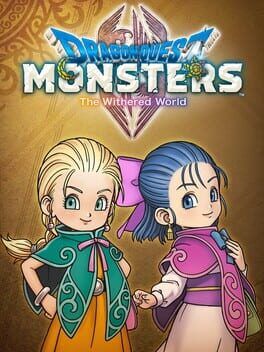
Square Enix has shared new Dragon Quest Monsters: The Withered World details covering synthesis, party structure, battle commands, monster traits, Bianca and Nera, and new monsters ahead of the December 2026 launch.
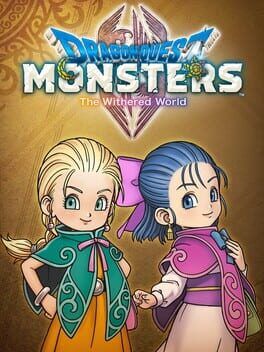
Image: IGDB
Store links: Dragon Quest Monsters: The Withered World on Steam
Square Enix’s new systems reveal puts the roster under pressure
Square Enix has shared a fuller look at Dragon Quest Monsters: The Withered World, and the headline for returning players is clear: this entry is putting more weight on monster identity before synthesis even begins. As reported by Nintendo Everything, the new information covers the Dragon Quest Monsters battle system, Synthesis, characters, monsters, and party structure. Siliconera’s report, also citing Square Enix, adds that each creature is defined by family, size, rank, personality, talents, and traits.
That combination creates the real pre-launch question for Dragon Quest Monsters fans. The Withered World is still built around the familiar wrangler fantasy, where the protagonist does not fight directly and monsters do the work in battle. But the new details suggest that long-term planning may start earlier than usual. Size changes how many monsters fit into the active party. Personality affects stat growth rates and limits. Traits can influence battle performance. Synthesis can pass talents forward, raise rank through plus values, and produce special results from specific pairings.
For players who treat Dragon Quest Monsters synthesis as the center of the game, those details are the systems to watch before launch. A creature is no longer interesting only because of what it becomes later. In The Withered World, Square Enix is presenting every monster as a bundle of progression decisions from the moment it joins the roster.
The party limit makes size a build decision, not a cosmetic trait
Square Enix says players can bring up to eight monsters at a time, with four in the active party and four in reserve, according to Nintendo Everything and Console Creatures. The important caveat is size. Siliconera reports that monsters can be small or large, with small monsters taking one party slot and large monsters taking two. That means a party can field four small monsters, or a mix such as one large monster and two small ones.
The tradeoff is explicit in the Square Enix details cited by Siliconera: large monsters receive two traits and can perform more actions each turn. For returning players, that changes the usual question from “which four monsters do I like?” to “how much of my turn economy am I willing to concentrate in one body?” A large monster occupying two slots has to justify itself through action count, trait quality, role compression, or all three.
That is especially relevant because the game also keeps a reserve party. Nintendo Everything reports that players can swap monsters in and out whenever they like. The source text does not define whether that means freely during all battle states or more broadly during adventuring, so players should wait for Square Enix to clarify the exact limitations. Still, the structure points toward a roster where the bench matters. A large attacker, a small healer, and a flexible reserve package could become a practical shape for progression, while four small monsters may give players more room to spread damage, healing, buffs, and status tools.
Commands, strategies, traits, and Wrangler’s Spirit add layers to battles
The Withered World keeps the series’ core division of labor: monster wranglers do not fight directly. Nintendo Everything’s Square Enix rundown says players can issue direct orders to monsters or assign a general strategy for them to follow. That matters for two different audiences. Players who want control over skill timing can command individual actions, while grinders and repeat battlers can lean on strategy settings if the AI behaves reliably.
Monsters will use spells and abilities in different combat roles, including offensive skills that hit enemies and healing abilities that support allies, according to Nintendo Everything. Each monster also has traits with special battle effects. Siliconera’s added detail about large monsters having two traits makes traits one of the key build variables to watch in future footage. If traits define tempo, survivability, elemental pressure, or action frequency, then synthesis planning will likely revolve around preserving the right talent and trait combinations rather than chasing rank alone.
Bianca and Nera also bring a protagonist-specific wrinkle. Square Enix calls their once-per-battle ability Wrangler’s Spirit, and Nintendo Everything reports that it has a chance to activate once per battle. Bianca’s version heals HP and boosts attack power, while Nera’s restores MP and raises defense. Console Creatures reports the same split, framing it as a randomly triggered battle ability.
That randomness is worth watching closely. If Wrangler’s Spirit is strong but unreliable, it may act as an emergency swing rather than a strategy foundation. If its activation rules can be influenced, or if its timing has predictable conditions, Bianca and Nera could support different build philosophies. Based on the confirmed effects alone, Bianca appears better aligned with aggressive physical pressure and recovery after damage, while Nera’s MP restoration and defense boost look more useful for longer fights, spell-heavy teams, and attrition.
Synthesis looks familiar, but personality and rank may change the grind
Square Enix’s Synthesis details confirm a familiar foundation with some important knobs. Siliconera reports that two parent monsters that have reached at least level 10 can be combined to create a child monster. The child can inherit talents from the parents, and the process presents multiple options for what the new monster can become. Console Creatures also says synthesis can involve parent and grandparent monsters, creating opportunities for stronger monsters and new talents.
The rank system runs from G to X, according to Siliconera and Console Creatures. Siliconera reports that synthesis can produce a plus value that may result in a higher-rank monster, giving the example that combining a G-rank monster with an E-rank monster could create a stronger D-rank individual. That is an important signal for players who usually rush toward known endgame recipes. Rank climbing may be tied to repeated synthesis chains, but the provided sources do not explain the full formula, inheritance caps, or whether plus values have limits.
The most concrete recipe example Square Enix has shared, per Siliconera, is Mitey Oak as a special result from synthesis involving Bad Egg and Stump Chump. Console Creatures adds that some monsters will only be obtainable through Synthesis. That gives completion-focused players an immediate warning: field recruitment alone will not fill the monster library.
Personality is the quieter system with the largest possible impact. Siliconera reports that a monster’s personality determines stat growth rates and limits, and that items can change personality to better suit a role. If that system is broad, a monster’s best form may depend on whether its personality supports its intended job as a healer, tank, spellcaster, or attacker. Before launch, returning players should watch for Square Enix to explain whether personalities are inherited, rerolled, changed freely with items, or tied to rare consumables.
Eight families and 500-plus monsters narrow the catalog in some ways and expand it in others
Console Creatures reports that The Withered World will feature more than 500 monsters, described as a series-leading roster, spread across eight family types. Siliconera notes that past entries have included more than 10 types depending on the game, while this entry currently has eight. Dragon and Slime families are confirmed to return, according to Siliconera.
That creates an interesting tension for Dragon Quest Monsters new details. A roster of more than 500 recruitable creatures sounds enormous, but fewer family categories could make synthesis routes feel cleaner, broader, or less granular depending on how Square Enix structures recipes. For players who map family trees and inheritance paths, eight families may make early planning easier. It could also mean that individual traits, size, rank, and personality do more of the work that family typing handled in prior entries.
The latest monster reveal gives a small sample of the tone and range. MonsterVine reports three new monsters shown in screenshots: Slime Balls, Bamboo Badboy, and Groovy Grouse. Console Creatures describes Slime Balls as small rice ball-like members of the Slime family, Bamboo Badboy as a Nature family monster with a bamboo shoot appearance and a spiky disposition, and Groovy Grouse as a Nature family creature built around music and movement. MonsterVine also notes returning creatures shown alongside them, including Golem, Stump Chump, and Mud Mannequin.
For The Withered World monsters, the key question is not simply how many are present. It is how many have distinct mechanical reasons to stay in the breeding pool. With size, traits, personality, talents, family, and rank all confirmed as differentiators, even a familiar monster may matter if it carries a useful inheritance path or fills a specific party-size role.
Bianca and Nera give the adventure a Dragon Quest V frame
The Withered World stars Bianca and Nera from Dragon Quest V: Hand of the Heavenly Bride, presented here as young monster wranglers. Anime Daisuki’s story report says the two are searching for the legendary Leaves of Life, which may cure their sick fathers. MonsterVine’s synopsis, attributed to the new story text, says a strange creature named Fluffy visits them and leads them to the Kingdom of Witherwood, where the leaves were believed to grow.
The same story material says Witherwood has been damaged by malevolent forces that have nearly wiped out the Leaves of Life. Fluffy gives the girls the power to befriend monsters, sending them across the kingdom to revive the leaves. Anime Daisuki also reports that players can select Bianca or Nera as the main character and alternate between them during the adventure. Debora appears as Nera’s older sister, while Fluffy teaches the protagonists how to become monster wranglers.
The setting details matter because they support the monster-collecting loop. Anime Daisuki reports that Witherwood includes tropical beaches, enormous vegetable fields, underwater areas, hidden routes, dungeons, and interactive elements. It also says time moves between day and night, with some monsters behaving differently or appearing only during certain periods. That has direct implications for completionists: a monster missed in one visit may require returning at a different time rather than grinding the same encounter table.
None of the supplied sources confirm how quest progression gates regions, how day-night changes are controlled, or whether monster appearances are tied to weather, story state, or location rarity. Those are the practical unknowns to watch in future previews, especially for players planning a full bestiary or synthesis checklist.
Launch details are set, but the questions that affect buying remain open
Multiple supplied reports point to a December 3, 2026 launch. Siliconera says Dragon Quest Monsters: The Withered World will come to Nintendo Switch, Nintendo Switch 2, PlayStation 5, Xbox Series X, and PC on that date. Console Creatures lists Nintendo Switch 2, Nintendo Switch, PlayStation 5, Xbox Series, and PC. The Dragon Quest Wiki page supplied for the assignment lists Nintendo Switch 2, Nintendo Switch, PlayStation 5, Xbox Series X|S, and PC via Steam and Windows, while also marking the page as under construction. The safest confirmed reader guidance from these sources is that Square Enix is targeting a simultaneous release across Nintendo, PlayStation, Xbox, and PC platforms, with Steam visibility already referenced by MonsterVine and mxdwn through the public store page link.
There are still no confirmed details in the supplied material for price, editions, performance targets, save transfer, cross-save, cross-play, demo availability, or an upgrade path between Switch and Switch 2. Siliconera reports that DLC is planned, but the provided excerpt does not detail what that DLC includes or how it will be sold. For players choosing a platform, those missing pieces matter as much as the roster count. A monster-raising RPG lives in menus, repeated battles, synthesis planning, and long sessions of roster management, so load times, interface responsiveness, and online battle stability could shape the best version to buy.
For returning fans, the watchlist before launch is concrete. Look for deeper explanations of personality changes, synthesis inheritance, plus values, large-monster action rules, reserve swapping, and the conditions behind Wrangler’s Spirit. Square Enix has now shown enough of Dragon Quest Monsters The Withered World to make its direction legible: a familiar wrangler RPG where party slots, growth profiles, traits, and synthesis recipes all appear to matter early. The remaining question is how transparent the game will be about those systems when players start building toward the monsters they really want.