
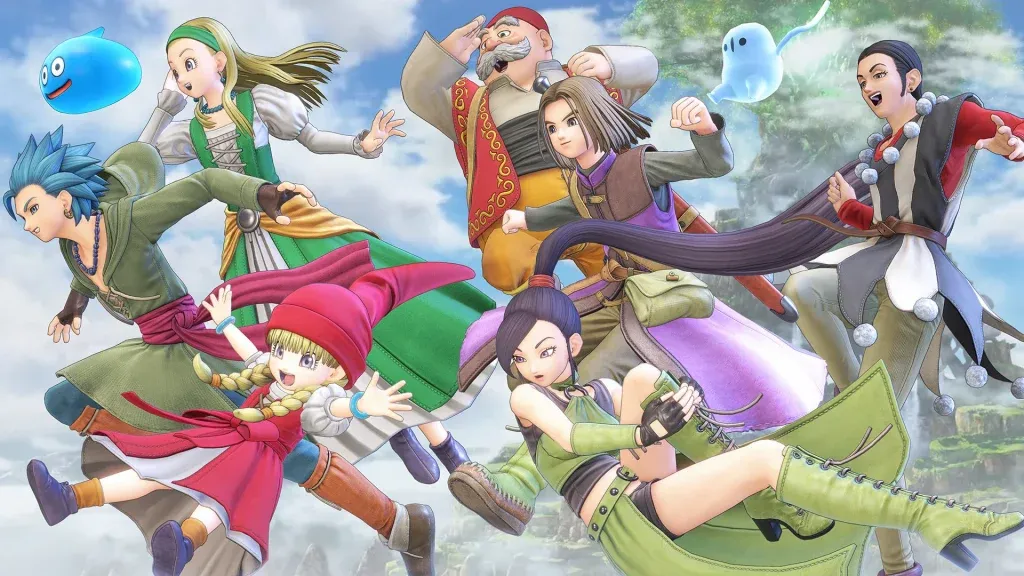
Chrono Trigger composer Yasunori Mitsuda has questioned Dragon Quest's future after a new mobile RPG reveal sparked criticism over Akira Toriyama-style art.
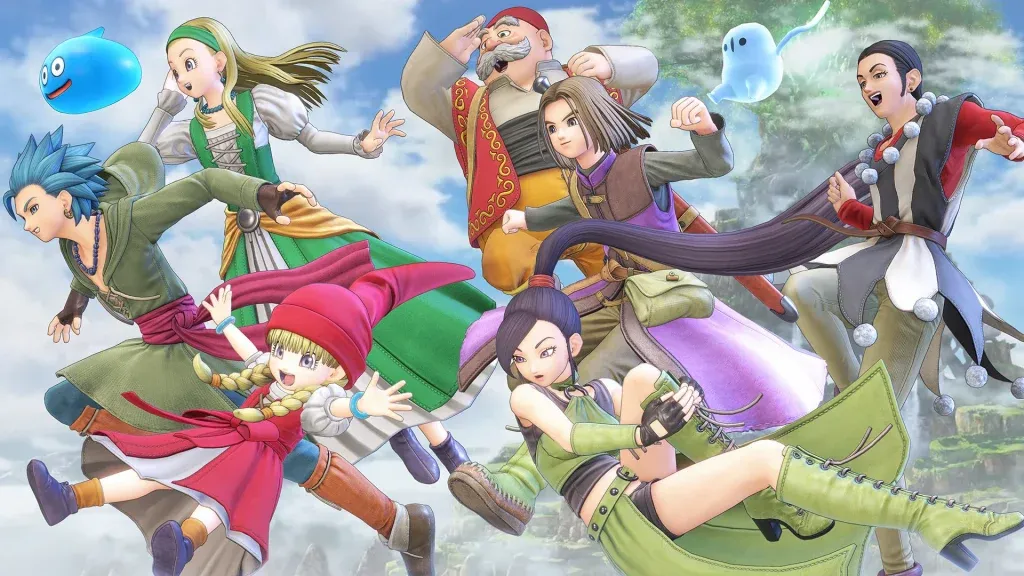
Image: gaymingmag.com
A mobile spin-off has become a referendum on Dragon Quest
Square Enix announced Dragon Quest RPG: The Cursed Tree and the Chosen Isle on November 10, with Automaton reporting that the game is planned for release in 2027 as a mobile-exclusive RPG. That reveal has now turned into a wider debate over the Dragon Quest series future, after Japanese fan criticism of its Toriyama-style character art drew a public response from Chrono Trigger composer Yasunori Mitsuda.
The immediate tension is clear. According to Automaton, the new project is being positioned as a classic role-playing adventure in the Dragon Quest mold, while Eurogamer reports that series creator Yuji Horii described the goal as capturing the familiar feeling of exploring towns, meeting allies, gearing up, and steadily growing stronger. For long-time players, that is the core loop Dragon Quest has protected for decades.
The backlash is not centered only on the fact that this is a mobile game. It is also about authorship, continuity, and how Square Enix should handle a series whose visual identity was shaped by Akira Toriyama, who died in 2024 at the age of 68. Push Square and Automaton both report that fans have questioned the use of artwork in Toriyama's recognizable style, with Automaton noting that character designs for the new mobile RPG are credited to the late artist.
That made Mitsuda's blog post land with unusual force. He is not a Dragon Quest decision-maker, and his comments are personal opinion rather than a publisher statement. Still, as a composer tied to Chrono Trigger, a game made in collaboration with Toriyama during the SNES era, his criticism gave the Dragon Quest mobile game backlash a sharper industry voice.
What Yasunori Mitsuda actually said
Mitsuda's blog post, as translated and quoted by Nintendo Life, Push Square, Eurogamer, Power Up Gaming, and Automaton, argues that continuing to imitate Toriyama's style may be the wrong direction for everyone involved. Nintendo Life quotes him as writing that the Toriyama-style illustration for Dragon Quest RPG had become a hot topic, but that he did not feel it was a good direction for the illustrator, Akira Toriyama fans, or Toriyama himself.
He then went further, suggesting that it might be time to end Dragon Quest and let Yuji Horii create a new RPG. Eurogamer's translation frames it as a personal opinion: since it is impossible to create anything truly new no matter how hard one tries, Mitsuda felt the Dragon Quest series should be brought to an end for now, and Horii should make a new RPG.
That is a dramatic statement, but it should be read in full. Mitsuda also wrote, according to multiple outlets, that what matters is giving younger players dreams, hope, and experiences that can only be had through games. Automaton reports that he also expressed love for the series and hope that Dragon Quest could keep providing those experiences to children in the future.
So the Chrono Trigger composer Dragon Quest story is not a simple call to erase the franchise. It is a criticism of preservation by imitation. Mitsuda's concern, as reported, is that once the original artist is gone, maintaining the surface of the work can become less honest than allowing the series to change or allowing Horii to build something new.
The art criticism started with small RPG details
The visible flashpoint is the protagonist artwork for The Cursed Tree and the Chosen Isle. Automaton reports that Japanese fans on X focused on the accuracy of the illustration, especially the claim that Toriyama would not draw a scabbard that could not hold the sword the character is carrying. Push Square also cites a viral post making that same point.
That may sound like a tiny prop-design complaint, but Dragon Quest fans are trained to read those details. Toriyama's character work often communicated function through silhouette, equipment, and practical exaggeration. In an RPG, the hero's sword, cloak, satchel, armor, and posture are part of the promise of progression. They tell you what sort of adventure this character is built for before a single stat screen appears.
Power Up Gaming reports additional fan criticism around the sword hilt, the mismatch between blade and scabbard, and the protagonist's damaged clothing. One commenter cited by the outlet argued that the cloak damage lacked visual storytelling, suggesting that scorch marks from dragon flame would communicate more than random tears. Another said the cloak looked tattered while the rest of the outfit appeared too clean.
None of those comments prove anything about how the art was made. They do show why the reaction grew beyond ordinary reveal-trailer nitpicking. If Dragon Quest continues to credit Toriyama's designs after his death, fans are going to inspect whether the work feels guided by his design logic or only by the most recognizable outer shape of his style.
The AI rumor needs a hard boundary
There is also speculation around generative AI, but the sourced record does not support treating that as fact. Nintendo Life reports that online speculation, highlighted by Power Up Gaming, has pointed to possible AI involvement in the creation of in-game characters. Nintendo Life also states that despite Yuji Horii's previously reported enthusiasm around the technology, there does not appear to be legitimate evidence that generative AI was used here.
That distinction matters. The confirmed information is that Square Enix announced a 2027 mobile Dragon Quest RPG, outlets including Automaton report that its character designs are credited to Akira Toriyama, and fans have questioned the new artwork's fidelity to Toriyama's design sensibility. The unconfirmed questions are how much of the work comes from original Toriyama material, whether any unused designs were adapted, who produced the final illustrations, and what internal process Square Enix used to approve them.
Power Up Gaming cites forum speculation that an amateur employee might have submitted AI-generated art as a Toriyama design, but that is presented as speculation from an online user, not evidence. Automaton likewise notes that fans have suggested the possibility of Square Enix refurbishing past unused Toriyama designs, while making clear that it is unclear whether the character illustration was drawn by Toriyama himself.
For readers following JRPG news, that is the useful line to hold. The authorship concern is real because multiple outlets have documented fan reaction and Mitsuda's response. The AI claim remains unproven unless Square Enix, the development team, or a credible production source says otherwise.
The argument landed during an already uneasy wait
This debate did not appear in a vacuum. Push Square writes that the future of Dragon Quest has felt unusually murky, with Dragon Quest XII: Beyond Dreams taking a long time to arrive and Toriyama's death adding uncertainty around the franchise. Nintendo Life also notes that reaction to Dragon Quest XII has not been universally positive among online users, with some criticism aimed at the main protagonist's design.
At the same time, Dragon Quest is not a dormant brand. Eurogamer points out that Dragon Quest 3 HD-2D Remake exceeded Square Enix's expectations, and Nintendo Life cites prior reporting that the franchise has surpassed 100 million units sold. Nintendo Life also reports that Dragon Quest Monsters: The Withered World is scheduled for Switch and Switch 2 on December 3, 2026.
That creates a complicated picture. Commercially, Square Enix has strong incentives to keep Dragon Quest active. Creatively, the series now has to answer how it continues after losing the artist whose style became inseparable from its monsters, heroes, box art, and sense of comic adventure. Structurally, the next revealed RPG being mobile-exclusive makes some console and PC players feel as if the main path is still out of view.
Horii's reported description of The Cursed Tree and the Chosen Isle is also important. Exploring towns, meeting allies, gearing up, and growing stronger is the Dragon Quest progression contract. It is deliberately conservative in a genre that often reinvents combat systems, class structures, and quest flow. The backlash is partly about whether that conservatism still feels like care, or whether it now risks becoming a museum display built around absent collaborators.
Mobile exclusivity sharpens the trust problem
Automaton reports that The Cursed Tree and the Chosen Isle is set to launch exclusively for mobile devices in 2027. Eurogamer identifies the platforms as iOS and Android. The provided sources do not include a price, monetization model, controller support details, offline-play information, regional rollout plan, or confirmed storefront pages.
That leaves practical questions unanswered for RPG fans. A Dragon Quest game built around towns, allies, equipment, and steady growth can work well on phones if its pacing, save structure, touch interface, and economy respect long-session RPG play. It can also become frustrating if progression is tuned around stamina systems, daily rewards, gacha pressure, or fragmented story updates. None of those outcomes are confirmed by the sources, so they should remain reader concerns rather than reported features.
The mobile angle still affects the reaction. If Dragon Quest XII had a clear release window and Square Enix had already explained how Toriyama's legacy would be handled across future mainline entries, a mobile side game might have drawn less scrutiny. Instead, The Cursed Tree and the Chosen Isle arrived while the series' next flagship chapter remains a waiting game for many players.
For now, the safest guidance is to treat the mobile RPG as announced but incomplete in public detail. Players interested in the game should wait for official information on monetization, combat structure, party systems, save functionality, and whether the project is intended as a self-contained RPG or a service-driven mobile title.
Dragon Quest now has to choose how openly it changes
The central question is not whether Dragon Quest should look like Dragon Quest. Square Enix, Horii, and the audience all have reasons to value continuity. Slimes, readable equipment, bright adventure framing, and steady character growth are part of the series' grammar. Removing all of that would create a different problem.
The harder issue is whether the series can be transparent about transition. If future entries use Toriyama concepts, adapted archive material, or new artists working in a legacy style, players will want to know which is which. If Square Enix eventually moves Dragon Quest toward a new visual lead, the company will need to frame that as stewardship rather than abandonment. If it keeps crediting Toriyama in new projects, scrutiny over individual designs will only intensify.
Mitsuda's proposal to retire the series is unlikely to become Square Enix policy, at least based on the sales context cited by Eurogamer and Nintendo Life. Dragon Quest remains one of Japan's most important RPG brands, and recent releases have shown that the audience is still there. But his criticism has exposed a real fault line between brand preservation and creative succession.
That is where the Dragon Quest series future now sits: not in a single mobile reveal, and not in one composer's blog post, but in the unresolved handoff between a beloved legacy and the next generation of artists, designers, and players asked to carry it forward.