
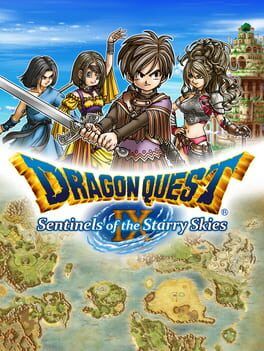

Yuji Horii says Dragon Quest IX was built for Nintendo DS because its local networking made immediate connection possible, a choice that still shapes remake speculation.
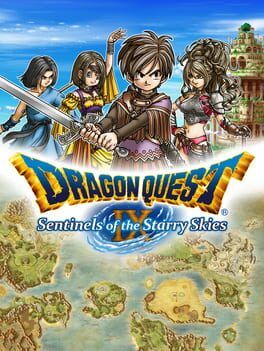
Image: IGDB
Horii says Dragon Quest 9 was built around the DS connection hook
Yuji Horii’s latest explanation for the Dragon Quest 9 DS exclusive decision is unusually direct: according to the Famitsu interview excerpt translated by Nintendo Everything and reported by My Nintendo News, Dragon Quest IX: Sentinels of the Starry Skies was made for Nintendo DS because the handheld let the team pursue quick local network play at a time when networked games were still comparatively difficult and inaccessible.
Nintendo Everything’s translation quotes Horii as saying the reason the team made Dragon Quest IX on Nintendo DS was “to allow quick and easy play over local networks.” My Nintendo News similarly reports Horii’s point that, on DS, players could connect with others as soon as they turned the system on. Horii called that an “amazing system” and said he wanted to create a Dragon Quest game using that network functionality.
That is the key tension in this retrospective. Dragon Quest IX did not land on DS because the series had run out of home-console ambition after Dragon Quest VIII. Horii frames the platform choice as a systems decision: the DS offered a social infrastructure the team wanted to build around. For a mainline RPG series known, as Nintendo Everything notes, for new entries debuting on home consoles before IX, that was always going to read as a rupture to some players.
The backlash made sense in the Dragon Quest VIII afterglow
The surprise around Dragon Quest IX’s platform is easier to understand when placed immediately after Dragon Quest VIII. Nintendo Everything points out that Square Enix was coming off Dragon Quest VIII on PlayStation 2, which it describes as the first entry where fans could experience the series with fully 3D graphics. My Nintendo News’s quoted Famitsu prompt makes the same contrast, noting that the “rich 3DCG” of Dragon Quest VIII made it seem as if the series was continuing a natural visual evolution before IX moved to Nintendo DS.
Horii says he expected surprise, but the response was sharper than that. In Nintendo Everything’s translation, he recalled criticism along the lines of “What? On Nintendo DS?” and said the team was “actually a little disheartened,” while My Nintendo News renders him as saying he was “a little discouraged at the time,” with a laugh.
Those two translations differ slightly in wording, but not in substance. Both reports present Horii as remembering a negative fan reaction to the DS announcement, and both tie that reaction to expectations formed by Dragon Quest VIII’s home-console presentation. GamesRadar’s framing goes further, describing Dragon Quest IX as having been “trapped on the Nintendo DS for 17 years,” which captures the modern frustration around access, but the underlying platform decision was born from 2009-era connectivity priorities rather than preservation concerns.
Dragon Quest IX fit the DS because the hardware changed the RPG promise
For an RPG player, Horii’s explanation is useful because it identifies the design promise before the hardware limitation. The DS was weaker than a PlayStation 2-style home-console path in obvious presentational terms, but the sources emphasize that its local network functions were the attraction. Nintendo Everything specifically notes that Dragon Quest IX included connectivity features such as four-player local multiplayer.
That matters when looking back at the game’s place in the series. Horii was not describing a porting compromise or a marketing experiment in the quoted Famitsu excerpt. He was describing a mainline Dragon Quest designed around the idea that players near each other could connect quickly. In progression-heavy RPGs, that kind of platform choice can alter the rhythm of play: when, where, and with whom players tackle the game becomes part of the design conversation.
The DS also made that social pitch practical in a way Horii says other network approaches at the time did not. According to Nintendo Everything’s translation, Horii said there were not many games using local networks then and that doing so was difficult. The DS lowered that barrier. The important historical point is not that every fan wanted a handheld Dragon Quest after VIII. Many plainly did not, based on Horii’s recollection. It is that Dragon Quest IX’s identity was tied to a feature the DS made unusually approachable.
The remake speculation keeps circling the same problem
Dragon Quest 9 remake speculation persists because the original platform choice solved one problem while creating another. The DS fit Horii’s local-network ambition, but it also left the game associated with a dual-screen handheld ecosystem that modern platforms do not reproduce one-to-one. GamesRadar’s “trapped on the Nintendo DS for 17 years” phrasing reflects that access issue, though it should be separated from any confirmed remake news.
No source material provided here reports a Dragon Quest IX remake announcement, release window, platform list, price, rating, store page, or publisher confirmation. The concrete news is Horii’s explanation of the original DS decision, not a new product reveal from Square Enix. My Nintendo News includes a reader comment wishing for a remake in the style of Dragon Quest VII for Nintendo Switch and Switch 2, with local wireless, Nintendo online play, and game sharing, but that is community speculation, not a publisher plan.
Still, Horii’s comments help define what a serious remake conversation would have to address. A remake would not merely need higher-resolution art or modern convenience features. It would need a credible answer for the local-network role that Horii says motivated the DS exclusive in the first place. If modern hardware cannot recreate that immediacy, a remake would have to reinterpret it through online play, local wireless, platform-level sharing features, or some other structure. None of those options has been announced in the supplied reports.
A modern version would be judged on systems, not nostalgia alone
The DS decision still matters because Dragon Quest IX’s platform identity is inseparable from how Horii describes its intended play. If a future version ever appears, fans will likely compare it against two different memories: the Dragon Quest VIII expectation of a visually expansive home-console RPG, and the Dragon Quest IX reality of a portable RPG built around easy local connection.
That split is the heart of the buyer question, even before there is a product to buy. A straight visual upgrade could satisfy players who bounced off the DS announcement in 2009, but it might miss the reason Horii chose the hardware. A version focused on multiplayer access could honor the original design logic, but it would need to fit modern habits around online services and platform ecosystems. The supplied sources do not establish whether Square Enix is pursuing either route.
There is also a preservation angle, but it should be kept factual. GamesRadar describes Dragon Quest IX as stuck on Nintendo DS for 17 years, while the broader Dragon Quest franchise page on Wikipedia identifies the series as a long-running Square Enix RPG franchise created by Horii, with main-series development spread across multiple external developers over time. That history makes platform movement normal for Dragon Quest as a franchise, but Dragon Quest IX remains a special case in the reports because Horii is pointing to a specific hardware function as the reason for its exclusivity.
For now, the practical answer is to wait for a real announcement
Readers looking for a Dragon Quest IX remake should treat the current wave of discussion as context, not confirmation. The confirmed facts from the cited reports are narrow: Horii told Famitsu that Dragon Quest IX was made for Nintendo DS because of its quick local network play, Nintendo Everything reports that the game included features such as four-player local multiplayer, and Horii recalled being disheartened or discouraged by criticism of the DS announcement.
Everything beyond that sits in the realm of expectation and speculation. There is no confirmed Dragon Quest IX remake release timing in the supplied material. There are no confirmed platforms, no price, no upgrade path, no technical target, and no statement here from Square Enix announcing a new version.
Horii’s explanation does, however, give fans a better question to ask if Dragon Quest IX returns. The issue is not simply whether a remake can make a DS RPG look modern. It is whether a new version can preserve the accessibility of connection that made the DS the “amazing system” Horii wanted to build around. Until Square Enix says otherwise, Dragon Quest IX remains a Nintendo DS exclusive by history, and a remake remains an unannounced hope shaped by that history.