
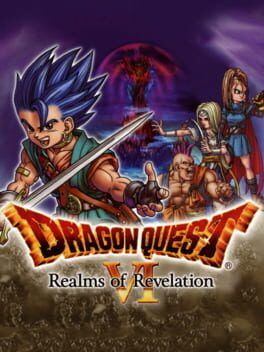
Square Enix says Dragon Quest has crossed 100 million cumulative shipments and digital sales as remakes, Switch 2 releases, Monsters, and Dragon Quest XII shape its next phase.
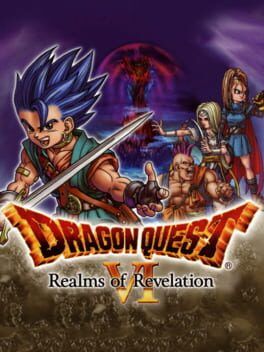
Image: IGDB
A 100 million milestone, and a slate under pressure
Square Enix has announced that Dragon Quest franchise sales have surpassed 100 million games sold worldwide, a total the publisher says is based on cumulative physical package shipments and digital sales. The Dragon Quest 100 million sold milestone lands during the series’ 40th anniversary year, four decades after the original Dragon Quest released in Japan in 1986.
That number is the concrete headline, but the timing is the more revealing part of the story. Square Enix is celebrating the commercial benchmark while Dragon Quest is between eras. The company’s recent public framing leans heavily on remakes, re-releases, and platform expansion, while Dragon Quest XII: Beyond Dreams remains in development as the next mainline entry without a release date or platform list in the provided announcement coverage.
According to Square Enix’s statement, carried by Nintendo Everything and Nintendo Life, Dragon Quest now spans 11 main series titles, numerous spin-offs, and adaptations across films, anime, novels, manga, and merchandise. Square Enix describes the series as a pioneer of the JRPG genre and credits its player-friendly structure, narratives, characters, monsters, visual style, and music for its long life.
For players, the current shape of the franchise is unusually practical. There are near-term games with dates, including Dragon Quest XI S: Echoes of an Elusive Age for Nintendo Switch 2 on September 24, as reported by MonsterVine, and Dragon Quest Monsters: The Withered World on December 3, 2026. There is also a long-term promise in Dragon Quest XII. The tension is that Square Enix can point to a huge franchise milestone while the next numbered chapter still sits beyond the visible release calendar.
Square Enix’s sales count is clear, but the split is not
The Dragon Quest sales milestone is reported as worldwide cumulative package shipments and digital sales. That phrasing matters. It means Square Enix is combining shipped physical copies with digital units sold across the franchise’s history. It does not, based on the provided materials, break out sell-through to consumers for boxed copies, regional performance, platform contribution, individual game totals, or how much recent releases added to the final push over 100 million.
That limitation is important for reading the business signal correctly. The announcement confirms that Dragon Quest has crossed a major commercial threshold, but it does not allow a precise ranking of which games drove the latest growth. Nintendo Life says the achievement has been helped by recent remakes, including Dragon Quest III HD-2D Remake, Dragon Quest I & II HD-2D Remake, and Dragon Quest VII Reimagined. Square Enix’s own announcement also emphasizes those remakes, but the company has not provided unit counts for them in the source material supplied.
The broader takeaway is still firm. Square Enix RPG sales now have another nine-figure franchise pillar alongside the publisher’s better-known global RPG brands. For Dragon Quest, a series historically associated with a particularly strong Japanese audience, the wording “worldwide” and Square Enix’s description of the franchise as a global phenomenon show how the publisher wants the milestone understood: as an international result, not a domestic legacy statistic.
There is also a messaging advantage in the 40th anniversary context. A 100 million cumulative figure lets Square Enix present Dragon Quest as active catalog value rather than nostalgia. That is useful at a time when the company is asking different kinds of RPG players to meet the series through HD-2D remakes, a Nintendo Switch 2 version of an existing modern classic, a revived Mystery Dungeon release, and a new Monsters entry.
Remakes are doing strategic work for the RPG catalog
Square Enix’s announcement does not treat the recent remakes as side material. It places them near the center of the 100 million celebration, which says plenty about how the publisher is maintaining Dragon Quest between numbered installments.
Dragon Quest III HD-2D Remake and Dragon Quest I & II HD-2D Remake are described by Square Enix as combining to tell the complete Erdrick Trilogy. The company says these remakes use the HD-2D graphical style and add never-before-seen story content and gameplay updates. That positioning is strategic: it lets newer players enter foundational Dragon Quest lore through modern presentation while giving returning players a reason to revisit routes, party decisions, and progression arcs they may already know.
Dragon Quest VII Reimagined, which Square Enix says arrived in early 2026, pushes the remake strategy in a different direction. The publisher describes it as a remake of 2000’s Dragon Quest VII: Fragments of the Forgotten Past that reimagines Akira Toriyama’s character designs in a hand-crafted 3D art style, with diorama-inspired environments and dungeons, streamlined exploration, and enhanced narrative depth. Those details matter because Dragon Quest VII has long been associated with a sprawling structure. Square Enix’s chosen language points to a remake philosophy built around preserving identity while reducing friction in quest flow.
From an RPG systems perspective, that is the most interesting part of the current slate. Square Enix is not only selling old names again. It is revising how players move through older Dragon Quest arcs, how much story context they receive, and how approachable these games feel on contemporary hardware. The company’s own press language repeatedly returns to accessibility and player-friendly design, suggesting that Dragon Quest’s next growth phase depends on lowering the barrier to entry without stripping out its traditional rhythm.
Nintendo players are central to the current runway
The current Dragon Quest Nintendo Switch picture is unusually strong, especially when viewed across both Switch and Switch 2. MonsterVine reports that Dragon Quest XI S: Echoes of an Elusive Age comes to Nintendo Switch 2 on September 24. Noisy Pixel reports that Dragon Quest Heroes: Torneko’s Mystery Dungeon -Classic HD- is available on Nintendo Switch 2, Nintendo Switch, PlayStation 5, Xbox Series, and PC via Steam. MonsterVine and Noisy Pixel both report that Dragon Quest Monsters: The Withered World launches December 3, 2026, with Switch 2 and Switch included alongside PlayStation 5, Xbox Series X|S, and PC storefronts.
That does not mean Dragon Quest is Nintendo-exclusive. The cited platform lists show a broad multiplatform approach for Torneko’s Mystery Dungeon -Classic HD- and Dragon Quest Monsters: The Withered World. Still, the Nintendo audience is clearly part of Square Enix’s active plan. Multiple near-term Dragon Quest releases are either available on Nintendo hardware or dated for it, and Nintendo-focused outlets highlighted the 100 million announcement alongside Switch 2 coverage.
This matters for audience momentum because Dragon Quest’s current Nintendo presence covers several entry points. Dragon Quest XI S offers a modern mainline adventure for Switch 2 players. The HD-2D remakes connect current Nintendo audiences with early-series lore. Torneko’s Mystery Dungeon -Classic HD- brings back an older spin-off lineage. The Withered World gives Monsters fans a dated upcoming release on both Switch generations.
For players deciding where to start, the confirmed dates create a simple map. If the goal is a mainline modern Dragon Quest on Nintendo’s newer hardware, September 24 is the date attached to Dragon Quest XI S on Switch 2. If the interest is monster-focused spin-off play, The Withered World is the December 3 release to watch. If the appeal is historical curiosity, Torneko’s Mystery Dungeon -Classic HD- is already available across modern platforms listed by Noisy Pixel.
Global growth is being built around familiar RPG language
Square Enix’s description of Dragon Quest’s appeal is notably consistent: approachable RPG systems, compelling narrative, iconic characters and monsters, charming visuals, and a strong soundtrack. Those are broad terms, but for Dragon Quest they describe a recognizable design contract. The series has rarely sold itself on mechanical shock. It tends to build confidence through readable progression, clear adventure structure, familiar monster language, and a sense of questing continuity from town to dungeon to party growth.
That identity helps explain how the franchise can cross 100 million units while still relying on older material as part of its current growth plan. Remakes can work for Dragon Quest because the core appeal is legible across generations. A slime remains instantly readable. An Erdrick reference still has franchise weight. A remake can update pacing, visuals, and story presentation while leaving the larger emotional and mechanical grammar intact.
The global angle is also broader than game sales alone. Square Enix points to films, anime, novels, manga, and merchandise as part of Dragon Quest’s footprint. Noisy Pixel similarly notes that the series has expanded beyond 11 numbered games into spin-offs and adaptations. Those formats keep characters, monsters, and iconography visible even when the next mainline game is not dated.
The 100 million figure therefore marks both a sales achievement and a test of continuity. Square Enix has a franchise with deep recognition, but it also has to keep explaining Dragon Quest to players who did not grow up with its original cadence. The recent remake language shows one answer: keep the lore map intact, modernize the route through it, and make sure the games are available where RPG players are currently building their libraries.
Dragon Quest XII is still the unanswered progression gate
The largest open question remains Dragon Quest XII: Beyond Dreams. MonsterVine reports that Square Enix reiterated the game remains in development as the next mainline entry. VGTimes likewise reports that Square Enix said Dragon Quest XII: Beyond Dreams is currently in development. The provided materials do not include a release window, confirmed platforms, price, or detailed gameplay information.
That absence keeps the 100 million announcement from becoming a full roadmap. Square Enix can celebrate the franchise’s past and point to several active releases, but the next numbered installment is still the missing keystone. For a series with 11 mainline games across 40 years, a new mainline entry carries different expectations than a remake or spin-off. It has to serve long-time players who care about Dragon Quest’s inherited structure while also proving that the franchise’s accessible RPG identity can continue to grow globally.
Until Square Enix says more, the safest reading is to separate confirmed pipeline from anticipation. Confirmed: Dragon Quest has surpassed 100 million cumulative package shipments and digital sales worldwide. Confirmed: the franchise is in its 40th anniversary year. Confirmed through current reports: Dragon Quest XI S is coming to Nintendo Switch 2 on September 24, Dragon Quest Monsters: The Withered World is scheduled for December 3, 2026, and Torneko’s Mystery Dungeon -Classic HD- is available on modern platforms listed by Noisy Pixel. Confirmed: Dragon Quest XII remains in development as the next mainline game.
Everything beyond that, including how Dragon Quest XII will play, when it will launch, and how it will affect the next phase of Square Enix RPG sales, is still unannounced in the source material. For now, the 100 million milestone is best understood as a checkpoint: Dragon Quest has enough momentum to support remakes, spin-offs, Switch 2 releases, and a still-distant mainline promise. The next challenge is turning that anniversary momentum into a clear path forward.