
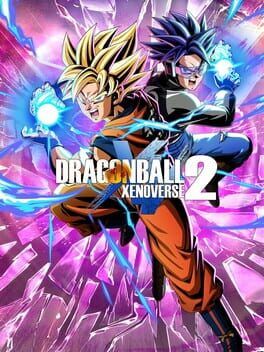
Project AGE 1000 has leaked as Dragon Ball XenoVerse 3, but the real story is how Dimps can evolve a decade‑old formula for next‑gen Dragon Ball brawling.
Project AGE 1000 was pitched as a brand new Dragon Ball world with original characters and a far‑future setting in Age 1000. But a slip on Bandai Namco Southeast Asia’s official YouTube channel seems to have quietly revealed what it really is: Dragon Ball XenoVerse 3.
Push Square reports that the official playlist hosting the AGE 1000 announcement trailer was briefly titled “Dragon Ball XenoVerse 3,” before being rapidly edited. The damage was already done, with screenshots and mirrors spreading across social media and being amplified by accounts like Wario64. Bandai Namco hasn’t confirmed the title publicly yet, but the branding crossover lines up with what fans have been speculating since the project reveal.
AGE 1000’s premise fits the XenoVerse mold cleanly. The series has always been about patrolling twisted timelines, repairing history, and inserting custom avatars into pivotal Dragon Ball battles. A future set centuries after the original manga gives Dimps a fresh canvas while keeping the time‑patrol structure intact. It also mirrors Dragon Ball Online’s distant‑future setting, which already served as a major inspiration for XenoVerse’s Time Patrol and character races.
Rather than treat this as just another leak, it is a rare opportunity to look forward. XenoVerse 2 is still being updated a decade after launch, but the genre and Dragon Ball game landscape have moved on. If AGE 1000 really is XenoVerse 3, here is where it can credibly evolve.
A new timeline needs modern netcode
If there is one area where XenoVerse 3 cannot afford to repeat history, it is online play. XenoVerse 2’s network experience has always been inconsistent. Delay‑based netcode, peer‑to‑peer connections, and desync issues made competitive matches and raids feel unreliable, especially once players started pushing the game’s combo and transformation systems.
The broader fighting game scene has shifted decisively toward rollback netcode, even for anime and arena titles. Games like Guilty Gear Strive, Granblue Fantasy Versus Rising, and even smaller projects have proven that responsive rollback can be paired with striking visuals and complex systems. For a game that still leans on reaction‑based vanishes, stamina breaks, and snap decisions around supers, that responsiveness is critical.
For XenoVerse 3, a robust online backbone should be treated as a headline feature, not an afterthought. Rollback netcode with sensible input delay options would immediately make PvP feel more honest. Dedicated servers for large‑scale modes like raids and Conton‑style hub activities could cut down on dropped lobbies and bizarre positional desyncs. High‑frequency state syncing for fast movement and beam clashes would finally make “what I see” and “what the opponent sees” match up.
There is also room to rethink how matchmaking works. XenoVerse 2 often left casual players at the mercy of optimized meta builds, while veterans complained about uneven connections and rage‑quits. A modern sequel could introduce optional ranked brackets with stricter connection requirements, while leaving looser “anything goes” lobbies for players who just want to see custom avatars clash. Given how long XenoVerse 2 survived, building a network layer designed for a ten‑year lifespan is not a luxury, it is table stakes.
Custom avatars as true Dragon Ball protagonists
Part of the original XenoVerse magic was stepping into the story as your own character. Over time, though, the limitations became obvious: stiff facial animations, limited body types, and shallow build variety meant most Time Patrollers blurred together. AGE 1000’s promise of an all‑new world and original cast is a chance to rethink what a custom Dragon Ball hero can be.
First, character creation needs more expressive tools. Multiple body archetypes, better proportions for each race, varied facial structures that do not all lean on the same template, and more flexible hair and aura options would let players match Toriyama’s exaggerated style without cloning the same avatar a million times. Modern lighting and materials could finally sell Saiyan armor, Namekian skin, and Majin gloss in ways that look sharp instead of plasticky.
Second, builds should matter beyond just picking a race and stacking ki or stamina. XenoVerse 3 could introduce a set of “combat archetypes” that influence combo trees, movement options, and utility skills. A Namekian tank build might have unique guard counters and regeneration triggers, while a human support archetype could specialize in buffs, debuffs, and team auras. The key is to avoid rigid “classes” while still making your choices feel like they lead to a distinct playstyle.
AGE 1000’s new characters could play into this by acting as mentors, not only for signature moves but for broader combat philosophies. Training under an original time patroller or a new Kai could unlock branching skill trees, combo routes, or transformations that reflect their style. Rather than simply grinding Parallel Quests for random drops, XenoVerse 3 can make progression feel more like an RPG story, less like a loot box.
Even social elements can help avatars feel more alive. Expanded hub interactions, in‑game photo modes that highlight your character’s personality, and more coordinated emotes and poses would tap into the same energy that kept Conton City populated for so long. In an always‑online future setting, half the fantasy is seeing how everyone else riffs on Dragon Ball’s look.
Raids and co‑op that respect your time
XenoVerse 2’s raid bosses and multiplayer events became a reliable reason to log back in, but they also showed the limits of its structure. Damage races against gigantic, hyper‑armored enemies sometimes felt more like watching health bars tick down than engaging Dragon Ball battles. Lag and weird collision made high‑level raids frustrating, especially when failure meant losing out on rare rewards.
For XenoVerse 3, the AGE 1000 setup naturally lends itself to bigger, stranger threats. Time anomalies and future villains can justify wild mechanics. The important step is to bind those ideas to co‑op systems that feel rewarding instead of punishing.
One path forward is to design multi‑phase raid encounters with clearer roles and mechanics. Imagine a fight against a time‑distorted fusion where certain players need to focus on breaking shields across timelines, while others manage adds or keep an NPC ally alive. Telegraphed super attacks that require coordinated vanishes or joint beam struggles could make big moments feel like Dragon Ball setpieces instead of random wipes.
On the structural side, better matchmaking and scaling are essential. Flexible raid tiers that auto‑adjust for smaller groups would let dedicated squads attempt harder content without relying on randoms, while public matchmaking could focus on more accessible versions tuned for varied builds. Clearer reward ladders that guarantee certain drops after a set number of completions would address the “endless grind for a 1 percent skill” fatigue that defined parts of XenoVerse 2’s life.
The long tail matters as well. Seasonal or episodic raid arcs, framed as specific time anomalies in the AGE 1000 storyline, would give co‑op content a narrative spine. Instead of isolated boss events, players could feel like they are actively defending the timeline month after month.
Next‑gen visuals that keep the anime charm
The announcement of AGE 1000 already emphasized “a new world and new characters brought to life” which strongly hints that visuals will be a selling point. XenoVerse 2 launched in 2016 and has been stretched across generations, but its age shows in flat lighting, repetitive environments, and the oily look that some character models picked up under modern HDR displays.
Contemporary Dragon Ball games prove there is a better path. Dragon Ball FighterZ used aggressive shading and camera work to mimic 2D animation. Dragon Ball Z Kakarot leaned into softer colors, atmospheric effects, and cinematic framing. XenoVerse 3 does not need to copy either, but it can learn from both.
A sequel on new hardware can push denser environments without sacrificing clarity. A future‑city hub in Age 1000 could feel bustling with layered crowds, airborne traffic, and destructible scenery that reacts to stray ki blasts. Distant ruins of familiar locations, overgrown Namekian districts, or off‑world arenas bathed in alien skies would help sell the far‑future premise.
Animations are just as important. One of XenoVerse 2’s quirks was how many ultimate attacks reused or abbreviated classic scenes. With a fresh start, Dimps can afford to choreograph more bespoke supers and team techniques that emphasize impact, camera shake, and character personality. If the game supports co‑op ultimates or raid‑specific finishers, a polished animation pipeline will make those moments as replayable as any cutscene.
Under the hood, stable performance remains vital. Given how fast and crowded XenoVerse battles can get, a strong frame rate target on consoles and PC is mandatory. Smart use of dynamic resolution, efficient particle systems, and modern upscaling can keep AGE 1000’s world looking sharp without compromising responsiveness.
Fitting into today’s Dragon Ball game universe
The timing of XenoVerse 3 is not accidental. By the time AGE 1000 launches, players will have a decade of XenoVerse 2 behind them, multiple seasons of Dragon Ball FighterZ, and a new wave of licensed titles experimenting with different genres. In that context, XenoVerse’s biggest strength is still its identity as a hybrid: part arena fighter, part RPG, part MMO‑lite.
That hybrid identity is exactly what gives AGE 1000 room to grow. FighterZ can continue to serve the strict competitive crowd, while story‑driven titles like Kakarot and future single‑player projects cover the nostalgia tours. XenoVerse 3 can position itself as the long‑term home for Dragon Ball fans who want to build a character, live in a shared world, and jump from ranked matches to co‑op raids without changing games.
If the leak is accurate and AGE 1000 truly is Dragon Ball XenoVerse 3, Bandai Namco now has a rare opportunity. A decade of live‑service lessons from XenoVerse 2, a more demanding online audience, and stronger competition across anime games have all raised expectations. Meeting them will require more than extra DLC and stronger bosses. It means treating netcode as a pillar, turning custom avatars into real protagonists, reimagining raids as cooperative adventures, and leveraging new hardware to build a future Dragon Ball world that feels alive.
The series has already proven it can keep players invested for ten years. The question for XenoVerse 3 is whether it can do that again, this time in a timeline that is finally built for the future it has always promised.