
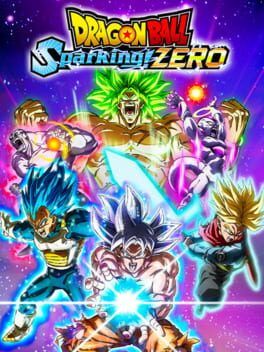

Bandai Namco’s latest Dragon Ball: Sparking Zero DLC and free update add Super Android 17, King Piccolo, Super Saiyan Bardock, new costumes, and fresh battle customization. Here’s what each addition brings to high-level play and how they might reshape team comps and strategies.
Bandai Namco’s newest update for Dragon Ball: Sparking Zero is more than a fanservice roster bump. With Super Android 17, King Piccolo, and Super Saiyan Bardock headlining a new DLC pack, plus fresh costumes and battle customization options arriving alongside a free update, the game is about to get a noticeable meta shakeup on both casual and competitive fronts.
What’s in the new DLC and free update
The new DLC introduces a batch of playable characters, with three obvious headliners for competitive players: Super Android 17, King Piccolo, and Super Saiyan Bardock. The pack also includes other legacy favorites like Zangya, Devilman, Mercenary Tao, Grandpa Gohan, Lord Champa, and Pikkon, along with additional stages such as Roshi’s Island. On top of that, there are new costumes, including a notable new look for Teen Gohan, and a teased new mode that Bandai Namco has not fully detailed yet.
Running alongside the paid content is a free update that adds Mission 100, a challenge mode where you take your favorite characters into a series of fights with different objectives. Mission 100 looks tailor-made for lab monsters who want to stress test routes, assists, and team synergies in a more structured format than simple free battle grinding.
The update also rolls out new battle customization options, letting players unlock and equip new super attacks for characters such as Goku and Vegeta. This layer of move customization has big implications for how teams are built and how certain shells function, especially in tournaments that allow customized loadouts.
Super Android 17: Resource control and oppressive zoning
Super Android 17 is poised to fill a rare niche as a heavyweight zoner and battery who can still brawl in close. In the anime, his kit centers on energy absorption, counter-style moves, and overwhelming beam pressure, and Sparking Zero’s trailer hints that his in-game tools lean into those ideas.
His long-range game should thrive on Sparking Zero’s large, fully 3D arenas. Expect charged beams and tracking projectiles that let him dictate neutral from mid to long range, forcing opponents to either burn movement options to close the gap or risk chip and guard damage. If he retains any kind of ki absorption or reflect-style move, he will naturally counter popular beam characters and punish reckless super spam in ranked.
On the team-building side, Super Android 17 fits best as a mid or anchor who comes in with resources. Pairing him with strong frontline rushdown like Super Saiyan Blue Goku or Ultra Instinct Goku gives you a layered gameplan. Your point character spends early meter opening the opponent and establishing momentum, then tags into Super Android 17 to lock them down at midrange and punish any attempts to reset space.
In competitive play, he is likely to become a staple pick against beam-heavy compositions or teams that rely on straightforward ki-blast zoning. He also looks like a prime answer to players who depend too much on linear approach patterns, since his long beams and potential counters can stuff telegraphed dashes and step-ins.
King Piccolo: Setplay menace and pressure specialist
King Piccolo is a very different beast from his modern counterpart. While regular Piccolo in most Dragon Ball fighters leans on zoning and layered setups, King Piccolo traditionally plays like a relentless bully with oppressive normals and overwhelming presence on screen.
In Sparking Zero, King Piccolo should excel at midrange harassment and setplay. Expect big, sweeping normals that control horizontal space and specials that create lingering threats, such as projectiles or explosive traps. If he gains access to minion-style attacks or delayed projectiles, he becomes especially scary in 2v2 and 3v3 situations, where a single well-timed summon can cover a tag or force a bad defensive option.
Teams that currently rely on Vegeta or Frieza for screen control may pivot to King Piccolo for his ability to pressure on wakeup and in the corner. He looks well suited to compositions built around suffocating offense, where the goal is to pin the opponent down and never let them comfortably reset neutral. Imagine a team where SSJ Bardock or Goku Black cracks the opponent’s defense, and King Piccolo tags in to run a brutal knockdown game that strips health and meter.
Tournament players looking to break turtle-heavy metas will be watching him closely. If his frame data and recovery are favorable, you can expect players to build “Piccolo cores” that revolve around forcing blocks and baiting vanishes, rather than playing the usual spacing footsies.
Super Saiyan Bardock: Momentum monster and scramble king
Bardock already appears in the base roster, but Super Saiyan Bardock is a major power spike that gives one of the most iconic Saiyans a full-fledged brawler archetype. Historically, Bardock is known in Dragon Ball fighters for strong buttons, easy confirms, and momentum-heavy pressure, and Super Saiyan Bardock seems poised to extend that reputation.
In Sparking Zero’s pacing, Super Saiyan Bardock should shine in close-range skirmishes. Faster normals, more damaging strings, and improved mobility will make him deadly once he is in your face. If he gets access to signature techniques like Rebellion Spear or an upgraded Riot Javelin, expect him to be able to convert stray hits into high-damage combos that also side-swap or carry to the corner.
For team compositions, SSJ Bardock almost screams “point character.” His job is to get the first opening, take the lead, and then either stay in to snowball or tag out safely after establishing a health advantage. He naturally pairs with assist-style zoners and controllers such as Super Android 17 or Beerus, who can cover approaches while Bardock fishes for a clean hit.
In a tournament context, you will likely see many players swap their current rushdown point to SSJ Bardock as soon as they get comfortable with his routes. He is exactly the kind of character that rewards strong fundamentals and reaction-based play, which makes him a favorite for top players who want consistency rather than pure gimmicks.
New costumes and what they actually change
While costumes are cosmetic first, they matter more than you might think in high-level Sparking Zero. The DLC adds new outfits for several characters, with Teen Gohan explicitly called out. Visual clarity is a real concern in 3D Dragon Ball fighters, particularly when multiple Gokus, Gohans, and Vegitas share the screen. A distinct Teen Gohan costume can make it easier to track which character version is currently active in hectic tag situations.
Costumes also subtly affect how players read animations. Different silhouettes or color palettes can change how quickly an overhead or a dash is recognized, particularly in chaotic 2v2 and 3v3 matches. Tournament players are likely to latch onto costumes that keep animations crisp and easy to read, both for execution and for defense.
For casual and content-creator communities, these outfits matter even more. Expect to see more themed squads such as “Cell Games Gohan” teams or retro Z movie tribute squads built around Bardock and Gohan in specific outfits. That in turn feeds back into the broader online meta, since popular streamers often set trends in character and costume usage.
Battle customization: How super-attack loadouts might redefine teams
The most quietly important part of this update is the added battle customization, which lets you unlock and equip new super attacks for characters like Goku and Vegeta. Instead of every Goku sharing the exact same standard supers, players can tailor their move lists to suit their teams and personal playstyle.
In practical terms, this means you may start seeing Goku builds that give up some raw damage to gain better screen control, or Vegeta setups that favor fast, safe supers over slow, high-commitment finishers. For zoning-heavy comps, equipping more horizontal beams and tracking ki blasts will be a priority. For rushdown squads, players might favor supers that lead directly into oki or tag routes.
Competitive rulesets will have to answer a big question: will all custom supers be legal, or will tournaments standardize “default only” builds to simplify balance? If full customization is allowed, then the Sparking Zero meta may shift from “what character do you play” to “what version of this character do you play,” similar to how assists and drive systems changed team fighters in the past.
This system also directly impacts synergy. A Goku who equips a fast DHC-style super that keeps the opponent juggleable suddenly becomes a perfect bridge between Bardock’s rushdown and Super Android 17’s zoning. Likewise, a Vegeta who leans into explosive beam supers pairs naturally with King Piccolo, who can force blocks and set up guaranteed beams.
Mission 100 and the competitive lab grind
Mission 100, added in the free update, should not be dismissed as a pure single-player mode. Structured mission content has historically been one of the best ways to teach and test advanced mechanics, and Sparking Zero’s implementation looks ideal for players who want to refine tournament-ready strategies.
By throwing your squad into different objective-based fights, you are effectively stress testing them under pressure. You can see how well Super Android 17 actually controls space when the mission requires survival, how reliably SSJ Bardock can convert off awkward hits when time is short, or how sturdy your King Piccolo pressure is when the AI fights back with aggressive vanishes and reversals.
In the long run, expect Mission 100 to become part of serious players’ training routines. It offers a middle ground between static training mode and the volatility of ranked, where you can grind out specific matchups and scenarios without worrying about rage quits or matchmaking downtime.
How the new content could shift team comps and the meta
The immediate impact of this DLC is that it gives Sparking Zero three strong archetypes that fill clear roles in team building. Super Android 17 shores up long-range control and anti-beam counterplay. King Piccolo brings suffocating pressure and setplay tools that crack turtles and passive playstyles. Super Saiyan Bardock delivers a reliable rushdown core for players who want strong offense without overly complex execution.
One likely early meta trend is the rise of “Bardock shells” built around him as point, backed by either King Piccolo for extended offense or Super Android 17 for zoning and cleanup. Another is the appearance of anti-zoner squads that specifically target Super Android 17 with high-mobility characters and strong teleports, trying to neutralize his screen control before he can stabilize.
Custom supers further complicate the picture. Goku and Vegeta, already among the most flexible characters in the game, will become even more modular. Top players are going to experiment heavily to find the exact configurations that best support these new DLC anchors and mids. A single optimized super loadout could be the difference between a “good” team and a tournament-winning one.
Overall, this update pushes Sparking Zero in a more expressive, player-driven direction. Between new DLC fighters that cover distinct archetypes, costumes that improve clarity and style, and battle customization that makes move sets more modular, the game is giving both casual and competitive players more tools to define their own playstyles. Whether you plan to terrorize ranked with Super Android 17’s beam control, slam through brackets with SSJ Bardock, or lab out devilish King Piccolo setups, the next phase of the Sparking Zero meta is going to be busy.