
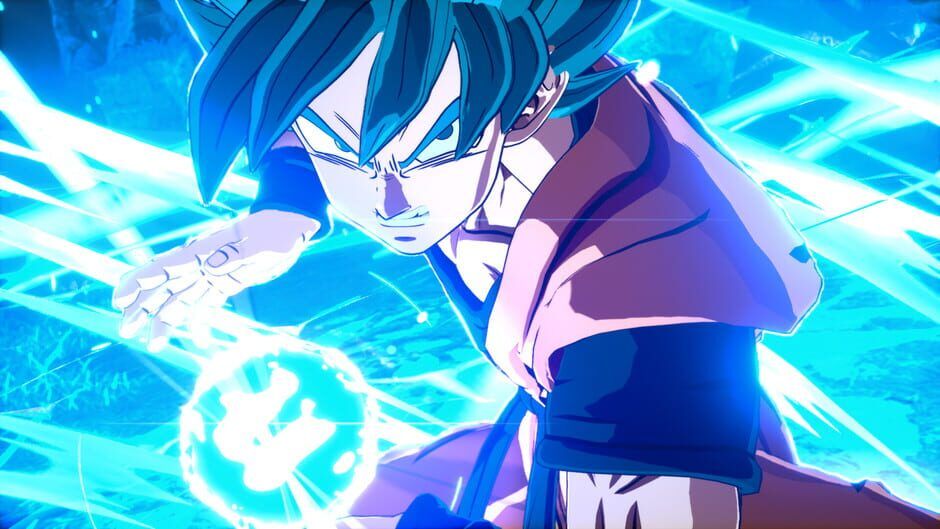

Super Android 17, King Piccolo, Super Saiyan Bardock and a mission-focused single-player grind are about to shake up Dragon Ball: Sparking! Zero’s online meta in 2026. Here is how the new DLC, Mission 100 mode, costumes and battle customization tools could reshape team building for both casual and competitive players.
Bandai Namco is treating 2026 like a second launch window for Dragon Ball: Sparking! Zero, and the headline is simple: this is not just more characters, it is more systems. The new DLC and free update announced during the Dragon Ball 40th anniversary event are clearly built to extend the game’s life well into its second year and to give the online meta room to evolve rather than calcify around early tier lists.
The core of the paid DLC is a roster injection that mixes fan-favorite powerhouses with tricky specialists. Super Android 17, King Piccolo and Super Saiyan Bardock are the obvious headliners, but they arrive alongside Zangya, Devilman, Mercenary Tao, Grandpa Gohan, Lord Champa and Pikkon. On paper that looks like a standard series nostalgia pack. In practice, it could be one of the most disruptive balance waves in the game’s short history because of how Sparking! Zero’s assist, tag and transformation systems reward synergy over raw stats.
Super Android 17 is likely to become a central pivot for new defensive and counter-focused team compositions. In previous titles he has leaned on absorption and energy nullification to punish beam-heavy opponents and shut down zoning patterns. In an online environment where Kamehameha variants and long-range ki pressure dominate casual rooms, a character who can turn those habits into liability will instantly change how people think about safe spacing. If Sparking! Zero’s battle customization tools let players tweak his absorption windows or modify follow-up supers after a successful nullification, you can expect entire community-made builds centered on turning enemy supers into meter and damage.
King Piccolo sits at the other end of the spectrum as a tempo bully. His classic toolkit revolves around oppressive normals, long-reaching specials and health-draining techniques that reward sustained advantage. On teams he looks ideal as a mid-slot character who comes in to snowball once the opponent is in a bad resource position. In casual play he is poised to be a favorite for players who like to overwhelm rather than outplay with reactions, while in competitive scenes he could anchor compositions that aim to lock opponents out of their preferred ranges and force them into panic tags.
Super Saiyan Bardock adds a more traditional, fundamentals-forward option that still carries heavy comeback potential. Bardock’s history in Dragon Ball fighters tends to oscillate between honest brawler and vortex monster, and Sparking! Zero’s free-movement 3D combat gives him room to both chase and pressure. Expect him to show up frequently in ranked as a flexible lead who can safely scout an opponent’s tendencies, then pass the baton to harder specialists like Super Android 17 or King Piccolo. With the new battle customization system letting you unlock additional supers for core cast members, Bardock builds that trade a bit of raw damage for stronger mix-up or safer confirms are very likely to appear.
The DLC does not stop at raw roster size. New costumes, including a new look for Teen Gohan, might seem cosmetic, but they feed into how players express identity in online lobbies. That matters in a game where character overlap is huge. When two players both lock in Gohan, costumes and customized supers become the signal for what style of game you are about to play. It makes rematches more interesting and creates clear archetypes in the community, like zoning Gokus built around newly unlocked long-range supers or rushdown Vegetas that sacrifice beam control for aggressive close-range options.
The real structural shakeup is Mission 100, the new free single-player mode. It is pitched as a set of 100 missions that you clear using your favorite characters, but the design implications go much deeper. If these missions scale in difficulty and encourage experimentation with the expanded roster, they become a natural training ground for tech hunters. Instead of labbing in a barebones practice mode, players can chase mission clears that subtly teach them spacing, resource routing and situational awareness. For casual players this gives a structured way to grow more comfortable with advanced mechanics. For competitive fans it is essentially a disguised training gauntlet that rewards grinding out unfamiliar matchups.
Mission 100 also pairs neatly with the new battle customization tools. Because you will be running repeated fights under varied conditions, the incentive to unlock and test new super attacks for Goku, Vegeta and others increases dramatically. Suddenly, experimentation is not an offline luxury for lab monsters but an integrated part of progression. As more players stumble on strong or unexpected combinations, the online meta will absorb those builds. Over time you can expect the line between casual and competitive tech to blur, since everyone who touches Mission 100 will be interacting with the same pool of unlockable options.
Battle customization itself might be the most important long-term change. Giving players the ability to discover and equip new super attacks turns each character into a small toolkit, not a fixed loadout. That has three big consequences for the meta. First, scouting becomes harder. When you see a familiar character, you can no longer assume you know every option they have in neutral and in pressure. Second, counter picking becomes more nuanced because you are reacting to a player’s build rather than just their character select. Third, tier debates will evolve from static lists into build-centric discussions where a supposedly mid-tier fighter might spike in power with the right set of supers.
From a team-building perspective, the 2026 update encourages thinking in roles rather than names. You will have damage anchors like Super Saiyan Bardock, control pieces like Super Android 17 and snowballing mids like King Piccolo, but their exact function will depend on what you have equipped. Imagine a King Piccolo who gives up some of his best raw damage options in favor of supers that extend combos for a tag partner, or a Super Android 17 build tuned for support with enhanced meter gain while he is on screen. These choices trickle down into online strategies, from ranked ladder to community tournaments.
Casual players stand to benefit from a richer sandbox. Roshi’s Island as a new stage and the expanded customization tools mean more variables to play with in friend matches. Instead of every session defaulting to the same handful of top-tier characters and supers, you will see more wild experiments: Devilman builds fishing for specific debuffs, Mercenary Tao flying around abusing stage geometry, or Grandpa Gohan surprising people with unorthodox movement. Mission 100 will quietly train this audience in matchup knowledge so that even wild picks feel less random and more like informed style choices.
For competitive fans, the big question will be stability. Every injection of new characters and supers risks short-term chaos, which can make serious events tricky to run if balance patches are frequent. The upside is that Sparking! Zero gains something it badly needs to thrive as a long-term esport: planned waves of meta refresh. Knowing that the 2026 roadmap includes major DLC, a long-form mission mode and systemic customization gives players a reason to keep investing time. It also means tournament organizers can plan seasonal formats around pre and post DLC patches, similar to how traditional fighting games frame new seasons.
In the broader context of Dragon Ball games, this 2026 push positions Sparking! Zero as more than a nostalgia-driven successor to Budokai Tenkaichi. It signals a pivot toward treated-as-a-platform support where new characters like Super Android 17, King Piccolo and Super Saiyan Bardock arrive tied to systems that change how people play, not just who they pick. If Bandai Namco can balance the new builds without flattening creativity, the result could be a meta that evolves in waves and keeps both casual lobbies and high-level tournaments fresh well beyond the game’s initial launch window.