
Bandai Namco’s “major” 2026 DLC and the new Mission 100 mode push Dragon Ball: Sparking! Zero toward a live-service future that can bridge today’s roster with tomorrow’s AGE 1000 project, reshaping single-player support, competitive balance, and how Budokai Tenkaichi-style games evolve over time.
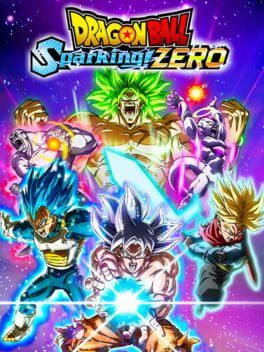
Bandai Namco has made it clear that Dragon Ball: Sparking! Zero is not just another one-and-done Budokai Tenkaichi style revival. With the announcement of a “major” DLC expansion coming in summer 2026 and the rollout of the new Mission 100 mode, Sparking! Zero is being positioned as a long-term Dragon Ball fighting platform that can sit alongside, and eventually intersect with, the newly revealed AGE 1000 project.
In practical terms, this means more characters, more modes, and a longer tail of support than older Tenkaichi releases ever had. The more interesting angle is what this live-service direction means for single-player fans, the competitive community, and how Bandai Namco will manage roster creep in a game already known for an enormous cast.
What Bandai Namco Has Actually Confirmed
Across Bandai Namco’s Genkidamatsuri announcements and follow-up press, a few details about Sparking! Zero’s roadmap are locked in.
For 2026, the centerpiece is a “massive” paid DLC expansion scheduled for summer. This expansion adds new playable fighters like Super Android 17, King Piccolo, Super Saiyan Bardock and several more legacy faces such as Spike the Devilman, Zangya, Tao Pai Pai, Champa, Grandpa Gohan and Pikkon. Alongside the roster additions, Bandai Namco is promising new stages, extra costumes, fresh attacks for existing characters including new super attacks for Goku and Vegeta, and at least one new mode layered on top of the current suite.
On the free side, Sparking! Zero is getting two key updates designed to keep people playing between now and that DLC drop. The most immediate is Mission 100, which arrives January 26 and functions as a single-player challenge ladder built around short, varied battles. Later in spring 2026, a Survival Mode update is scheduled, offering a more endurance-focused format.
There are some platform caveats. On PlayStation 5, Xbox Series X|S and PC, the cadence is straightforward, with Mission 100 first, then Survival, then the big summer expansion. Switch and Switch 2 owners will receive earlier DLC packs first starting in winter 2026, with schedules for the new wave staggered. That split already hints that Bandai Namco is thinking about Sparking! Zero not as a boxed product, but as a continuously updated service that must be synchronized and resynchronized across hardware.
Mission 100: Old-School Tenkaichi Energy For Modern Single-Player
Mission 100 is described as a simple single-player mode where you tackle a curated list of one hundred battles using your favorite characters. That framing is very deliberate. Bandai Namco explicitly calls back to the dense mission lists of Budokai Tenkaichi 3, a game many fans still hold up as the gold standard for solo content in this subseries.
Instead of a cinematic storyline, Mission 100 leans on scenario variety. You get unusual team compositions, “what if” encounters that never happened in canon, and odd rule sets that push you to experiment with underused fighters. For a modern Dragon Ball fighting game, this quietly solves two long-running problems: how to give casual players something repeatable to chew on without expensive cutscenes, and how to spotlight lesser-known characters in a gigantic roster.
Because the mode is single-player only, Bandai Namco has freedom to make encounters wildly unbalanced in either direction. Expect hard-hitting bosses that test your knowledge of Sparking! Zero’s movement and cancel systems, in contrast to the more straightforward story arcs. In a meta sense, Mission 100 is Bandai Namco’s way of reasserting that this is still a “playground” style Dragon Ball game, not a pure esports product.
The more intriguing possibility is what happens after the initial one hundred. If Mission 100 proves popular, Mission 200 or seasonal mission packs tied to other projects like AGE 1000 start to look almost inevitable. The structure is perfect for limited-time event fights themed around new characters or anniversaries and that is the precise cadence live-service games love.
How The 2026 DLC Pushes Sparking! Zero Toward A Platform Model
From a business and design perspective, the 2026 expansion is less about one specific batch of characters and more about setting expectations. When you introduce a “major” DLC a full year and a half after launch, you are implicitly telling the audience that this game is here for the long run.
The character lineup itself reflects that direction. The additions reach across the franchise timeline: classic villains like King Piccolo and Tao Pai Pai, GT material in Super Android 17, movie-adjacent picks like Pikkon and Zangya, and deep-cut favorites such as Spike the Devilman and Grandpa Gohan. That approach matches how live-service rosters work in other fighting games, drip-feeding fan favorites alongside stranger picks.
The other oversight is move and stage updates for existing characters. New super attacks for Goku and Vegeta, fresh costumes, and a returning Roshi’s Island stage are the sort of incremental tweaks that only make sense if the game will keep evolving. They also signal an intent to keep revisiting the core cast, not just padding the extremes of the character select screen.
When you add Mission 100 and Survival Mode on top, Sparking! Zero begins to look like a platform that can host special events, crossovers and long-form progression. Persistent modes with wide replay value give Bandai Namco a natural home for any seasonal tie-in content, including whatever AGE 1000 grows into.
The AGE 1000 Connection: A Bridge Between Eras
AGE 1000 is currently more teaser than game, but the broad strokes are clear. Bandai Namco showed a new white or gray-haired Saiyan protagonist designed by Akira Toriyama, wearing a Capsule Corp branded outfit reminiscent of the Great Saiyaman era, fighting masked enemies in what looks like some kind of simulation. The story is set hundreds of years after Z and Super, and is being pitched as a brand new Dragon Ball world built on original characters and future tech.
What does that have to do with Sparking! Zero? Historically, mainline Dragon Ball fighting games have chased whatever was most current, from GT to Super and the movies. This time, Bandai Namco has a fully modern arena fighter already in the wild before its new flagship project releases. If Sparking! Zero is still active when AGE 1000 arrives in 2027, the obvious step is to treat it as the legacy half of a two-game ecosystem.
Mission-based modes are the glue. A future Mission 100 update or successor could easily stage flash-forward battles featuring AGE 1000’s hero, villains and tech-based arenas, framed as simulations or time-travel anomalies. That sort of cross-era fan service is trivial to justify in Dragon Ball lore and fits the simulated combat that AGE 1000’s debut trailer already suggests.
This arrangement would mirror how other publishers use existing games to incubate interest in new IP or subseries. Sparking! Zero acts as the nostalgia-heavy, all-stars archive for Saiyan history up through Super, while AGE 1000 explores new ground. Shared content drops, synchronized events and cross-promotion inside Mission 100 or Survival Mode could keep both titles in conversation without one cannibalizing the other.
Competitive Play: Balancing A Growing Monster Roster
If Mission 100 is comfort food for single-player fans, the 2026 DLC is a stress test for anyone who wants to treat Sparking! Zero seriously as a versus fighter. Budokai Tenkaichi games have always flirted with competitive scenes while prioritizing spectacle and roster breadth, and Sparking! Zero leans into that heritage with its huge cast and chaotic beam clashes.
Adding another wave of characters like Super Android 17 and King Piccolo has immediate implications. Super Android 17, for example, traditionally brings absorption and counter mechanics that can either be oppressive or underwhelming depending on how they interact with projectile-heavy zoning. King Piccolo tends to be a mid-range bully with strong normals and space control. Pikkon is nearly always designed as a fast, technical character with high execution payoff.
Sparking! Zero’s move updates for stalwarts such as Goku and Vegeta may shake the top of the meta even more than the new inclusions. Whenever existing mains get new tools, players must reevaluate pressure strings, combo routes and neutral options. That kind of churn is healthy for a live game, but it also increases the burden on competitive communities who now have to lab each patch with an ever-growing checklist of matchups.
Survival Mode and Mission 100 could also influence competitive culture indirectly by encouraging players to explore secondary picks. Tough solo challenges tend to reveal sleeper-strong characters that did not look scary in day-one tier lists. Over time, that often leads to a more diverse tournament meta than you would expect from raw frame data alone.
The missing piece is official support. Bandai Namco has not yet outlined a full competitive circuit for Sparking! Zero, but the timing of the Mission 100 launch and 2026 DLC, paired with the yearly Dragon Ball Games Battle Hour events, leaves plenty of room for seasonal balance passes. If the game earns a recurring stage at those shows, expect balance updates to cluster around that schedule, similar to how other modern fighters align changes with Pro Tour milestones.
Roster Creep Compared To Classic Budokai Tenkaichi
Every new wave of Dragon Ball arena fighters faces the same question: how big is too big? Budokai Tenkaichi 3 famously boasted a staggering character list, but much of it amounted to minor stat and move-set variations. For some fans, that was part of the charm. For others, it fractured the roster into a handful of viable options and a graveyard of clones.
Sparking! Zero launched with a high base count, but Spike Chunsoft has put more emphasis on making each character mechanically distinct, with unique movement quirks, assist behavior, or situational supers. The 2026 DLC will be a reflection of how committed the team is to that philosophy. If Super Saiyan Bardock feels meaningfully different from his regular Bardock incarnation in terms of speed, risk-reward and combo theory, that is a win for modern design. If he mostly exists as a stat-tuned reskin, Sparking! Zero risks sliding back toward the quantity-first mentality of older Tenkaichi games.
Roster creep also affects accessibility. Newcomers confronted with hundreds of faces can feel overwhelmed, unsure where to start or how to pick a main. Mission 100 subtly mitigates that problem by encouraging experimentation in a low-stakes, AI-focused environment. When a mission nudges you to clear a challenge with Grandpa Gohan or Zangya, you naturally absorb how those characters function without needing to play ranked.
The other important factor is how the developers handle power creep. If each DLC character or move update is pushed slightly above the existing cast to drive sales, the game will quickly stratify into a “DLC or bust” environment. On the other hand, if Bandai Namco adopts a more restrained approach, introducing sidegrade tools and situational strengths instead of raw stat bumps, Sparking! Zero could land in a healthier place than Budokai Tenkaichi 3 ever managed.
A Forward-Looking Take: The Blueprint For Dragon Ball Fighters
Taken together, Mission 100, Survival Mode and the 2026 DLC paint a clear picture of how Bandai Namco wants to handle Dragon Ball fighting games for the rest of the decade. Sparking! Zero is the evolving legacy hub that can absorb decades of characters and story threads, while AGE 1000 looks poised to define a new era of canon.
If Bandai Namco can keep updates meaningful without drowning players in unmanageable roster creep, Sparking! Zero could become the go-to Dragon Ball platform rather than just another entry in a long line of fighters. Mission 100 is the quiet foundation of that shift, providing a lightweight, extensible framework for long-term single-player support, cross-promotion and experimental challenge design.
The competitive implications are more uncertain, but the ceiling is high. A stable patch cadence, thoughtful tuning on new DLC fighters, and smart integration of single-player modes that push people to learn more of the cast could give Sparking! Zero the enduring community presence that older Budokai Tenkaichi games never quite achieved.
As AGE 1000 gets closer and the summer 2026 expansion lands, the real test will be whether Bandai Namco is willing to treat Sparking! Zero as a living platform first and a nostalgia trip second. If it does, this could be the most cohesive Dragon Ball fighting ecosystem the series has ever seen.