
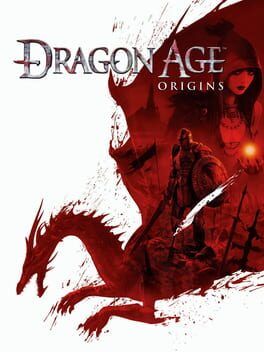

Former Dragon Age executive producer Mark Darrah says a Mass Effect Legendary Edition style collection is difficult because BioWare has lost old Aurora engine expertise.
Image: IGDB
Store links: Dragon Age: Origins on Steam, Dragon Age: Inquisition on Steam, Dragon Age: The Veilguard on Steam
A Dragon Age collection runs into a problem Mass Effect did not have
The strongest new signal for anyone waiting on a Dragon Age remaster is not a rating board listing, a store-page change, or a coy publisher tease. It is a technical warning from former Dragon Age executive producer Mark Darrah, who told FRVR, as reported by VGC, GameSpot, Push Square, and IXBT Games, that BioWare no longer has the old engine knowledge that would make a trilogy remaster straightforward.
Darrah was asked about whether Dragon Age: Origins, Dragon Age 2, and Dragon Age: Inquisition could receive a Mass Effect Legendary Edition style treatment. His answer was not that such a project is impossible, and none of the reporting cites EA or BioWare announcing a cancellation. The confirmed point is narrower and more useful: according to Darrah, the expertise needed to modernize the first two Dragon Age games has largely disappeared from BioWare and is scarce outside the studio as well.
That distinction matters for fans searching for a Dragon Age Legendary Edition or a Dragon Age trilogy remaster. There is no announced collection, no release date, no platform list, and no price in the provided source material. What exists is a former series lead explaining why the obvious comparison to Mass Effect breaks down as soon as development logistics enter the conversation.
The lost engine knowledge is the center of the story
Darrah’s key claim concerns BioWare’s old Aurora technology lineage. VGC reports that Dragon Age: Origins was built on Eclipse, an enhanced version of BioWare’s Aurora Engine, while Dragon Age 2 used Lycium, its successor. GameSpot similarly describes Eclipse and Lycium as enhanced versions of Aurora, with Dragon Age: Inquisition moving to DICE’s Frostbite engine.
That engine split is the core technical obstacle. Mass Effect Legendary Edition benefited from a cleaner foundation because, as Darrah noted in the FRVR interview, the first three Mass Effect games were built on Unreal Engine 3. Unreal knowledge exists broadly across the industry, and outside remaster specialists can more realistically help. Dragon Age does not offer that same contractor-friendly path, at least according to Darrah’s account.
His wording is stark. VGC quotes Darrah as saying, “There is basically no one at BioWare anymore that understands the Aurora Engine.” He also said, “There’s basically no one outside of BioWare anymore that understands the Aurora Engine. So unlike Mass Effect, which is Unreal… there are basically no companies that could help you.” Push Square and GameSpot both report the same central explanation: the problem is not simply desire, it is the loss of institutional knowledge around proprietary technology.
For an RPG like Dragon Age: Origins, that knowledge is not cosmetic. Origins’ tactical combat, party scripting, conversation flow, area transitions, inventory behavior, save-state logic, class progression, and DLC integration all sit inside a game architecture that was built for a different development era. A remaster team can increase resolution and improve UI scaling only after it can reliably build, debug, test, and preserve the underlying game. Darrah’s warning suggests that the people most fluent in that foundation are no longer in place.
Darrah says a ‘Champion’s Edition’ was once part of the plan
The most interesting wrinkle is that Darrah did not frame the idea as fan fantasy. According to VGC and GameSpot, he said that when he was at BioWare there had been a plan for a collection he called a “Champion’s Edition” or “Champion’s Trilogy,” grouping Dragon Age: Origins, Dragon Age 2, and Dragon Age: Inquisition as a retrospective trilogy built around three major figures.
That proposed framing makes sense for Dragon Age’s structure. Unlike Mass Effect, which follows Commander Shepard across one continuous trilogy, Dragon Age changes protagonists and political centers with each entry. Origins follows the Grey Warden and the Fifth Blight. Dragon Age 2 centers on Hawke and Kirkwall. Inquisition elevates the Inquisitor into a continent-scale religious and military crisis. Darrah’s reported idea would have packaged those shifting leads as a coherent historical arc rather than pretending the series had the same protagonist-driven continuity as Mass Effect.
But the reporting also makes clear that a past internal ambition is not the same as an active project. Darrah left BioWare in 2020 during development of Dragon Age: The Veilguard, according to VGC. No source material provided here says EA has greenlit a Dragon Age Origins remaster, a Dragon Age Legendary Edition, or any other remastered collection. The confirmed story is that the concept existed in Darrah’s thinking while he was at the studio, and that he now sees the technical and staffing reality as a major barrier.
A remaster would need people before it needs pixels
The easy version of a remaster conversation starts with texture resolution, frame rate, controller support, and loading times. Darrah’s comments point to a less visible prerequisite: a team that can safely operate the old tools. If a studio no longer has engineers and technical designers who understand a proprietary engine, every small improvement carries risk.
That risk is especially acute for Dragon Age because its first three entries are mechanically uneven by design and by technology. Origins is the most tactical and systems-dense of the three, built around party positioning, pausable encounters, origin stories, and class specialization. Dragon Age 2 reuses spaces more aggressively and pushes toward faster combat. Inquisition, built in Frostbite, shifts toward larger zones, crafting, war table operations, and open-region questing. A collection would not be one preservation job repeated three times. It would be at least two old BioWare engine problems followed by a Frostbite-era modernization problem.
GameSpot reports that Darrah believes the project would likely require a “brand-new team.” VGC adds Darrah’s view that, under EA’s structure, such work would probably happen under the BioWare umbrella, meaning those people would not be working on something else. That is a production tradeoff, not simply a technology note. Remasters consume senior attention, QA time, build infrastructure, localization checks, certification work, and platform compliance resources. For a choice-heavy RPG trilogy with expansions and DLC, save compatibility and content completeness would also become central questions, though the source material does not say how BioWare would handle those issues.
That is the practical difference between a remaster that looks simple from the outside and one that becomes a studio-level commitment. A Dragon Age remaster would need a preservation effort before it could become a marketing beat.
The business case exists, but BioWare’s capacity is the unresolved constraint
The market argument for remasters is easy to see. GameSpot notes that remasters are good business for game companies, and Eurogamer’s Capcom reporting gives a current example of how publishers value catalog strength: Capcom’s Q1 2026 financial materials credited strong new and catalog title performance for year-on-year unit sales growth, while Eurogamer also cited Resident Evil 4 as the best-selling remake of the current console generation. That broader industry context helps explain why fans keep asking for a Dragon Age trilogy package.
Darrah himself appears to think there is commercial potential. GameSpot reports that he said a Dragon Age collection could be successful, particularly after the impact Baldur’s Gate 3 has had on fantasy RPGs. That is interpretation from a former BioWare producer, not a sales forecast from EA. Still, it captures the tension: the audience appetite for party-based fantasy RPGs is visible, and Dragon Age: Origins remains the entry many fans most often want modernized.
The opposing pressure is BioWare’s current bandwidth. VGC reports Darrah’s separate view that a new Dragon Age game is unlikely under EA’s greenlighting process because it would probably need to be handled by BioWare, which is busy with the next Mass Effect. GameSpot also reports that after Dragon Age: The Veilguard failed to meet EA’s expectations, BioWare underwent changes that left a “core” team focused on the next Mass Effect game. Push Square similarly points to The Veilguard performing below expectations and the long wait for the next Mass Effect as context for why BioWare’s next release carries heavy commercial pressure.
Those are reported circumstances, not a formal statement that EA will never fund Dragon Age again. But they narrow the realistic path. If BioWare’s available staff is concentrated on Mass Effect, and if Darrah is right that external help is hard to find because Aurora expertise is scarce, then a Dragon Age trilogy remaster becomes a more expensive and disruptive project than its surface appeal suggests.
For fans, the safest assumption is preservation over waiting
For players hoping to replay the trilogy on modern hardware, the source-backed guidance is simple: do not treat a Dragon Age Legendary Edition as an imminent or likely product. Nothing in the provided reporting confirms an active remaster, a target year, platforms, pricing, performance targets, upgrade paths, or included DLC. The only concrete development is Darrah’s explanation of why the project would be difficult now.
That leaves fans in an awkward position. The Dragon Age franchise spans many platforms, with Wikipedia listing series releases across Xbox 360, PlayStation 3, Windows, OS X, PlayStation 4, Xbox One, PlayStation 5, and Xbox Series X/S, and the first three main entries have been joined by expansions and DLC. But the provided sources do not establish a current all-in-one modern collection. Anyone planning a replay should make decisions based on existing availability on their own platform rather than waiting for an unannounced Dragon Age Origins remaster.
The larger lesson is one RPG fans have seen across the medium: old games survive because teams preserve knowledge, tools, builds, documentation, and people, not because the brand remains beloved. Dragon Age is particularly vulnerable because its identity is tied to systems that changed from game to game. Origins’ origin stories and tactical party control, Dragon Age 2’s compressed city drama, and Inquisition’s Frostbite-era scale each carry different preservation problems.
A Dragon Age remaster trilogy still has an obvious audience. It would give new players a cleaner route through the Grey Wardens, Kirkwall, and the Inquisition before or after The Veilguard. It would also let returning players revisit builds, companion arcs, romances, and world-state choices without wrestling with aging platforms. Darrah’s comments do not erase that demand. They explain why demand alone is not enough when the engine knowledge that built the series has faded.