
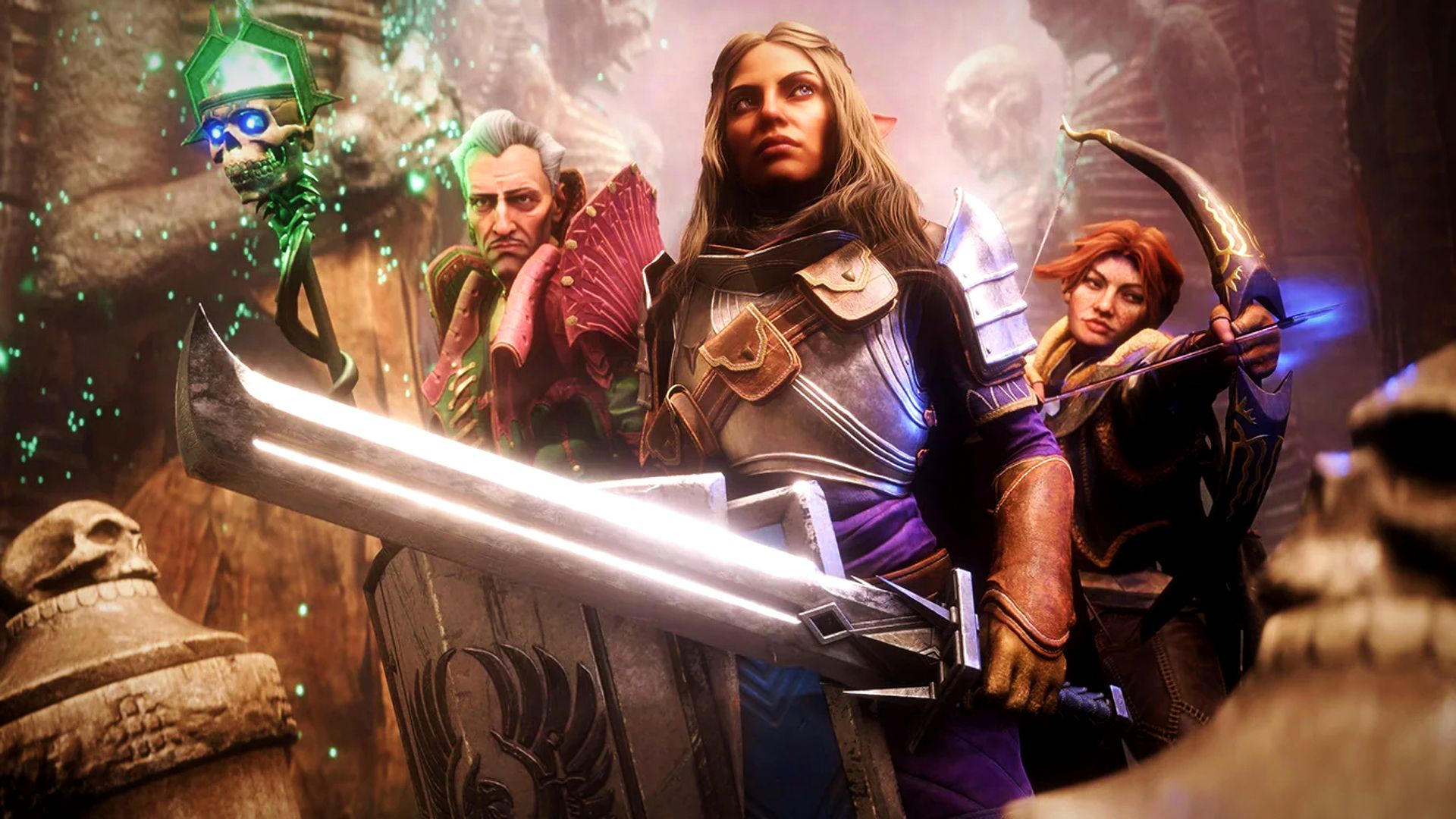

Former Dragon Age executive producer Mark Darrah says he has little faith the RPG series will return soon, citing EA's internal greenlight process, BioWare's Mass Effect focus, and uncertainty over who would pitch the next game.
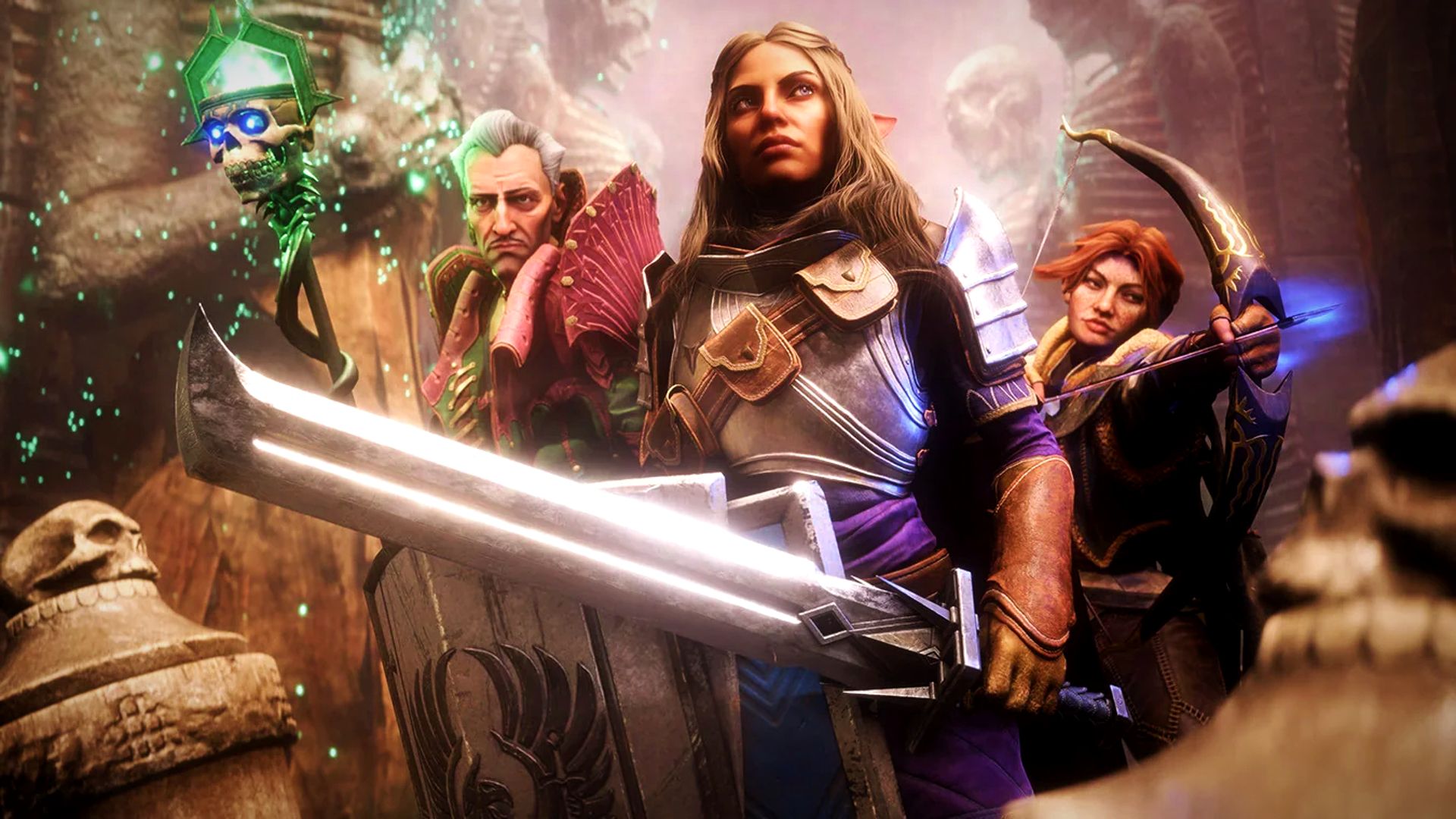
Image: gamesradar.com
Darrah’s warning is about process, not an announced cancellation
Former Dragon Age executive producer Mark Darrah says he does not see another Dragon Age game coming soon, and his reasoning is less about Thedas running out of stories than about who inside Electronic Arts could actually get a pitch through the company. In an interview with FRVR, reported by VGC, Darrah said he has “no concept of who could, would, possibly pitch” a new Dragon Age at EA, adding that the publisher owns “a frightening number of IPs that are dormant.”
That is the strongest concrete development here: a veteran who spent 23 years at BioWare and served as executive producer on the Dragon Age series is publicly skeptical that the franchise has a clear path back through EA’s approval structure. It is also important to keep the boundary clear. EA has not announced that Dragon Age is cancelled. BioWare has not said the series is over. No new Dragon Age game has been announced, dated, priced, rated, or listed on storefronts.
Darrah’s comments are an informed outside assessment from a former BioWare leader, not a current corporate statement. They matter because they point to a practical bottleneck that fans often miss when discussing the Dragon Age future. A role-playing series can have unresolved lore, a loyal audience, and obvious sequel hooks, but still sit idle if no internal team has the mandate, resources, and political clearance to make the case for it.
The greenlight problem Darrah describes starts with ownership inside EA
Darrah’s most pointed criticism concerns how existing intellectual property can become difficult to revive inside a large publisher. Speaking to FRVR, he said that when someone decides to make a game based on an EA-owned IP, “the instant you’re about to start,” multiple people who believe they control it can appear and challenge the effort. VGC summarized his view as a problem created by dormant franchises and competing internal claims over them.
For Dragon Age, Darrah sees a narrow and awkward path. In his view, BioWare is the obvious steward because the series has historically belonged to that studio. But he also said, “the problem is I don’t know who at BioWare would pitch a Dragon Age.” If another EA team tried to bring forward a Dragon Age pitch, Darrah told FRVR he would expect someone at BioWare to push back in the same defensive way he had described elsewhere in the publisher’s structure. His conclusion was blunt: “I suspect that it wouldn’t happen for a variety of reasons.”
That does not confirm that EA has formally blocked a Dragon Age new game. It does suggest that Darrah sees the franchise trapped between two requirements: BioWare may be the only politically plausible home for it, while BioWare may not currently have an obvious champion or available development track for it. For an RPG series built on continuity, faction memory, and player choice, that internal stewardship question is especially consequential. Dragon Age is difficult to hand off cleanly because its value is tied to tone, world-state handling, companion writing, and long-running lore expectations as much as combat or brand recognition.
BioWare’s current focus is Mass Effect, and that leaves Dragon Age without a clear lane
The other confirmed pressure point is BioWare’s workload. VGC reports that BioWare is currently working on a new Mass Effect game, which was announced in December 2020. VGC also cites Mass Effect executive producer Mike Gamble’s reassurance from last year, when he addressed rumors about the project and wrote that “the next Mass Effect game is in development” and that EA and BioWare “remain committed to telling more stories in this universe.”
That public commitment gives Mass Effect a visible place in BioWare’s immediate future. Dragon Age does not currently have the same status. The Veilguard arrived in 2024 as the first new Dragon Age game since 2014’s Dragon Age: Inquisition, according to VGC and VGTimes. After a decade-long gap, Darrah’s comments raise the possibility that the series could return to dormancy rather than move into a regular sequel cadence.
The studio structure around that work has also changed. VGC and VGTimes report that Electronic Arts downsized BioWare in early 2025 following Dragon Age: The Veilguard. VGC’s source text notes BioWare general manager Gary McKay said the next Mass Effect game did not require “support from the full studio.” That is a staffing and production fact, not proof that Dragon Age is dead. But it does shape the practical question for fans: if the studio is smaller and its active public project is Mass Effect, a new Dragon Age would need leadership, staffing, budget approval, and a production window before players ever saw a teaser.
The Veilguard’s performance is part of the backdrop, but the sources differ in tone
Several outlets connect Darrah’s pessimism to Dragon Age: The Veilguard’s commercial reception, but they do not all phrase the point the same way. FRVR describes The Veilguard as a “major failure” and refers to “worrying sales.” Push Square writes that it “failed to sell very well.” Eurogamer’s separate reporting says The Veilguard fell short of EA’s sales expectations, alongside EA Sports FC 25, as EA lowered its financial forecast. Those are related claims, but readers should treat the most precise version as the one tied to EA’s own expectations: The Veilguard underperformed against what EA had projected.
That context matters because Dragon Age has repeatedly survived long odds. Eurogamer’s report on former lead writer David Gaider quotes him saying that, during his time at BioWare, the team was “always one breath away” from a project being shelved, but Dragon Age releases kept selling better than expected. VGC notes that Inquisition launched in 2014, and FRVR states that Inquisition became BioWare’s best-selling game of all time. The Veilguard broke the decade-long silence, but the available source material presents its commercial result as disappointing rather than franchise-reviving.
There is a danger in flattening that into fan certainty. Underperformance does not automatically equal cancellation. A weaker launch can change internal appetite for investment, especially for an expensive single-player RPG, but EA has not publicly announced a final decision on the Dragon Age series. Darrah is describing why he doubts a pitch would emerge and survive. Fans are extrapolating from that into broader claims about BioWare’s future, and those claims remain unconfirmed unless EA or BioWare says them plainly.
Gaider’s comments reinforce the pessimism, but from a different angle
Darrah is not the only former Dragon Age lead expressing doubt. Eurogamer reports that Dragon Age creator and former lead writer David Gaider told PC Gamer he believes another installment is “unlikely” while the series remains under EA’s control. Eurogamer also reports that Gaider would be interested in returning under some unlikely future circumstance, saying he would take the series in a “dark and dangerous” direction and do things that would “make people upset.” TechRadar’s coverage highlights a similar thread from Gaider, including the idea of returning to “the basics of what made Dragon Age appeal to so many people in the first place.”
Gaider’s comments are creative and historical; Darrah’s are production-focused. Together, they show why the Dragon Age future feels uncertain from both sides of the old BioWare equation. The writing side sees a franchise whose identity may need a sharper return to foundational appeal. The production side sees an EA greenlight process where even a known IP may struggle to find a sponsor and avoid internal resistance.
For players, those are separate issues. A hypothetical next game would need a creative thesis, such as what era of Thedas it follows, how it handles the aftermath of The Veilguard, and how much weight previous choices carry. It would also need a production thesis, meaning who makes it, who approves it, and why EA believes the investment fits its portfolio. Darrah’s comments are mainly about the second problem. The fandom’s louder debate is often about the first: tone, companions, tactical depth, romance, faction design, and whether the series should lean closer to Origins, Inquisition, or The Veilguard.
No new Dragon Age has been announced, so players should treat the series as inactive for now
The practical read is simple, even if the corporate picture is complicated. There is currently no announced Dragon Age new game. There are no confirmed platforms, release window, price, editions, PC requirements, upgrade paths, or storefront listings in the provided source material. The latest released entry remains Dragon Age: The Veilguard, which launched in 2024. BioWare’s publicly discussed active project is the next Mass Effect, and EA has not issued a new statement promising another Dragon Age.
That makes Darrah’s assessment useful as a signal, but not as a verdict. His experience gives weight to his view of EA’s internal process, yet he is no longer speaking as BioWare management. The confirmed facts are that Darrah has little faith in a near-term return, BioWare is working on Mass Effect, BioWare was downsized after The Veilguard, and The Veilguard underperformed against EA’s expectations according to reports citing EA’s financial outlook. The unconfirmed part is everything beyond that: whether BioWare will never make another Dragon Age, whether another EA studio could ever be allowed to touch it, or whether EA’s ownership or investment priorities might eventually change the calculation.
For RPG players who follow Dragon Age for world-state consequences and long-form character arcs, the hard truth is that the series is in a waiting phase with no visible quest marker. Thedas still has narrative space left, but a sequel needs more than unresolved lore. It needs a champion inside BioWare or EA, a greenlight path that survives internal ownership disputes, and a business case strong enough to compete with other priorities. Until one of those appears publicly, expectations for the Dragon Age future should stay cautious.