
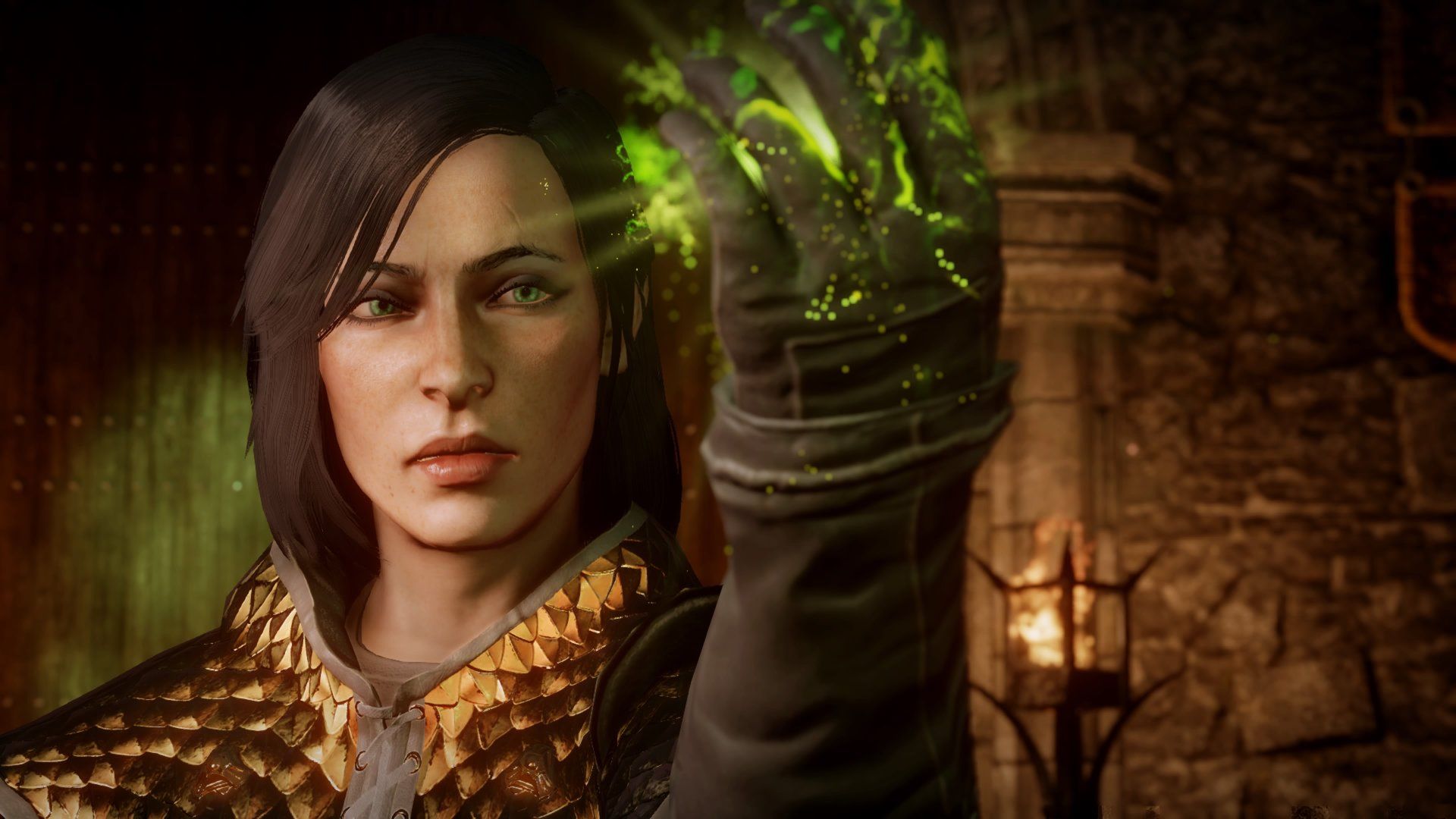
Former Dragon Age lead writer David Gaider says another game looks unlikely under EA. Here is what that does and does not tell fans about Dragon Age 5.
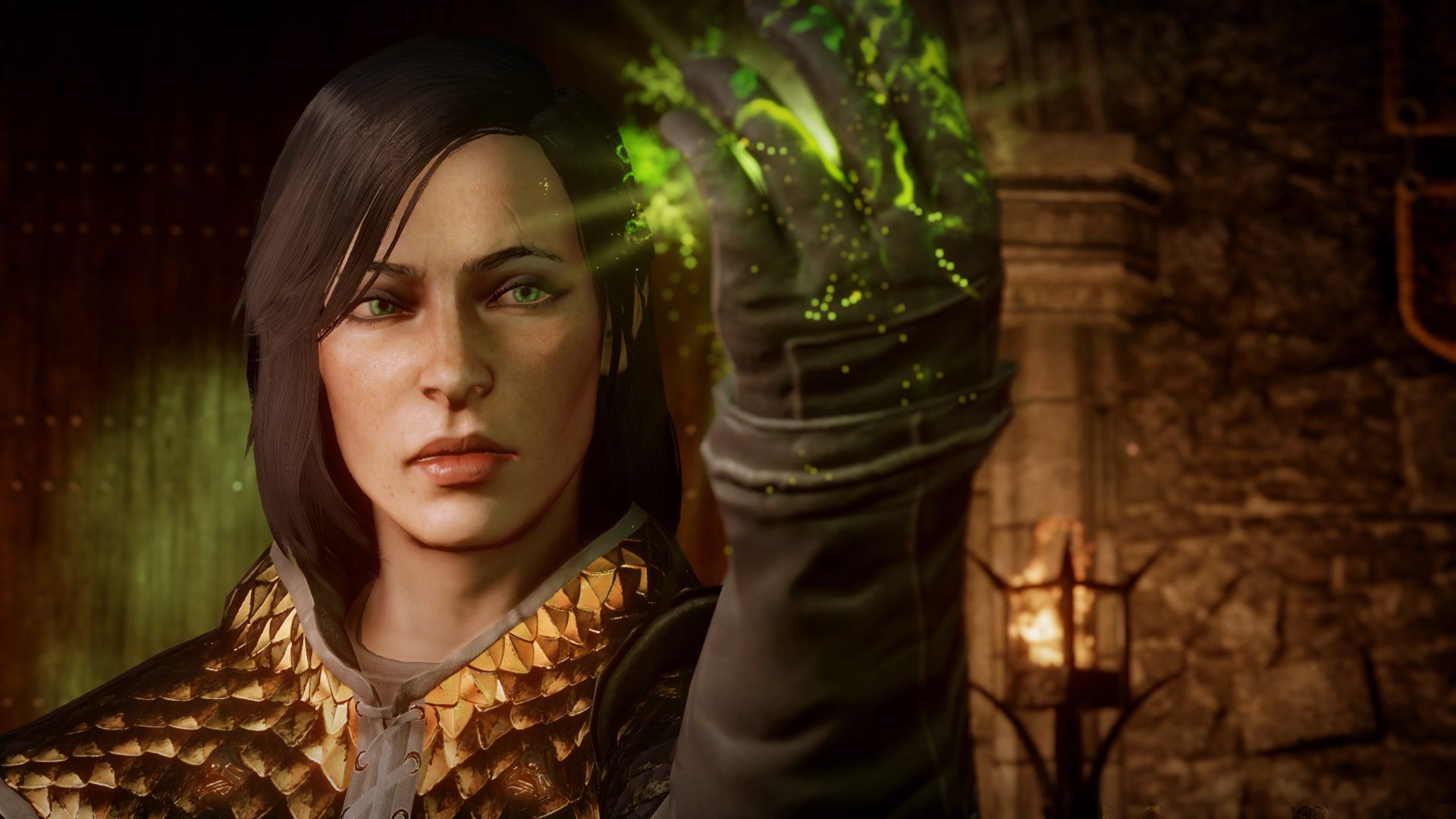
Image: gamesradar.com
Gaider’s pessimism is a warning sign, not a Dragon Age 5 cancellation
Former Dragon Age lead writer David Gaider has said he believes another Dragon Age is “unlikely” while the series remains under Electronic Arts, according to interviews reported by PC Gamer and covered by Eurogamer, Polygon, and IGN. That is the strongest concrete development here: one of the central creative voices behind the first three games thinks the franchise’s future under its current corporate owner is bleak.
It is also important to keep the boundary clear. Gaider no longer works at BioWare, having departed in 2016, and the source material does not include an EA or BioWare announcement canceling Dragon Age 5. There is no confirmed Dragon Age 5 reveal, no platform list, no release window, no price, and no stated production plan. What fans have is an informed former lead’s assessment, made against a backdrop of Dragon Age: The Veilguard underperforming for EA and BioWare being redirected toward Mass Effect.
That distinction matters for a series built on long waits and shifting design mandates. Dragon Age has survived reinventions before, from Origins’ tactical party RPG lineage to Dragon Age 2’s compressed city drama, Inquisition’s open-zone structure, and The Veilguard’s more action-forward form. But Gaider’s comments are not about whether Thedas has more lore left to mine. They are about whether EA has the appetite to fund another BioWare fantasy RPG after the last one failed to meet the publisher’s expectations.
The business context around The Veilguard is doing most of the work
Gaider’s comments land differently because they follow EA’s own public disappointment in Dragon Age: The Veilguard. Polygon reports that The Veilguard reached 1.5 million players in its first two months, but also says EA later described the game as a failure. In a February 2025 earnings call, EA CEO Andrew Wilson said The Veilguard “did not resonate with a broad enough audience in this highly competitive market,” according to Polygon.
Eurogamer similarly reports that The Veilguard fell well short of EA’s sales expectations and notes that EA lowered its financial forecast after both EA Sports FC 25 and The Veilguard underperformed. Eurogamer also says EA leadership appeared to point toward the game’s lack of live-service features as a possible factor, while noting the uncomfortable comparison to BioWare’s Anthem, a live-service-style project that also failed to meet expectations.
That creates the tension at the center of the Dragon Age future conversation. If a single-player fantasy RPG underperforms, a publisher can conclude that the audience has shrunk, that the execution missed, that the market timing was poor, or that the monetization model did not fit its ambitions. Those are very different diagnoses. Fans should be cautious about assuming EA has reached only one of them, because the sources show public disappointment but do not provide a detailed internal postmortem.
For RPG players, the difference is practical. A future Dragon Age EA project would not simply need a new story hook. It would need a business case strong enough to justify years of development, a large writing and quest team, cinematic production, combat systems, companion work, localization, quality assurance, and console and PC optimization. Thedas can always support another crisis in lore terms. The harder question is whether EA currently sees that crisis as a fundable product.
Gaider says Dragon Age was always fighting for oxygen inside EA
Gaider framed his pessimism as part of a longer pattern. Eurogamer quotes him saying that during his time at BioWare, “We were always one breath away from the [current] project being shelved.” He added that Dragon Age kept surviving because the games sold better than expected and “kept surprising” EA.
Polygon’s account of the PC Gamer interview adds sharper language from Gaider about EA’s internal preference. According to Polygon, Gaider said EA treated Dragon Age like “the redheaded stepchild” and preferred BioWare’s more action-oriented science fiction series, Mass Effect. Polygon also reports Gaider’s recollection that strong Dragon Age sales were treated as a “fluke,” while weaker Mass Effect results received “excuses.”
Those are Gaider’s recollections, not a current EA statement. Still, they help explain why his latest assessment is not simply a reaction to one disappointing launch. His view is that Dragon Age’s position inside EA was historically fragile even when the games were working commercially. If that is true, The Veilguard’s underperformance removes the kind of surprise success that previously protected the series.
This is also where Dragon Age differs from many dormant franchises. It is not a small legacy brand waiting for a cheap revival. It is a lore-heavy, choice-reactive RPG series whose appeal depends on companion arcs, world-state consequences, faction identity, moral pressure, and a particular texture of codex-deep fantasy politics. Those strengths are expensive to build and easy to dilute. A publisher choosing between that and a clearer global action brand has obvious incentives, even if fans would argue that Dragon Age’s identity is exactly what made it valuable.
BioWare’s current RPG uncertainty points away from an imminent return
IGN reports that after The Veilguard’s fallout, BioWare was downsized and its remaining staff were tasked with pre-production on the next Mass Effect. IGN further states that BioWare’s current remit is Mass Effect, with no chance of another Dragon Age arriving before Mass Effect 5. IGN also says BioWare has not announced when Mass Effect 5 will arrive, though the outlet understands it is likely still a couple of years away.
That makes Dragon Age 5 a distant question even under the most optimistic reading. If the next Mass Effect is still in pre-production or early enough that no public release timing exists, then another full-scale Dragon Age would sit behind a project that itself has no firm date. Nothing in the provided sources indicates a second BioWare team quietly building a fantasy RPG in parallel.
The leadership picture adds to the uncertainty. IGN reports that much of the leadership behind The Veilguard was moved elsewhere within EA or laid off after BioWare shifted focus to Mass Effect. That does not make another Dragon Age impossible, but it does mean continuity cannot be assumed. A future entry would likely need a reassembled creative structure, a renewed technical plan, and a clear answer to what kind of RPG Dragon Age should be after The Veilguard.
For players who care about builds, quest cadence, party composition, and world reactivity, that uncertainty is larger than a logo on a future showcase. Dragon Age’s identity has changed dramatically from game to game. A hypothetical fifth game could lean into action combat, return to tactical party control, reset the setting, or carry forward The Veilguard’s ending in some form. The sources confirm none of that. At present, the only concrete BioWare RPG direction in the reporting is Mass Effect.
What Gaider would do with Dragon Age is a creative pitch, not a plan
Despite his bleak forecast, Gaider did not rule out personal interest in returning to the series under an unlikely set of circumstances. IGN quotes him saying, “I do like a challenge,” and imagining that if “some weird alignment of the stars” handed the franchise back to him and asked him to “Breathe the life back into this baby,” he would find that interesting.
His stated direction would be a deliberate return to danger. According to IGN, Gaider said he would “go back to the basics of what made Dragon Age appeal to so many people in the first place,” then “go somewhere dark and dangerous, and do things that will make people upset.” Eurogamer reports the same broad sentiment, including his interest in taking the series in a “dark and dangerous” direction.
That should not be read as a Dragon Age 5 design document. Gaider is not announcing that he is working on the franchise, and none of the sources say EA is handing him the rights. It is a former lead writer describing the kind of creative risk he would find interesting after years away from Thedas.
The comment is still revealing because it identifies a fault line in the audience. Dragon Age has always drawn power from uncomfortable decisions: mage freedom versus templar control, political compromise versus idealism, personal loyalty versus institutional survival. Gaider’s language suggests a version of the series that would restore friction to the center of quests and companion relationships, even at the cost of making some players angry. That is a recognizable RPG design philosophy. It is also the opposite of a safe brand-maintenance sequel.
The Veilguard’s reception is contested, which complicates the easy narrative
The source material does not present a single clean verdict on The Veilguard’s quality. Polygon describes the game as having received largely positive reviews and cites its own review, which called it “BioWare at its best” while noting that it took time to get rolling. IGN, by contrast, says The Veilguard launched to mixed reviews and faced criticism for its writing, including some characters described by critics as overly youthful and storylines viewed as on-the-nose.
Both can be true in the broader reception sense: a game can review decently in some places, divide longtime fans, and still miss the sales or engagement targets set by its publisher. For Dragon Age, that divide is especially sharp because the series’ audience evaluates more than completion time or combat feel. Players remember whether choices bite back, whether companions carry ideological weight, whether factions feel rooted in history, and whether a finale pays off years of lore investment.
IGN notes that The Veilguard’s appearances by Solas were among its stronger moments and that its Mass Effect-inspired final sequence served as a worthwhile capstone on the franchise’s story to date. That matters for Dragon Age 5 speculation because it suggests the series is not necessarily paused on an unresolved cliffhanger in the way fans once feared during the long wait after Inquisition. The Veilguard appears, in IGN’s reading, to have closed major hanging plot points.
A cleaner narrative would say The Veilguard failed, so Dragon Age is dead. The reported picture is messier. The game found players, earned some praise, disappointed EA commercially, divided parts of the audience, and arrived after an unusually long and troubled development. Any future pitch for Dragon Age would have to answer all of that at once.
What fans should infer, and where the line stops
Fans can reasonably infer that Dragon Age is not an active public priority for BioWare right now. IGN reports the studio’s remaining focus is Mass Effect, while EA has publicly said The Veilguard did not reach a broad enough audience. Gaider, drawing on his own history with the franchise, believes another Dragon Age is unlikely under EA. Together, those signals point to a long dormancy unless EA changes course.
Fans should not infer that Dragon Age 5 has been officially canceled, because the provided source material contains no such announcement. They should not infer platforms, combat style, companions, setting, canon world state, or release timing. They should also be careful with the idea that Gaider is teasing a return. His comments describe a hypothetical scenario, not a confirmed job, project, or rights transfer.
The most practical guidance is simple: do not plan around Dragon Age 5 arriving anytime soon. If you are deciding whether to play The Veilguard, treat it as the current endpoint of the series rather than a guaranteed bridge to a near-future sequel. If you are waiting for BioWare’s next RPG, the reported path runs through Mass Effect first.
For a lore-heavy series, that is a strange kind of closure. Thedas may have unresolved corners, untouched nations, and enough political and magical pressure to fuel another decade of quests. But the Dragon Age future now depends less on whether the setting has stories left and more on whether EA believes a big-budget single-player fantasy RPG can still deliver the audience it wants.