
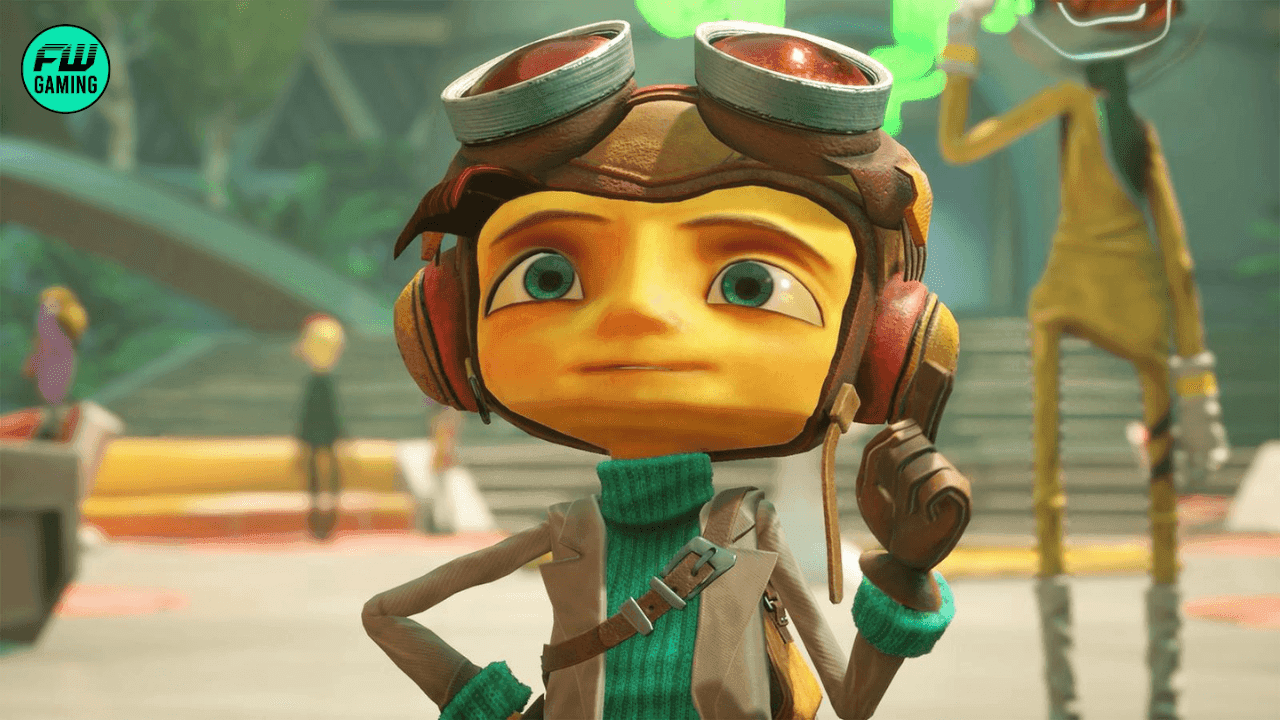
Tim Schafer says Double Fine has regained its IP and publishing rights after leaving Xbox, turning future catalog sales into runway for the newly independent studio.

Image: gameloop.gg
Double Fine’s catalog now feeds the studio again, with one timing caveat
Double Fine CEO Tim Schafer has confirmed that the studio has regained, or is in the process of regaining, the IP and publishing rights tied to its games after its split from Xbox. Speaking on Kinda Funny Games Daily, Schafer answered the practical question fans have been asking since the separation: if someone buys Psychonauts 2, Kiln, Keeper, or another Double Fine release, does that money help Double Fine directly?
According to Schafer, the answer is yes. “The transfer of the IP came back to us, and we get the publishing rights back to all our games,” he said, as reported by Eurogamer, IGN, Rock Paper Shotgun, and Kotaku from the same Kinda Funny appearance. He added that some games may still show Microsoft on listings for now because “it just takes a while for it to all process.”
That caveat matters. The confirmed development is that Double Fine publishing rights are returning to the studio, and Schafer’s message is that buying Double Fine games now supports the studio. The unresolved detail is how quickly every storefront, publisher credit, rights notice, and revenue pipeline is updated. Until those backend changes are fully reflected publicly, players may still see Microsoft attached to some entries even though Schafer says the rights transfer is underway.
The rights answer clears up the biggest post-Xbox uncertainty
The Double Fine Xbox split left one question larger than the announcement itself: whether the Psychonauts studio rights would remain with Microsoft or come back to the developer. That distinction controls who can discount games, bundle them, update them, reissue them, negotiate ports, and benefit from long-tail sales.
Eurogamer reports that Double Fine owns, or will shortly own, the intellectual property and publishing rights to every game it made during its seven years under Xbox. IGN framed the confirmation around games released under Microsoft, including the period after Microsoft acquired Double Fine in 2019. Kotaku went broader, describing Schafer’s comments as confirmation that Double Fine owns its own IP and publishing rights again across its catalog.
The slight difference in framing is worth keeping intact rather than flattening. Schafer’s own phrasing was broad, referring to “all our games,” while some outlet writeups focused on the Microsoft-era releases that created the immediate uncertainty. The clean reader takeaway is this: Double Fine says catalog purchases support Double Fine, but some public-facing ownership labels may lag behind the legal and commercial transfer.
Catalog sales are now runway, not background noise
Schafer repeatedly described Double Fine’s current position in terms of runway. His phrase, reported by IGN and others, was that revenue from game sales can help “extend that runway.” That is a blunt way to describe the economics of a newly independent studio after years inside a platform holder.
The studio is not returning to independence from a position of unlimited safety. Eurogamer reported that Xbox’s July restructuring affected around 3,200 roles across the division and that Double Fine laid off roughly a quarter of its 90-person team as part of the transition. Double Fine said at the time that the cuts were needed to reach “a size that we can sustain.” Rock Paper Shotgun and Kotaku also tied those layoffs to the cost of becoming independent again.
From a strategy perspective, the catalog is now an operating asset. Psychonauts 2 is no longer simply a prestige release sitting under an Xbox umbrella. Kiln and Keeper are no longer locked into a platform-holder publishing posture. Older Double Fine games become part of the same direct support argument Schafer made on Kinda Funny: when people buy the games, the revenue helps fund the studio’s next phase. That does not guarantee survival or greenlight a sequel, but it changes the incentives around every sale.
Players may want to watch pricing before buying Kiln or Keeper
There is also a practical shopping angle. ComicBook.com reported that Double Fine confirmed permanent price changes are coming for Kiln and Keeper, and that Double Fine clarified in replies that those changes are price decreases. The exact new prices have not been announced in the supplied reporting, so anyone planning to buy those two games may have a reason to wait if price is the deciding factor.
ComicBook.com also reported that Double Fine is reviewing international pricing for all of its games on Steam. That does not mean every region or every game will change, and no source material gives a region-by-region table. It does show how regaining publishing control can quickly become visible to players. Rights ownership is abstract until it affects the checkout page, the discount calendar, or whether a studio can tune its regional pricing without waiting on a former corporate parent.
Kotaku additionally reported that Schafer said Double Fine is working on updates for Kiln, including a planned update with new maps and game modes, alongside a price drop. That places Kiln in the most active part of the catalog right now: a current game with incoming content, a pricing change, and a newly direct revenue path back to the developer.
Amnesia Fortnight is the first visible test of Double Fine independence
Double Fine’s next announced move is not a massive sequel pitch. It is the return of Amnesia Fortnight as a Kickstarter-backed game jam. Eurogamer reported that the jam is set to run from August 31 through most of September. IGN and Rock Paper Shotgun reported that backers will vote on ideas, with teams pitching prototypes and one project eventually becoming a real small game. Aftermath reported that 2 Player Productions will document the process.
This is a telling choice. Schafer told Kinda Funny that being independent again allows Double Fine to return to practices such as game jams. Rock Paper Shotgun quoted him describing the studio splitting into small teams to make games in two weeks, while also acknowledging the scarier funding reality outside Xbox. He said the studio has “a little bit of runway on the departure” and wants to extend it.
That makes Amnesia Fortnight both creative reset and financing experiment. It lets Double Fine test audience appetite, raise money directly, and generate prototypes without immediately committing to a large production. For a studio that has just reduced headcount and regained publishing rights, that is a conservative opening move dressed in Double Fine’s usual playful format.
Double Fine is part of a wider Xbox rights reset, but the cases are still studio-specific
Double Fine is not the only former Xbox studio reclaiming control after the restructuring. Compulsion Games, the studio behind We Happy Few and South of Midnight, has also confirmed it retains ownership of its IP, according to Eurogamer. Rock Paper Shotgun and Kotaku similarly reported that Compulsion’s post-Xbox status includes control over its games, with Kotaku noting South of Midnight is self-published and owned by the studio.
That pattern is the larger business story. Microsoft’s restructuring did not simply close teams or keep every asset inside Xbox. In at least the confirmed cases of Double Fine and Compulsion, the studios emerged independent with catalog rights intact. IGN reported that Xbox CEO Asha Sharma had promised Double Fine and Compulsion would retain their IP, catalog, and runway for next games as part of the restructuring plan.
Still, this should not be treated as a universal rule for every studio affected by Xbox’s changes. The supplied reporting confirms Double Fine and Compulsion. It does not establish identical terms for every team named in broader restructuring coverage. The important shift is that former Xbox studios with retained rights can now make independent calls on pricing, publishing, crowdfunding, future deals, and catalog stewardship, provided they can solve the funding problem that Xbox previously absorbed.
The open question is whether control becomes stability
Regaining Double Fine publishing rights is the cleanest possible answer for fans who want their purchases to help the studio rather than disappear into a corporate account line. It gives the Double Fine independent studio more tools: direct catalog revenue, potential price changes, revived crowdfunding, and control over how its games are presented and sold.
But control is not the same as security. The studio has already cut staff. Its next fully unannounced projects remain unclear, apart from Schafer saying there are other projects in the works, as IGN reported. Psychonauts 3 is not confirmed in the supplied material, and the current concrete plan is Amnesia Fortnight rather than a large sequel announcement.
For players, the advice is straightforward. If the goal is to support Double Fine, Schafer says buying its games now helps the studio. If the target is Kiln or Keeper specifically, reported permanent price decreases may make waiting sensible. If the hope is a new Psychonauts, the only confirmed path right now is indirect: catalog revenue and Kickstarter support can extend the runway, but Double Fine has not announced that project.