
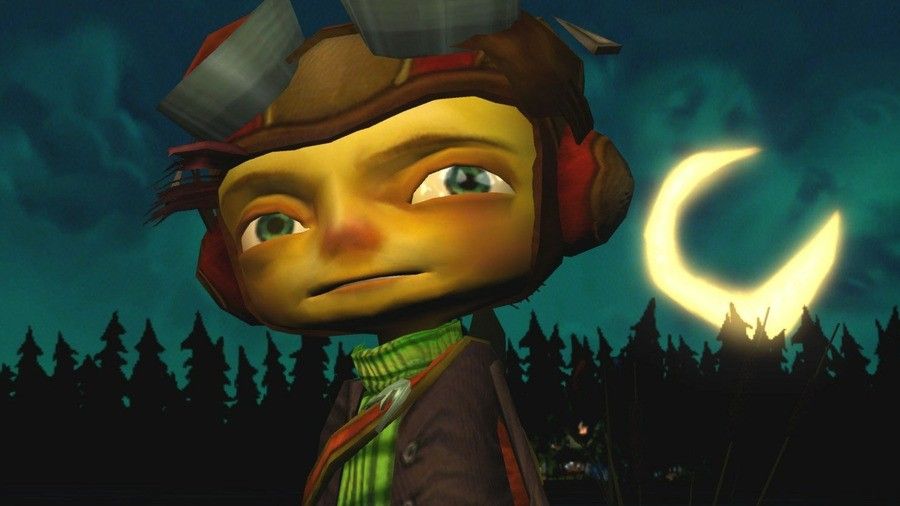
Double Fine is bringing back Amnesia Fortnight as a Kickstarter, letting backers vote on prototypes and the studio's next small game after its split from Xbox.
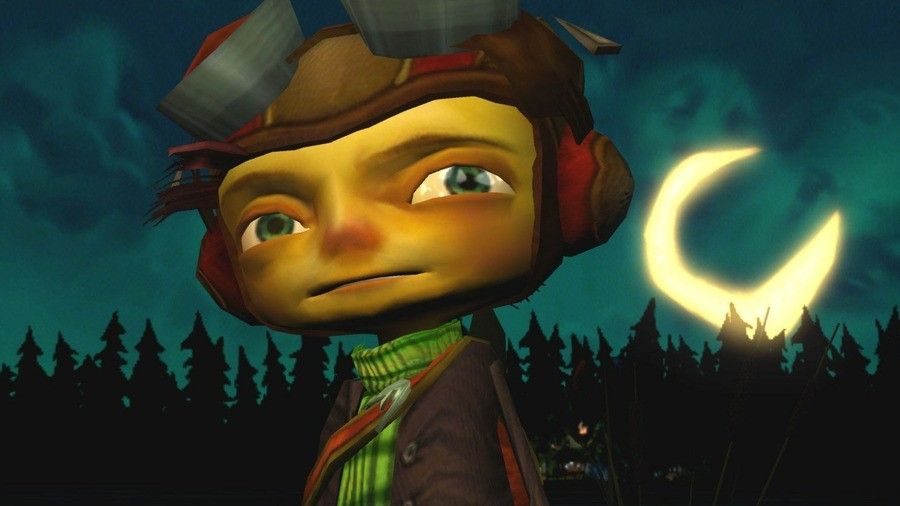
Image: pushsquare.com
Double Fine is turning its next decision into a public vote
Double Fine’s next game will begin as a Kickstarter-backed public game jam, with fans voting on which ideas become prototypes and which prototype becomes a finished small release. The Psychonauts developer announced Amnesia Fortnight 2026 through a Kickstarter page and a Kinda Funny appearance by CEO Tim Schafer, according to Push Square, Polygon, and Kotaku.
The confirmed structure is unusually direct. Double Fine will run a live game jam online. Kickstarter backers will hear the studio’s pitches, choose which ideas are developed into four prototypes, then vote again on which of those four will be polished into a real “small” game. Push Square quotes Double Fine’s own Kickstarter framing: backers will choose which ideas “get made into four new prototypes” and which of those “will become a real (small) game.”
The campaign is scheduled to launch on August 31, 2026. Polygon reports that Amnesia Fortnight 2026 will run through September, and that 2 Player Productions, the documentary team previously associated with Double Fine’s Psychodyssey, will film the event for a new documentary.
That makes the Double Fine fan vote both a creative exercise and a business signal. This is not the studio unveiling Psychonauts 3, Brutal Legend 2, or any other sequel. Based on the announced plan, Double Fine is asking its community to help it pick a contained project at a moment when the studio’s future has become newly visible, newly independent, and newly uncertain.
How the Amnesia Fortnight 2026 process works
The public-facing loop is simple, but it has several stages. First, Double Fine developers pitch ideas during a live game jam. Then Kickstarter supporters vote on which pitches move forward. Four selected ideas become prototypes. After that, backers choose one prototype to receive additional development and become a small released game.
Kotaku reports Schafer described the setup on Kinda Funny by saying that “everyone at Double Fine gets to pitch a game,” and that supporters will help vote for which one the studio makes. He said the team will make four of them, then backers will vote on which one Double Fine works on longer “to polish up and actually release.”
What remains unannounced is just as important for anyone deciding whether to back it. The sources do not list the pitches, the genres, the final platforms, a price for the finished game, a release window, or whether backers receive the eventual game at any particular pledge tier. Those details may appear when the Kickstarter fully launches, but they are not confirmed in the provided reporting.
The safest way to read the campaign is as access to a decision process, documentary production, voting rights, and whatever rewards Double Fine lists on Kickstarter, rather than as a conventional pre-order for a known game. Push Square’s report notes the Kickstarter wording also mentions “merchables and rarities,” but the exact reward structure is still a campaign-page question.
The timing matters after the Xbox split and layoffs
This announcement lands shortly after Double Fine’s departure from Microsoft ownership. Polygon describes the move as part of Xbox layoffs and divestments, while Push Square reports that Double Fine had “just returned to independence after years of ownership under Microsoft.” Wikipedia’s company summary lists Microsoft ownership from 2019 to 2026 and says Double Fine became independent again as part of a July 2026 Xbox division reset.
The independence story is paired with a harder staffing story. Push Square and Polygon both report that Double Fine laid off 23 employees after the split. Polygon says that was out of approximately 90 staff members. Push Square quotes Schafer’s statement: “Only the survival of our studio would ever make us consider such a painful action.” In the same statement, Schafer said the transition to independence meant becoming “a size that we can sustain.”
That context changes the reading of Amnesia Fortnight 2026. This is a studio using a public creative format to buy time, gather attention, and potentially create a manageable product, not a studio simply staging a nostalgic community event. Kotaku reports Schafer said Double Fine has “a little bit of runway” after its departure and wants to sign game deals, adding, “It’s a runway, not a freeway, it doesn’t go forever.”
For a studio that recently had the financial backing and portfolio shelter of Xbox Game Studios, the move back to Kickstarter is a strategic reset. It puts community enthusiasm back into the funding mix, but it also makes the studio’s constraints visible. The fan vote is a creative pitch room, a marketing beat, a documentary subject, and a runway-extension tool at the same time.
This is a return to an old Double Fine survival strategy
Amnesia Fortnight is not a new experiment for Double Fine. Polygon reports that the studio first streamed one of its two-week game jams in 2012, then repeated the format in 2014, 2017, and 2019. In past versions, Double Fine made prototypes available through Humble, according to Polygon.
The format has also fed the studio’s commercial catalog. Polygon identifies Costume Quest, Spacebase DK-9, and Headlander as games that originated from these jams, while also noting that Amnesia Fortnight ideas have influenced parts of larger games, including the Compton’s Cookout level in Psychonauts 2. Wikipedia similarly describes Amnesia Fortnight as a two-week prototype process that helped Double Fine expand smaller titles, and says Schafer repeated the format with fan-voting mechanics.
That history matters because Double Fine is strongest when its project size matches its production reality. The studio’s reputation was built on personality-driven games, unusual premises, and sharp tonal identity, but those traits do not automatically solve budgets, staffing, platform requirements, or release timing. A small game chosen through prototypes is a way to test which idea has the best ratio of creative spark to production risk.
Schafer made that comparison explicit, according to Kotaku. He said the company is in a similar position to the period after Brutal Legend, when an EA-published sequel was canceled and Double Fine worked on smaller Amnesia Fortnight-born projects to keep going. That comparison frames the 2026 campaign less as a side activity and more as a playbook the studio has used before when the big-project path became unstable.
Kickstarter is familiar ground, but expectations are different now
Double Fine has deep crowdfunding history. Polygon notes that before Xbox Game Studios acquired the studio in 2019, Double Fine helped drive the popularity of video game crowdfunding through successful Kickstarter campaigns for Broken Age and Psychonauts 2. Wikipedia says Double Fine raised more than $3 million for Broken Age and more than $3 million for Psychonauts 2, describing Broken Age as one of Kickstarter’s largest projects at the time.
The 2026 campaign is different in scale and promise. The announced target is a small game emerging from a live jam, not a known sequel with an established fan base or a full adventure-game pitch. That should temper expectations. Anyone searching for “Double Fine next game” may be hoping for the next major studio release, but the confirmed project is a process that will determine a smaller release.
That difference may help Double Fine manage risk. A Kickstarter attached to four prototypes gives backers a visible funnel rather than a single fixed pitch. It also gives the studio a chance to measure demand before committing to a longer production cycle. From a portfolio perspective, the four-prototype model creates options: each prototype can test genre, scope, team chemistry, audience reaction, and documentary appeal before one receives extra investment.
The tradeoff is uncertainty for players. A fan-voted process can surface a surprising idea, but it can also leave backers attached to prototypes that do not win. It may produce a game with a tighter scope than fans of Psychonauts 2 expect. The strongest reason to back, based on the announced structure, is interest in Double Fine’s process and a willingness to support a small experimental project whose final form is deliberately undecided at the start.
Fans are watching because the next move will define the independent era
The most obvious fan question is whether this campaign points toward a future Psychonauts, Brutal Legend, Costume Quest, or other returning franchise. The sources do not confirm any franchise revival. Push Square’s original story raised the question of which Double Fine series readers would want to see return, but the update confirms Amnesia Fortnight 2026 rather than a named sequel.
That absence is part of the tension. Double Fine’s catalog includes Psychonauts, Brutal Legend, Broken Age, Costume Quest, Stacking, Iron Brigade, Headlander, and other games cited across Push Square, Polygon, and Wikipedia. Each one carries a different production burden. Psychonauts 2 is a large, expectation-heavy platformer. A Costume Quest-style project might be easier to imagine as a smaller release. A completely new idea may be the cleanest fit for a jam-driven vote.
For players, the practical guidance is to wait for the Kickstarter launch on August 31 if they need specifics on pledge tiers, rewards, platforms, or delivery timing. At the moment, the confirmed value proposition is participation in the Double Fine Kickstarter decision process, access to the public game jam, and a vote that helps narrow the studio’s ideas from pitches to four prototypes to one small game.
For Double Fine, the larger test is whether community selection can become part of its post-Xbox operating model without overpromising. A studio leaving a corporate parent often needs to solve three problems at once: generate cash, keep morale and talent aligned, and show partners that it can still convert attention into shippable work. Amnesia Fortnight 2026 is built to address all three, but the final answer will depend on the quality of the pitches, the realism of the winning scope, and whether the studio can turn public curiosity into a finished game that feels worthy of the vote.