
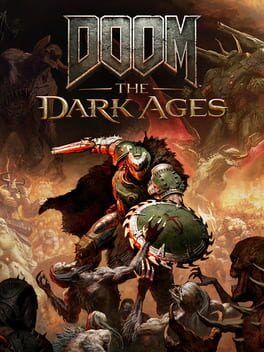

A former id Software developer says Doom: The Dark Ages was once planned as an Xbox console exclusive before PS5 work began fairly late, complicating the public story around Xbox first-party strategy.
Image: IGDB
Store links: Doom: The Dark Ages on Steam, Doom: The Dark Ages - Revelations on Steam
A reported Xbox-first plan now complicates Doom’s multiplatform launch story
Doom: The Dark Ages was reportedly planned as an Xbox console exclusive before id Software began work on a PlayStation 5 version fairly late in development, according to comments from former id Software developer Jordan Turner in a Kiwi Talkz interview with former id developers Todd Boyce and Taylor Offill. Pure Xbox quoted Turner as saying that “originally the game was going to be Xbox exclusive” and that “fairly late in the process, we were porting to PS5.” Niche Gamer, Power Up Gaming, Digital Citizen, and Instant Gaming also reported the same account from the interview.
That claim lands in a tricky spot because the public launch plan looked clean and settled. Bethesda announced Doom: The Dark Ages at the Xbox Games Showcase in June 2024 with PS5 listed alongside Xbox Series X|S and PC, according to the Xbox showcase recap cited by Power Up Gaming. The game then launched on May 15, 2025 across Xbox Series X|S, PlayStation 5, and PC, with day-one availability on Game Pass, according to Niche Gamer and Digital Citizen.
Microsoft and Bethesda have not confirmed the reported earlier exclusivity plan. That is the line readers should keep locked in: the shipped reality is confirmed, the former developer account is reported, and the internal platform plan before the public reveal remains unverified by the companies involved.
The tension is between Turner’s account and Spencer’s 2024 explanation
The strongest wrinkle is not simply that a Doom The Dark Ages Xbox exclusive plan may have existed. It is that Phil Spencer publicly framed the PS5 release as aligned with id Software’s own preference before the game was revealed.
Speaking to IGN around the June 2024 reveal, Spencer recalled asking id studio director Marty Stratton about platforms a couple of years earlier. According to reports citing that IGN interview, Stratton wanted to sell Doom: The Dark Ages across platforms, and Spencer said he agreed. Spencer pointed to Doom’s history across a wide range of systems as part of the reasoning for keeping the series broadly available.
Turner’s later account does not automatically disprove that. Internal plans can shift more than once, and a studio head’s preference can coexist with publisher-level uncertainty over timing, SKU planning, and business targets. But the two accounts create a real question: if Stratton wanted all platforms years earlier, why did a former developer remember the project as originally Xbox exclusive, with PS5 work arriving fairly late?
The available sources do not answer that. They establish a conflict between a public executive explanation and a later recollection from inside development. For players, that distinction matters because it changes the reading of Doom: The Dark Ages on PS5 from “obvious day-one multiplatform release” to “possibly added after a period of Xbox-first planning.”
Game Pass uncertainty sits at the center of the report
The reported PS5 shift came up during a broader discussion about uncertainty around Microsoft’s goals for Game Pass, according to Niche Gamer and Power Up Gaming. The former developers discussed whether the priority was attracting new subscribers, keeping existing subscribers, or selling full-price copies. Pure Xbox’s quoted passage connects the PS5 port discussion directly to that uncertainty, with Turner asking whether the goal was “premium sales.”
The same discussion included a reference to Battle.net. Niche Gamer and Power Up Gaming reported that a developer recalled Marty Stratton bringing up Battle.net as another place to sell the game, while Pure Xbox quoted Turner describing it as “another premium platform to put the game on.”
That is the business pressure point around Doom: The Dark Ages. Xbox first-party releases carry two competing incentives. Game Pass wants major day-one games that make the subscription feel valuable. A full-price blockbuster wants the largest premium sales base available. A Doom game from id Software sits right in the blast radius because it has a long multiplatform history, a high-profile PC audience, and enough brand power that keeping it off PlayStation would have been a deliberate hardware and subscription play.
The reported late PS5 work suggests Microsoft may have moved away from a narrower console strategy while the project was already deep in production. That interpretation fits the conversation described by the former developers, but it remains an interpretation. The confirmed facts are that the final game shipped on Xbox, PS5, and PC, and that it was also available day one through Game Pass.
A late PS5 version would raise production questions, not proof of a weak port
For an FPS, platform timing is not a cosmetic detail. Doom’s core promise is precision under pressure: fast target acquisition, readable arenas, consistent input response, and stable performance when the screen fills with demons, particles, and projectiles. If a PS5 version entered the schedule later than the Xbox and PC work, the natural questions are practical ones around optimization time, certification, controller tuning, QA coverage, and platform-specific fixes.
Digital Citizen noted that adding another console version requires testing, optimization, and platform-specific adjustments even when modern consoles share similar hardware architecture. That is a fair technical frame, but none of the provided sources report that Doom: The Dark Ages shipped with PS5-specific problems, performance gaps, delayed features, or missing content. A late porting window is a development risk signal, not evidence by itself that the final PS5 release was compromised.
That distinction is important for players who followed Doom for gunfeel and pacing rather than boardroom strategy. A competitive-feeling single-player shooter depends on responsiveness. If a platform is added late, the concern is whether the team had enough runway to make that version feel native rather than secondary. The source material does not provide benchmarks, resolution targets, frame-rate data, or platform comparisons, so any quality judgment would go beyond the record.
The safer takeaway is narrower: the former id account suggests PS5 may not have been part of the original plan throughout development, while the public launch treated PS5 as a full day-one platform by the time Bethesda announced the game.
The report fits Xbox’s broader first-party identity problem
Doom: The Dark Ages is an especially sharp case because id Software is an Xbox first-party studio through Microsoft’s Bethesda acquisition, but Doom itself has never felt like a franchise that belongs cleanly to one console audience. Spencer leaned on that history in his IGN comments, saying the series’ presence across many systems supported a broad release.
The former developer account points to the messier internal reality behind that public position. If Doom: The Dark Ages was once planned as an Xbox console exclusive, Microsoft was at least considering the older playbook: keep a major first-party release off PlayStation, strengthen Xbox hardware value, and make Game Pass feel like the place to play on day one. If the PS5 version was added later, the company had moved toward a different calculation: preserve Game Pass value on Xbox and PC while also taking premium sales from the PlayStation audience.
That strategy creates mixed expectations. Xbox players are told first-party ownership still matters because Game Pass gets the game at launch. PlayStation players are told select Xbox-owned franchises may still arrive day one if the business case supports it. Developers, at least according to the former id discussion, can be left navigating unclear goals around subscriptions, retention, and full-price sales.
The report also lands after other outlets framed Microsoft as increasingly willing to put first-party games on competing platforms. Digital Citizen described Doom: The Dark Ages as part of a broader shift away from strict console exclusivity during the current Xbox generation. The Doom case is useful because it suggests that shift may not have been a clean top-down policy announced before production, but a moving target that affected platform work during development.
For players, the confirmed release picture is simple even if the strategy is not
Anyone buying or playing Doom: The Dark Ages now does not need to decode an exclusivity plan to know where it landed. The game launched May 15, 2025 on Xbox Series X|S, PlayStation 5, and PC, according to the cited reports, and Niche Gamer reported day-one Game Pass availability. Bethesda’s June 2024 announcement already included PS5 publicly, so PlayStation owners were not surprised at launch by a late platform reveal.
What remains unconfirmed is the internal timeline. Microsoft and Bethesda have not verified Turner’s recollection. The sources do not provide an exact date for when PS5 work began, who approved the change, whether the Xbox version was the lead console build, or whether the PS5 schedule affected development priorities.
For the next id Software release, that uncertainty is the real takeaway. Xbox first-party no longer guarantees a clean “exclusive or multiplatform” answer early in development, especially for legacy series with large audiences outside Xbox. Players should watch official platform announcements, Game Pass messaging, and store listings rather than assuming studio ownership alone decides where a game ships.
Doom: The Dark Ages ended up everywhere it needed to be for the modern audience: Xbox, PS5, and PC. The new report does not change that release history. It does, however, make the path to that launch look less settled than the 2024 showcase presentation suggested.