
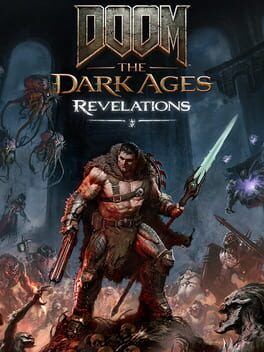

Former id Software producer Andrew Willis says Doom: The Dark Ages - Revelations was built under brutal crunch, with much of the DLC allegedly made in three or four months before layoffs hit id Software.
Image: IGDB
Store links: Doom: The Dark Ages - Revelations on Steam
A former id producer says Revelations was built under brutal overtime
Former id Software producer Andrew Willis says the final push on Doom: The Dark Ages - Revelations involved severe overtime, including two months where he was working at least 12 hours every day and a few days that reached 17 hours. In an interview with Insider Gaming, later covered by Eurogamer, Game Developer, TheGamer, and others, Willis said the schedule was “brutal” and that “the majority of the game got made in three or four months.”
That is the central tension for Doom fans following the expansion. Revelations shipped in July as an expansion-sized DLC for Doom: The Dark Ages, according to Eurogamer, but the former producer’s account suggests the release was finished under a compressed, punishing timeline. Willis also said there were weeks where he reached at least 80 hours, according to Game Developer and Insider Gaming’s report.
This is still a reported account from a former developer, not a public admission from id Software, Bethesda, or Microsoft. The confirmed public fact is that Revelations released in July. The labor conditions described around it come from Willis’s interview, with multiple outlets quoting the same remarks. As of the provided source material, there is no response from id Software, Bethesda, or Xbox addressing his specific claims about the Doom The Dark Ages Revelations crunch.
The schedule Willis describes is the real story for Doom players
Willis’s claim that most of Revelations was made in three or four months is the detail that changes how the DLC should be understood. For a shooter like Doom, an expansion is not simply a set of new rooms stitched together. Encounter pacing, enemy placement, arena geometry, escalation, puzzle flow, difficulty tuning, and performance polish all have to line up. The final product may feel smooth to players, but Willis’s account points to a production run where the team allegedly had to make major content decisions under extreme time pressure.
According to Insider Gaming’s article, Willis said the expansion’s timeline was “tight” and that additional things continued to be added, which increased development requirements. Game Developer reported the same general picture: more work kept being added, and the hours varied by week, with some periods reaching at least 80 hours.
That matters because Doom’s combat loop is especially sensitive to pacing. If arenas are undertuned, the player steamrolls them. If they are overtuned, the game can feel cheap rather than demanding. If traversal, puzzles, and resource pressure are not polished, the Slayer fantasy starts to stutter. Willis’s comments do not tell us which specific missions, arenas, enemies, or puzzles were built during that three-to-four-month window. They do suggest, however, that a large amount of the expansion’s playable shape allegedly came together during a short, high-pressure sprint rather than a long, stable finish.
Willis says the crunch was not officially mandated
One of the most important parts of the id Software crunch report is how Willis describes responsibility. He told Insider Gaming that the overtime was not an official company mandate, but called the situation a “blurry line.” Eurogamer quotes him asking what developers are supposed to do when they are loaded up with 60 hours of work in a week.
That distinction matters because crunch in game development often does not need to arrive as a written order. Willis’s account describes what he called “pseudo-induced crunch,” where the workload, schedule, and quality bar combine to make overtime feel unavoidable. In his telling, the choice was between doing a barely passable version of the work or sacrificing personal time to hit the level of quality expected by players and by the team itself.
Willis also described the personal cost. He said there were days where he did not see his son at all, and multiple days where he made that sacrifice to help get the DLC out the door. TheGamer and Game Developer both quote him saying that others on the team were also “really putting in the hours.” He further claimed that some people with decades of experience across Hollywood and games described this as the worst crunch they had been part of.
That is a serious allegation about Doom DLC development culture, but it should be framed precisely. The sources do not establish that every developer on Revelations worked the same hours Willis did. They report Willis’s account that the team broadly put in heavy time, and that some weeks reached 60 to 80 hours for him.
The release landed alongside Microsoft’s mass layoffs
The timing around Revelations makes the story sharper. Eurogamer reports that the DLC released in July during the same week Microsoft announced sweeping layoffs affecting 3,200 staff. Those cuts hit the Xbox studio portfolio, including Doom maker id Software. Willis said he was laid off just as the expansion was released, and Eurogamer quotes him describing the feeling of sacrificing so much to ship something and then being laid off the day before as “wild.”
The scale of the cuts at id Software is still described differently across reports. Eurogamer says id was hit especially hard and reportedly lost over half of its members. Game Developer cites anonymous sources who said around two thirds of those left at id Software had worked on Doom from 2016 at the beginning of July, with the report emphasizing the loss of “multiple hat” developers who were integral to the team. Those are reported figures, not numbers publicly confirmed by Microsoft in the provided material.
There is also internal disagreement in the public conversation over how damaged id is after the cuts. Eurogamer notes that some people suggested the studio had been gutted, including losses among senior, longtime staff and people tied to id Tech and core disciplines. Co-studio director Hugo Martin pushed back on some of that sentiment, saying the remaining team is about the size of the one that made Doom in 2016. Separately, Chris Hayes, a lead services provider at id who remains at the studio, told Game Developer it is “impossible” to make games like 2016’s Doom with the number of people that remains, according to Eurogamer’s coverage.
For readers, the conflict is the point. One public-facing studio leader says the remaining team size compares to the Doom 2016 team. Another current id figure says making games like Doom 2016 is impossible with the remaining number of people. Willis’s account adds a third pressure point: the team allegedly needed heavy overtime to finish the only released add-on for The Dark Ages before layoffs landed.
What was allegedly built in those few months remains partly unclear
The reporting gives a broad production claim, not a content-by-content breakdown. Insider Gaming says Revelations sends the Slayer to purgatory, where players face new demons and puzzles while fighting their way out. It also reports that the expansion was praised by critics and players. The provided sources do not include a mission list, a precise count of new enemies, a breakdown of weapons, a price, or platform-specific performance details for the DLC.
That leaves an important unanswered question: when Willis says the majority of the game was made in three or four months, does he mean most of the playable content, most of the final implementation, most of the production labor, or the bulk of the shippable version after earlier planning? The sources do not clarify that distinction. Game development can spend months in pre-production and then appear to accelerate once assets, tools, and design targets lock. It can also genuinely compress core building, tuning, and polish into a dangerous window. Willis’s wording points toward the latter, but without a public production timeline from id, the exact shape of that schedule remains unconfirmed.
For Doom fans, that uncertainty should temper both praise and blame. If you enjoyed Revelations, Willis’s account does not invalidate that. It does raise fair questions about how much stress was hidden behind the polish. If you found the DLC uneven, the report offers possible production context, but it does not prove any specific design flaw was caused by crunch. The clean read is narrower: a former producer says much of the expansion was made quickly, under heavy overtime, and amid a workload that he believes pushed the team into crunch even without a formal mandate.
How fans should read the future of Doom after Revelations
Eurogamer reports that Revelations is the only add-on released for Doom: The Dark Ages, and that id Software’s next project is not yet clear. That makes this report bigger than a post-launch labor story for one DLC. If Revelations is the lone expansion, then it may also be the final public example for a while of this particular Doom production pipeline before the studio moves into whatever comes next under a reduced workforce.
The practical guidance is simple. If you are deciding whether to follow or buy into the Doom: The Dark Ages expansion conversation now, the sources confirm that Revelations is already out. They do not provide pricing, platform availability, PC requirements, console performance metrics, or an upgrade path, so those questions should be checked on the relevant storefront before purchase. If labor conditions affect your buying decisions, this is a credible report to factor in, but it is still based on Willis’s interview rather than a formal studio investigation.
From an FPS perspective, the main concern going forward is sustainability. Doom works when its combat cadence is ruthless but controlled: arena pressure, weapon rhythm, enemy reads, and encounter escalation have to land at speed. That kind of tuning needs experienced developers and enough time to iterate. The sources describe layoffs affecting id Software, reported losses among experienced staff, and disputed claims about whether the remaining team can still build at the old Doom scale. Willis’s comments about Revelations add a labor warning to that design question.
Fans do not need to turn on the DLC to take the report seriously. They can hold both ideas at once: Revelations shipped, and some players may have enjoyed it, while a former producer says getting it out required punishing hours and personal sacrifice. Until id Software, Bethesda, or Xbox addresses the claims directly, the cleanest conclusion is that the Doom The Dark Ages expansion now carries two stories: the one players experienced on screen, and the reported production cost behind it.