
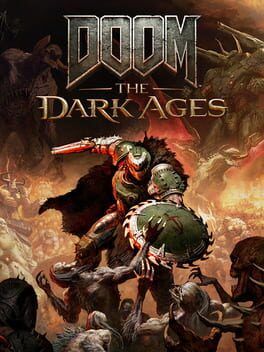

id Software leadership says the Doom team and id Tech remain intact after Xbox layoffs, but conflicting headcount reports explain why the rumor spread so fast.
Image: IGDB
Store links: Doom: The Dark Ages on Steam, Doom: The Dark Ages - Revelations on Steam
id pushes back during a Doom DLC stream
Doom: The Dark Ages director Hugo Martin used an official Bethesda-hosted livestream for the game’s Revelations DLC to directly reject claims that id Software had been reduced to a shell of itself by recent Xbox cuts.
“There’s been reports that we’ve been ‘nerfed into the ground’ and ‘gutted’ and we have 50 people, and that’s not true,” Martin said during the stream, according to Rock Paper Shotgun, IGN, Eurogamer, Push Square, and GamesRadar’s reporting on the broadcast. Martin added that id is “the size we were when we made Doom 2016,” and said “id Tech is very much alive and well.”
That is the strongest confirmed development here: id leadership is publicly disputing the most damaging version of the id Software Xbox layoffs story. Martin’s comments do not deny that major layoffs happened. They deny the specific idea that the Doom developer has been cut down to roughly 50 people, lost the capacity to build mainline Doom games, or had its engine team hollowed out beyond use.
For a studio whose identity is tied to speed, combat readability, and proprietary tech, that distinction matters. Doom is a series where the engine is part of the feel. If id Tech is weak, the next fight feels it. Martin’s message was aimed right at that fear: “The id Tech is there, the Doom team is here,” he said, while noting that id Tech engineers are located in Frankfurt and at MachineGames, and that those teams collaborate.
What id leadership actually confirmed
Martin’s statement gives players several firm points, but it also leaves limits around what can be safely concluded.
Confirmed by Martin on the livestream, as reported by multiple outlets, is that id disputes the “50 people” claim, considers the Doom team present, and says id Tech still has active engineering support. IGN also reported that Xbox told the outlet there are “dozens of people working on id Tech across multiple locations,” and that earlier reports suggesting only one person remained on id Tech in Texas were “inaccurate.”
Martin also tied the reassurance to Doom: The Dark Ages’ performance. According to IGN and Rock Paper Shotgun, he said the game was “critical and commercially successful” and was doing “very well related to the forecast.” That line is important because it frames The Dark Ages as a project Microsoft and id can still point to as a success after the cuts, at least by Martin’s account.
Id senior community lead Joshua Boyle also addressed the community during the stream, according to Rock Paper Shotgun, thanking Doom fans for supporting the Revelations DLC and for showing “overwhelming support” for those affected in the layoffs. That keeps the human cost in frame. The studio is saying it can keep building. It is also acknowledging that people were let go.
Why the layoff rumor caught fire
The id Software nerfed rumor spread because the numbers being reported were severe, and because the layoffs landed inside a wider Xbox restructuring that already looked brutal across Microsoft’s gaming operation.
IGN reported that a WARN notice filed in Texas and covered by Game Developer confirmed 96 workers laid off in Richardson, Texas, where id Software is based, plus 40 remote roles. Push Square likewise cited government documents for 96 Richardson cuts and 40 remote cuts. Rock Paper Shotgun described the same combined figure as 136 id workers shown the door. Push Square also noted reports of layoffs at id’s Frankfurt satellite studio.
Eurogamer reported a sharper version of the concern: legal documents suggested id had lost nearly three quarters of a 185-person staff, reducing the workforce to 49 people. Eurogamer said that fueled talk that id could become a support studio for Xbox rather than a studio capable of full-scale games, with separate anxiety around id Tech engineering losses.
That is where the conflict sits. The layoff totals in public documents and reporting are large enough to justify alarm. The specific claim that id now has around 50 people is what Martin says is false. No public source in the supplied material provides a verified current headcount for id Software after all cuts. Push Square explicitly says it does not have a current headcount. So the responsible read is narrow: the layoffs were real and substantial, but the most extreme headcount interpretation is disputed by id leadership.
The Doom 2016 comparison is reassuring, but imperfect
Martin’s comparison to Doom 2016 is designed to calm players because that game reset modern Doom’s reputation. If id can say it is back around the size of the team that built the 2016 reboot, that sounds like a studio returning to a proven combat rhythm rather than collapsing into support work.
The comparison has caveats. Eurogamer noted that approximately 75 people are credited as working on Doom 2016 at id Software via MobyGames, while Push Square wrote that the studio was “by all accounts” about 200 people around that release. Those figures are not the same kind of measurement. Credits do not always equal full studio headcount, and studio headcount does not equal the exact development team for one game. The sources leave that tension unresolved.
There is also the practical production question. Eurogamer correctly frames the challenge: Doom games have become larger since 2016, and expectations around scope, visuals, post-launch support, and technical polish have grown. A team comparable to the Doom 2016 era may still make excellent shooters, but the workload around a 2026 Doom ecosystem is not frozen in 2016.
From an FPS perspective, this is where confidence should be earned through shipped work, not slogans. Doom players will judge id by encounter design, weapon clarity, enemy pressure, animation response, input feel, and performance consistency. Martin is telling fans the team still has the core pieces. The next proof will be the next playable build, patch, expansion, or full reveal.
id Tech remains the pressure point
The most sensitive part of the Doom developer layoffs story is id Tech. Doom’s modern identity is not separated from its engine. The series depends on high frame-rate combat, dense arenas, fast target recognition, aggressive animation feedback, and low-latency weapon response. When players hear engine engineers were hit, they immediately worry about the parts of Doom that cannot be faked in a trailer.
Martin addressed that directly by saying id Tech is “very much alive and well,” and by pointing to engineers in Frankfurt and at MachineGames. IGN’s additional reporting that Xbox says “dozens” of people work on id Tech across multiple locations strengthens that denial against the most extreme version of the rumor.
At the same time, Push Square’s commentary raised a fair concern that drastic job losses can take institutional knowledge out of a studio even when enough people remain to keep moving. That is interpretation, not a confirmed operational failure, but it is a real production risk in any long-running proprietary tech environment. Engine teams often carry years of unwritten problem-solving around tools, pipelines, performance targets, and platform quirks.
So the engine story is not “everything is fine” versus “everything is dead.” The sourced facts support a more precise position: id Tech still has engineers across multiple locations, according to Martin and Xbox via IGN, but public reporting also confirms large cuts at id. The open question is how much those cuts slow iteration, support, or future feature work.
The Dark Ages gives id a stronger case than silence would
Martin did not only deny the rumor. He pointed to Doom: The Dark Ages as evidence that id still has momentum. The Dark Ages is the prequel to Doom 2016 and Doom Eternal, according to IGN, and its Revelations DLC was the focus of the livestream where the comments happened.
Rock Paper Shotgun reported that the Revelations DLC came out the same week 136 id workers were laid off. Eurogamer described the expansion as adding more movement and speed, making it feel closer to Doom Eternal, with a new Chain Spear melee weapon that can be upgraded and customized in different ways. That context matters because id’s reassurance was delivered while showing current Doom content, not through a standalone corporate note alone.
Martin also said The Dark Ages was performing well against forecast. Rock Paper Shotgun called that noteworthy because developers affected by the broader layoffs had expressed concern that Microsoft had not clearly communicated which success metrics games were failing to meet, leaving workers uncertain about how layoffs were being justified. Communications Workers of America-backed unions representing laid-off staff at Bethesda, ZeniMax, and id have also held rallies outside studio offices, according to Rock Paper Shotgun.
That creates the central tension. If The Dark Ages is doing well by forecast, as Martin says, players can reasonably ask why a successful Doom studio still took such heavy cuts. The source material does not answer that. It only shows id trying to reassure fans while the broader Xbox business reset continues to raise hard questions.
How much confidence should Doom players have now
For players following Doom: The Dark Ages, the immediate guidance is simple: the current game and its Revelations DLC are not being described by id as abandoned, and id leadership is openly saying the Doom team remains in place. There is no confirmed source in the provided material saying a future Doom project has been canceled because of the layoffs.
There is also no announced next Doom game in these sources. Martin said id is excited to share more about what it is working on “when it is appropriate and approved.” Eurogamer reported that Martin said he would love to complete the Doom origin story up to the sarcophagus seen at the beginning of Doom 2016, but that is a hope expressed on stream, not a product announcement.
So confidence should be measured, not blind. The worst version of the rumor, that id has been reduced to around 50 people and gutted beyond recognition, is directly disputed by Martin. The confirmed cuts are still large, and the lack of a public current headcount means nobody outside Microsoft and id can fully audit the damage.
If you are already playing Doom: The Dark Ages, Martin’s comments are a positive signal for continued Doom support and for id Tech’s survival. If you are waiting on whatever id builds next, wait for concrete announcements, gameplay, and technical details. In shooters, the scoreboard is the shipped build. Right now, id says it still has the squad. The next test is whether the next Doom content keeps the pace, precision, and violence sharp enough to prove it.