
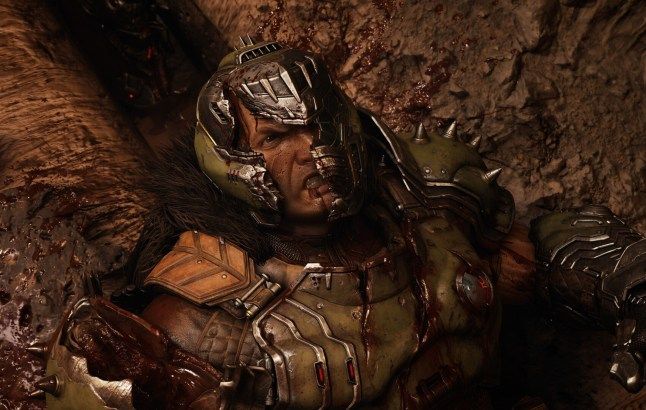

Doom DLC review reactions are pointing in one direction: Revelations makes Doom: The Dark Ages faster, harder, and sharper, though its story and opening pace remain divisive.
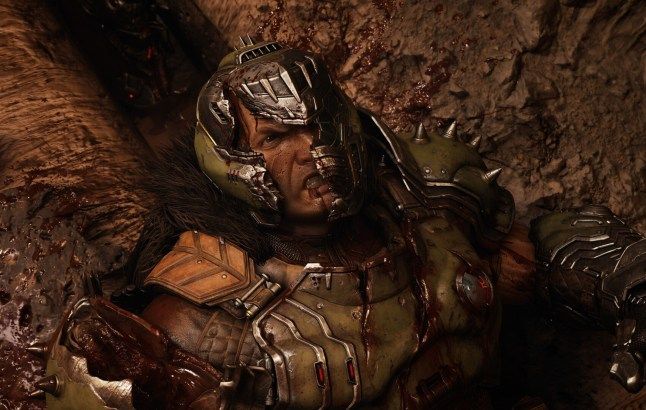
Image: metro.co.uk
Revelations is getting the response the base campaign did not quite earn
The clearest signal around Doom: The Dark Ages DLC is that critics are treating Revelations as a serious course correction, not a minor postgame add-on. Metacritic lists Doom: The Dark Ages - Revelations as released on July 7, 2026, and its PlayStation 5 page carries a Universal Acclaim label. In the critic-review section captured on that listing, Metacritic shows 100% positive with 11 reviews, while another part of the same page says the PS5 score is based on 13 critic reviews. The exact review count is inconsistent on the listing, but the direction of the response is not: the available critical snapshot is strongly positive.
That matters because the base game’s reception, as described across the supplied reviews, had a specific fault line. Critics liked the heavy, grounded Slayer, the shield parry, and the medieval war-machine identity, but several reactions suggest players who wanted Doom Eternal’s speed, pressure, and mobility were left wanting. IGN frames Revelations directly around that complaint, saying that anyone who wished The Dark Ages were faster, harder, and closer to Eternal’s movement options has “great news.” PC Gamer’s supplied headline goes further, calling the expansion “excellent” and saying it has “fixed Doom: The Dark Ages.”
The tension is that Revelations seems to solve the shooter problem by creating a new one: it raises the execution requirement. IGN says the DLC throws players into the deep end and can feel overwhelming because it builds on the full endgame arsenal from the base campaign. Kotaku enjoyed the expansion overall but found its opening hour or two hard to click with, citing cutscenes, lore, and a Chain Spear that initially felt finicky. So the early Doom DLC review reactions are not saying this is an easier or cleaner version of The Dark Ages. They are saying it is a sharper one.
The Chain Spear changes the rhythm from armored brawl to aerial pressure
The most important reported change in the Doom: The Dark Ages expansion is the Chain Spear. According to Kotaku, Revelations begins with the Slayer’s plan to attack Hell’s High Council going wrong, his chainsaw shield breaking, and the character being thrown into purgatory. A mysterious demon then helps him recover and grants him the new spear. That story setup is also the mechanical reset.
IGN describes the spear as a sub-weapon that changes combat flow, doubles the Slayer’s options for killing demons, and brings back his dash. The difference is not cosmetic. In the base game, the Shield Saw gave the Slayer a durable, forward-crashing identity. IGN notes that the shield could parry green attacks while also providing a safety net if mistimed, and its bash let players zip into a target at high speed. With the Chain Spear, parrying requires a timed strike instead, meaning a failed read no longer has the same defensive cushion.
GamingTrend makes the same contrast in cleaner terms: the shield encouraged a grounded, tank-like playstyle, while the Chain Spear emphasizes speed, maneuverability, and offense. The spear can pull the Slayer toward enemies, launch him through bullet patterns, and support perfect dodges that build charges for special spear moves. IGN adds that the spear pull gives the player directional control while moving toward a foe, allowing approaches from above, around, or straight in.
That is the core answer to the base game’s biggest pacing complaint. Revelations does not simply speed up enemy waves. It changes what the player is asked to do between shots. The Slayer is less of a wall and more of a predator again, with movement and target selection pushed back into the foreground.
The pacing fix appears to arrive after a messy on-ramp
The positive consensus has an important qualifier: several reactions suggest Revelations takes time to become the expansion players hoped for. Kotaku says the opening hour or two “didn’t click,” partly because the spear felt awkward compared with the shield and partly because the DLC spends a lot of time on cutscenes and dialogue. The outlet says it briefly stopped playing before pushing through, after which the expansion improved once the shield returned and purgatory opened into more varied realms.
That creates a different pacing profile than a straight adrenaline injection. Revelations starts by taking away the base game’s defining tool, forces the player to learn a less forgiving substitute, and then later asks them to combine both systems. IGN’s review supports that read, saying even after finishing The Dark Ages on Nightmare more than a year earlier, Revelations started “kicking my ass right from the start.” GamingTrend says the DLC offers some tutorializing for returning players, which it found useful, but then quickly moves into endgame-level enemy pressure.
For players who bounced off The Dark Ages because it felt too planted, this is probably the right kind of friction. The expansion’s answer is not to simplify the base game. It makes the shooter faster by making the player busier. The cost is front-loaded discomfort, especially if your muscle memory is built around blocking, shield-bashing, and stabilizing fights from the ground.
Critics and players are responding to the higher skill ceiling
The most encouraging part of the reaction is that reviewers are identifying Revelations as a stronger combat endgame rather than a novelty built around one weapon. IGN calls it the most exhilarating Doom combat has been since Doom Eternal’s The Ancient Gods DLC, while also warning that the number of weapons, techniques, mods, and spear options can be overwhelming. GamingTrend says players will be swapping between guns against endgame difficulty enemies after the reintroduction period, which places the DLC closer to a mastery test than a casual epilogue.
The r/Doom review megathread reflects the same split between friction and payoff, though Reddit comments are community reaction rather than a controlled critic sample. One user wrote that Revelations “might be peak Doom,” but also said the spear takes a long time to learn. Another argued that some criticism is coming from players uncomfortable with the learning curve, and said the appeal is in repeated Nightmare runs and Ripatorium practice. A third said the DLC made their “Eternal reflexes” kick in again.
Those reactions line up with the critical read: Revelations is built for players who wanted the base game to demand faster decisions. The important difference from Eternal, based on the supplied reviews, is that Revelations still has The Dark Ages’ heavier foundation underneath it. The spear does not erase the shield game. It complicates it. Once both tools are in play, the expansion asks players to swap mental modes mid-fight: block and punish, dodge and launch, pull through space, then choose the right gun for the enemy in front of them.
That is good shooter design when the inputs are readable and the arena supports it. It is also the kind of design that can turn into overload for players returning after a year away. IGN’s advice is practical here: while the DLC can technically be started directly, the review recommends playing the campaign first because Revelations expects familiarity with the full Slayer toolkit.
The story reaction is warmer, but the ending is not clean closure for everyone
The Doom: The Dark Ages ending conversation around Revelations is more complicated than the combat conversation. Kotaku describes the expansion as a finale for this era of id’s modern Doom, connecting The Dark Ages closer to where the rebooted series began in 2016. Its plot, according to Kotaku, sends the Slayer after Hell’s High Council, has that plan fail, strands him in purgatory, and then pushes him toward collecting stones to open a portal and confront the force behind events.
GamingTrend was more receptive to the story than it expected to be. The outlet says Revelations explores the Slayer’s past through moments of torment tied to the stones, and that some narrative beats made it take Doom Guy seriously. It also notes a Daisy the rabbit reference. Kotaku, by contrast, says the cutscenes look good and are well acted but that it was bored by the volume of lore, factions, and dialogue. Its blunt summary: too much lore, not enough shooting.
Community reaction shows the unresolved side of that ending. In the r/Doom megathread, one commenter asked whether the story felt incomplete, pointing to the High Council of Hell being introduced without the player defeating them. Another replied with speculation that this was done to leave room for future games, referencing what they believed Hugo Martin had said in an interview, but that claim is presented in the thread as a user comment, not as a publisher announcement in the provided source material.
So the confirmed picture is this: Revelations continues directly from the base campaign, expands the Slayer’s backstory, and is being read by critics such as Kotaku and some Metacritic-listed reviewers as a possible swansong for this era. What is not confirmed in the supplied sources is that Bethesda or id Software has officially positioned it as the final modern Doom release, or that any future High Council story is announced.
The id Software context gives this finale extra weight
Kotaku places Revelations against a difficult studio backdrop, reporting that it arrives after a large series of layoffs at id Software and the wider Xbox organization. The outlet describes the expansion as bittersweet because many people who made it reportedly no longer work at the studio. Metacritic’s captured critic excerpts echo that mood, with one review calling the expansion a fitting swansong and another saying the future of id Software is arguably up in the air despite reassurances.
Those are interpretations and reported context, not proof that Doom is ending. Still, they affect how this Doom: The Dark Ages expansion is being received. A strong DLC following a divisive base-game pivot can be read as id refining an experiment under pressure. The Dark Ages moved away from Eternal’s ballet of air dashes, meathook routes, and resource loops into something heavier. Revelations appears to pull some of that speed back without abandoning the medieval identity entirely.
That is why the response feels different from ordinary post-launch praise. Critics are not only saying the DLC adds content. They are saying it clarifies what this version of Doom was trying to be. The Chain Spear gives the Slayer a faster route through arenas. The restored shield keeps the brawler identity alive. The combined system seems to produce the pace and challenge that some players expected from the base game’s final stretch.
Who should play Revelations now
Based on the supplied review material, the safest recommendation is straightforward: play the base campaign first, then treat Revelations as an advanced combat finale. Metacritic lists the DLC on PlayStation 5, Xbox Series X, and PC review pages, with a July 7, 2026 release date. The provided sources do not include price, upgrade-path details, file size, PC requirements, or performance testing, so those buyer details remain outside the confirmed record here.
If your complaint about The Dark Ages was that it felt too slow, too grounded, or too distant from Doom Eternal’s movement skill ceiling, the critical response says Revelations is aimed directly at you. IGN’s review is explicit on that point, and GamingTrend’s description of the spear as a speed and offense tool supports it. If your problem was that modern Doom has too much lore between fights, Kotaku’s reaction is the warning sign. Revelations may improve the combat arc while still asking you to sit through story material you may not care about.
For high-skill FPS players, this sounds like the stronger ending The Dark Ages needed: faster reads, harsher punishment, more movement expression, and a bigger demand for clean weapon cycling. For casual players who enjoyed the base game because the shield made Doom feel weighty and controlled, the DLC may feel rough until the systems click. The best version of Revelations, according to critics and early community reaction, shows up after that learning curve.