
Examining how Don’t Nod’s tight finances could shape Aphelion’s support, marketing, and long-term future, from the perspective of players already invested in its frozen sci‑fi world.
Aphelion lands at a strange moment for Don’t Nod. On one hand it is exactly the kind of game that built the studio’s reputation: a focused, character‑driven narrative wrapped in a distinctive setting. On the other, the company’s own auditors are warning that, without new funding, cash could run dry by late 2026. That tension hangs over every discussion of Aphelion’s prospects.
Rather than treating this as corporate drama, it is worth looking at what it could actually mean for players: how the game might be supported, how much marketing oxygen it can realistically get, and what kind of long‑term life it might have once the credits roll.
Where Aphelion Stands Right Now
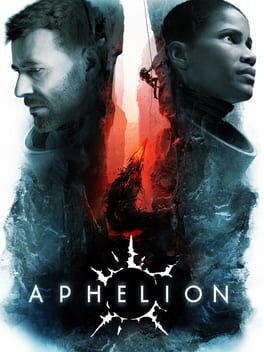
Aphelion is a single‑player sci‑fi adventure from Don’t Nod, released digitally on PC, PlayStation 5 and Xbox Series X|S, with a physical version planned a little later. You play as Ariane, an astronaut stranded on an icy, hostile planet, trying to save her injured partner while reality itself seems to fracture around her. It pulls together exploration, traversal across snow‑blasted landscapes, light stealth and the studio’s trademark emotional storytelling.
According to Don’t Nod’s own financial reporting, Aphelion cost around €8.5 million to produce. For a narrative game that sits somewhere between indie and big budget blockbuster, that is a meaningful but not extravagant spend. The problem is that auditors now question whether the studio can keep operating past November 2026 without fresh funding, and Aphelion is one of the key releases that needs to perform to improve that outlook.
Post‑launch Support: What Players Can Realistically Expect
From a player’s perspective, the main concern is whether Aphelion will be properly supported over the next couple of years. The good news is that, as a self‑contained narrative adventure, it is not structurally dependent on constant updates. There are no live‑service systems, no battle passes, and no multiplayer infrastructure that could simply be turned off.
That said, there are a few practical areas where Don’t Nod’s tight finances could show up.
First, patches and polish. Early post‑launch patches are almost certain, because every studio budgets for at least a short window of bug‑fixing. The question is how deep they go beyond the obvious crashes and progression blockers. Quality‑of‑life improvements, accessibility tweaks and performance passes cost time and staff, and a studio under cash pressure has to justify every sprint. Players should expect core issues to be addressed, but temper expectations for large, months‑long refinement pushes unless the game clearly overperforms.
Second, platform parity. Aphelion is available on all current high‑end platforms. If money gets tight, it becomes harder to keep three versions moving in lockstep, particularly when it comes to chasing edge‑case bugs and platform‑specific optimisations. That does not mean any version will be abandoned, but it could mean slower patch cadence or fewer bespoke enhancements for any single platform. For players this mostly translates to patience: fixes may come, just not on a weekly drumbeat.
Finally, language and accessibility support. Post‑launch additions like extra localisation passes, new subtitle options or controller remapping schemes are typically positioned as goodwill updates rather than revenue drivers. With auditors explicitly warning that Don’t Nod must watch its cash, those kinds of nice‑to‑have additions may slide down the priority list unless they are already locked into existing budgets.
The key point is that Aphelion is designed as a finished story. As long as core patching is done, the experience you buy should remain intact even if the studio has to tighten belts behind the scenes.
Marketing in a Cash‑Strapped Reality
Marketing is often the first obvious casualty when a studio is watching every euro. For Aphelion, that has two sides: the campaigns that already happened around launch, and the ongoing effort to keep it visible in a crowded market.
Pre‑launch, Don’t Nod benefited from a strong platform partner. Aphelion was revealed at the Xbox Games Showcase and is available day one on Game Pass, which means Microsoft has its own incentive to promote it to the subscription audience. That kind of placement is marketing you cannot easily buy on a shoestring.
Post‑launch is trickier. Sustained paid advertising campaigns, physical events and extensive influencer deals are expensive. If Don’t Nod is limited in how much it can spend, you are more likely to see short, targeted pushes around key dates rather than a constant presence. Expect visibility spikes around things like a physical release, discounts on digital stores, or a big Game Pass front‑page feature, rather than month after month of broad promotion.
For players, this has a subtle effect. Narrative games live or die on word of mouth. If official marketing quiets down sooner than it would for a more secure publisher, Aphelion will lean heavily on player impressions, reviews and community content to keep it in the conversation. That puts more weight on the first few weeks: if early adopters champion it, the game can still find a sizeable audience even without blockbuster advertising spend. If they do not, there is less money in the tank to try to turn the perception around later.
Long‑Term Plans: DLC, Sequels and Support Tails
The biggest unknown for players is what sort of long‑term future Aphelion can expect. It helps to separate that future into three tiers: concrete support, plausible expansions, and blue‑sky possibilities.
Concrete support is the stuff that is effectively baked in already. Engine maintenance, critical patches, and the contractual basics of keeping a game sold on PlayStation, Xbox, Steam or Game Pass are obligations that a studio like Don’t Nod honours unless things truly collapse. There is no indication that Aphelion is at risk of vanishing from storefronts in the near term, and single‑player games do not rely on ongoing servers that could be suddenly shut down.
Plausible expansions are more sensitive to finances. If Don’t Nod ever had ambitions for story DLC, extra episodes or a “director’s cut” with expanded sections, those plans will only move forward if Aphelion proves it can earn its keep. Developing extra content takes a similar kind of team you need for the next original project, and auditors are already pushing the company to think carefully about every new spend. For players, the sensible mindset is to treat Aphelion as a complete story in one box, with any additional content as a welcome bonus rather than an expectation.
Then there are sequels and spiritual follow‑ups. From a creative perspective, Aphelion’s self‑contained premise does not demand a direct continuation. If it quietly becomes a critical darling with strong long‑tail sales and Game Pass engagement, it could still influence future Don’t Nod projects in its tone, mechanics or universe. But those are decisions that will be made in a financial landscape that, right now, is uncertain. Player expectations are better anchored around this game as a standout, singular journey, rather than the start of a multi‑entry franchise.
How Financial Pressure Can Shape Design Priorities
Even if Aphelion is already out in the world, finances still shape how much the team can iterate on its design post‑launch. A cash‑constrained studio has to be ruthless about scope.
We are unlikely to see large mechanical overhauls or entirely new systems added after release. Things like overhauling combat, adding new traversal tools or heavily reworking levels are costly and do not guarantee additional sales. The focus instead is likely to be on improving the stability and feel of what is already there: fine‑tuning difficulty curves, fixing mission logic bugs, and cleaning up any rough edges that reviewers and players highlight early on.
There is also the question of ports and new platforms. Aphelion is already on the big three high‑end systems. In different circumstances, a studio might look at lower‑spec ports or future hardware re‑releases as a way to extend the life of the game. Each port, though, is an investment that might not break even quickly. In the current financial climate, Don’t Nod is more likely to lean on its existing catalogue and new financing options than to gamble heavily on speculative ports just to keep Aphelion in motion.
For players, the implication is that the core experience will probably stay closer to its launch state than in games that enjoy multiple years of post‑release reinvention. That is not necessarily a negative for a strongly authored narrative title, but it is worth keeping in mind if you are hoping for big, systemic changes based on feedback.
Player Expectations: Pragmatic Optimism
So how should someone interested in Aphelion approach it, knowing the financial concerns around its developer? The healthiest stance is probably pragmatic optimism.
On the optimistic side, the game already exists and is playable end to end on modern platforms. It is not dependent on servers that could quietly disappear, and its design is built around a complete narrative arc. As long as Don’t Nod remains operational, there is every reason to expect critical bugs to be addressed and the game to remain purchasable and playable for the foreseeable future.
On the pragmatic side, expectations for continual expansion should be modest. Big free content drops, a parade of cosmetic add‑ons, or a long season of live‑ops‑style support are not aligned with either the genre or the studio’s current financial reality. If you buy Aphelion, you are buying the story as it stands today, with some reasonable smoothing around the edges over the next months, not a five‑year evolving service.
The upside of that reality is focus. Don’t Nod built its reputation on tightly scoped, emotionally resonant games like Life is Strange precisely because they felt like complete experiences rather than platforms to be endlessly monetised. Financial pressure can distort creative choices, but it can also encourage teams to ship something polished and self‑contained, then move on.
The Bottom Line For Aphelion Fans
Don’t Nod’s money troubles are real, and they will influence how much extra time and cash can be poured into Aphelion after launch. But they do not automatically threaten the core experience on offer.
If you care about Aphelion, the most direct way to support it is the obvious one: play it, talk about it, and, if you enjoy it, recommend it to others. Narrative games live on the strength of the stories they tell and the communities that form around them. The future of this frozen, fractured planet will be shaped as much by players as by spreadsheets.