
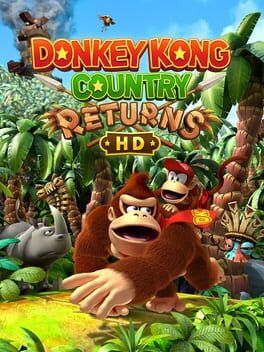
Dixie Kong, Turbo Attack, and sharper Switch 2 upgrades give Donkey Kong Country Returns HD a genuine late‑life refresh worth revisiting for veterans.
Nintendo has quietly turned Donkey Kong Country Returns HD into a much more interesting package. Version 1.1.0 is a free update for all existing owners on Switch, but it is clearly designed as a soft relaunch for Switch 2 players. Dixie Kong joins the cast, a new Turbo Attack mode leans into speedrunning, and visual plus performance tweaks on Switch 2 make this the sharpest and most responsive version of Retro’s platformer yet.
For a game that has already lived on Wii, 3DS and now Switch, this patch nudges it into late‑life refresh territory instead of a simple nostalgia port. The key question for veterans who already rolled credits on base Switch is whether these changes actually alter how you play, or if they are just nice extras.
Dixie Kong changes more than you might expect
Dixie is not just a palette swap for Diddy. Once you pick her as Donkey Kong’s partner, her ponytail spin kick in midair changes DK’s jump profile. Instead of Diddy’s quicker horizontal boost, you get a slower rise with a floaty hover and a small vertical lift at the end of the spin.
In practice that does three important things. First, you gain more forgiveness on precision jumps. Tricky gaps in levels like Tippy Shippy or the cliffside sequences in World 4 feel less punishing because you can correct midair. Second, vertical secrets become easier to route. Banana coin clusters and puzzle pieces that used to demand perfect rebound chains from enemies can often be nabbed with a well timed Dixie hover. Third, co‑op balance shifts, because the “support” role is no longer only about raw speed.
On Wii and even the early HD release, Diddy was the undisputed meta partner for players chasing fast times. His barrel jetpack turned DK into a low‑arc missile, ideal for skipping safe platforms and bouncing through enemy strings. Dixie instead gives you headroom. You can clear higher ledges without pre‑positioning, and you have more time to line up landings on collapsing platforms or in rocket barrel stages where a single mistake is fatal.
Speedrunners will likely still lean on Diddy in pure any‑percent runs, but Dixie opens fresh routing options for 100 percent and no‑damage categories. Sequences that were designed around tight rebound chains can be re‑imagined as slower but safer Dixie routes, trading a few seconds for consistency. For casual players, she effectively acts as a subtle “assist” mode baked into the character select, without toggling an explicit difficulty option.
Co‑op feels different with Dixie in the mix
Local co‑op was always one of Returns’ strongest hooks on Wii. The HD version preserved that, but the dynamic was clear. The more confident player usually grabbed Diddy, because his jetpack demanded a stronger read on momentum and enemy placement. Dixie softens that divide.
Now you can put the less experienced player in the Dixie slot and let them handle trickier jumps with that hover safety net. DK’s heft still matters for combat and ground pounds, yet Dixie’s spin lets a newer player keep up without constantly falling into pits. In many stages you can even plan “two route” runs: DK takes the low road, stomping enemies and hitting KONG letters, while Dixie floats along an upper lane dedicated to collectibles.
It also changes the feel of mine cart and rocket barrel levels in co‑op. The partner’s jump timing influences the cart’s arc, and Dixie's gentler hang time can smooth out those awkward moments where one player commits too early. It does not make the hardest special stages trivial, but it shaves off the roughest edges that once turned co‑op into an argument generator.
Crucially, all of this plays nicely with Switch 2’s new GameShare support. One console, two controllers, one copy of the game is enough to jump into co‑op, which lowers the friction for spontaneous sessions. If you skipped co‑op the first time because of cart sharing or install limitations, this update makes it far easier to treat Returns as a couch co‑op staple.
Turbo Attack mode reframes the levels for speed
Turbo Attack is the other headliner. Once activated, levels run faster and a visible timer at the bottom of the screen pushes you into a more aggressive rhythm. This is not just a cosmetic change. Enemy cycles, moving platforms and collapsing set pieces effectively compress, forcing you to make decisions earlier and commit to riskier moves.
At a base level, Turbo Attack functions like a built in time attack playlist for each stage. If you only ever played Returns as a straightforward collect‑a‑thon, this mode makes you reconsider how much extraneous movement you can cut from your route. Barrel chains and bounce pads that once felt like spectacle become tools for shaving seconds.
What makes Turbo Attack interesting is how it interacts with the partner choice. Diddy still dominates raw forward momentum, since his jetpack covers horizontal gaps faster. Dixie, however, offers stability under pressure. In stages with lots of vertical repositioning, like the factory and volcano worlds, her hover lets you hold lines that would be borderline suicidal at Turbo speed with Diddy.
For co‑op, Turbo Attack is chaotic in a good way. Optimal routing now involves deciding who takes which role. Let the more aggressive player run Diddy, blasting through primary obstacles, while a Dixie partner plays clean‑up on collectibles that are only reachable via a delayed hover. It adds a layer of planning that simply did not exist in the calmer original pacing.
If you finished the campaign on base Switch and felt done, Turbo Attack may be the real reason to reinstall. It turns familiar levels into something closer to obstacle courses designed for repeat runs and leaderboard chasing, even if the game itself does not surface full online leaderboards.
Switch 2’s visual and performance upgrades
On paper, the Switch 2 side of the update sounds simple. You get higher resolution output, sharper image quality and faster load times. In reality, these tweaks matter a lot for a game with Returns’ art direction.
The original Wii release leaned heavily on dense, layered backgrounds and lots of small motion cues. On a modern display, the standard Switch HD remaster already looked clean, but texture clarity and background detail could still blur slightly in handheld mode and in busy stages like the factory worlds. Running on Switch 2, the higher resolution pass noticeably sharpens those parallax layers. Foreground vines, track rails and debris read more clearly while you are in motion, which makes it easier to parse safe ground versus visual noise.
Load times are where you feel the upgrade every few minutes. Quick restarts are essential once you start treating levels as time attack challenges. On base Switch, hopping in and out of a tough stage or restarting after a death introduced just enough friction to make repeated attempts feel grindy. Switch 2’s faster loads make it far smoother to reset a bad run or bounce between story stages and Turbo Attack attempts.
The overall effect is not a transformative remake, but it is the first version of Returns that feels built for modern “one more run” play. The game has always been mechanically tight. Letting it breathe on more capable hardware finally catches the presentation and responsiveness up to the core design.
Is it worth revisiting if you already finished on Switch?
That depends on what kind of player you are. If you played through the HD campaign once on base Switch, collected a modest number of puzzle pieces and then shelved it, the core story beats will not surprise you. There are no entirely new worlds or boss fights here.
Where this update earns a second look is in how it reshapes the existing content. Dixie gives you a reason to re‑route old problem stages and difficult secrets. Turbo Attack reframes the entire campaign as something much closer to a high score chase, with built in pressure from the clock. Switch 2’s sharpening finally lets the presentation match the precision the design has always demanded.
For completionists who never quite hit 200 percent, Dixie might be the missing piece. Her hover alone turns some of the nastier late game collectibles from pure execution checks into puzzles about where you can exploit her extra hang time. If you bounced off the game’s difficulty back on Wii or even in the early Switch HD release, pairing DK with Dixie on Switch 2 is the most approachable way to see it through.
If all you want is brand new levels, you may come away wishing Nintendo had gone further. But as a late‑life refresh, version 1.1.0 does something more subtle. It treats Donkey Kong Country Returns HD like an active platformer again, not just a museum piece. Between the character rebalancing, mode shake‑up and technical clean up, this is the most inviting version of one of Nintendo’s sharpest 2D platformers, and it finally feels right at home on modern hardware.