
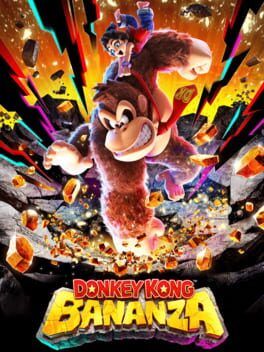

Nintendo’s recruitment site reveals how Donkey Kong Bananza’s sound team shaped DK’s transformation audio around feel, timing, and two control schemes.
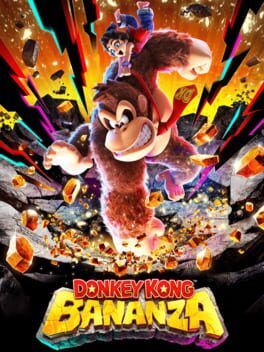
Image: IGDB
Nintendo’s sound team put DK’s transformation through a control test
The most revealing detail from Nintendo’s latest look behind Donkey Kong Bananza is small, practical, and very Nintendo: DK’s transformation sound had to feel right whether players triggered a Bananza with button presses or by shaking the Joy-Con 2. Nintendo Everything reports, based on a post from Nintendo’s recruitment website, that the team went through trial and error before settling on the final sound for Donkey Kong’s transformation.
That detail matters because transformation audio in a platformer is not decorative. It is timing, feedback, and character compressed into a short burst. In Donkey Kong Bananza, DK can perform multiple Bananzas, including Kong Bananza, which give him access to abilities he normally does not have. If that shift does not land in the player’s hands and ears at the same time, the power-up risks feeling softer than the move set around it.
The recruitment post, translated by Nintendo Everything, frames sound design as a broader job than simply placing effects on top of finished animation. The sound designer says their work includes sound effects, character voice recording, background music, ambience, balance, and an “overall sound” players can comfortably understand in different situations. For DK’s transformation, that philosophy collides with a clear design constraint: one sound cue had to serve two very different physical inputs.
A transformation sound has to sell weight before the player moves
Donkey Kong Bananza is a 3D action-adventure platformer, according to Super Mario Wiki, while Wikipedia describes it as a 2025 platform game developed by Nintendo EPD for Nintendo Switch 2. Both listings place the game in a genre where sound has a mechanical job. Jumps need readable impact. Breakable terrain needs to tell you what your fist can handle. A power-up has to announce a change in rules before the player tests the limits.
That is especially true for DK transformation audio. Super Mario Wiki’s Kong Bananza page says Kong Bananza transforms Donkey Kong into a larger, more powerful Kong, increasing his strength so he can break terrain faster and destroy material he cannot normally break with regular punches, such as concrete. It also says Kong Bananza is the first Bananza learned, taught by the Kong Elder in Lagoon Layer, Sublayer 101.
From a platforming craft perspective, the first transformation is a tutorial without necessarily feeling like one. The sound must tell players, instantly, that DK has crossed into a heavier, stronger state. It has to make a button press feel like an eruption, but it also has to match a motion gesture, where the player’s hand is already performing part of the fantasy. Nintendo’s reported trial-and-error process makes sense because the cue is doing two jobs at once: confirming input and reshaping DK’s identity for the next stretch of play.
The Joy-Con 2 shake requirement changes the sound problem
Nintendo Everything’s report highlights the key complication: a Bananza can be activated either through button presses or by shaking the Joy-Con 2, so the sound had to “fit and feel good with both control schemes,” as the translated recruitment text puts it. That is a sharper design problem than it first appears.
A button press is clean and immediate. A shake is messier, more physical, and less uniform from player to player. One person may flick the controller, another may swing it with enthusiasm, and another may use the gesture lightly while sitting back. If the transformation sound is too abrupt, it may pair cleanly with a button but feel detached from motion. If it has too much wind-up, it may flatter the shake but make the button activation feel sluggish.
The confirmed information does not say what specific recording sources, layering techniques, or implementation tools Nintendo used for the final Bananza sound. That remains unannounced in the provided material. What is confirmed is the team’s stated priority: the cue was iterated until it supported both activation methods. For a game built around hitting, smashing, and moving through destructible spaces, that is the kind of invisible craft that decides whether a mechanic feels authored or merely functional.
Nintendo describes sound as part of the game system, not a late coat of polish
The translated Nintendo recruitment post is also useful because it pushes against a common assumption about development order. The sound designer says many people may imagine that sounds are added near the end of development, but in reality the sound team can check sound mechanics or suggest ideas for incorporating sound into gameplay during earlier stages.
That statement gives the Donkey Kong Bananza sound design discussion more weight. If the audio team is involved early enough to test mechanics and make gameplay suggestions, then DK’s transformation sound is part of how the mechanic is shaped, not merely how it is presented after the fact. The sound has to coexist with background music, ambience, voice lines, and action effects without becoming muddy or overbearing.
In a platformer, clarity is kindness. A player should know when a form has started, when an attack connects, and when a material gives way. Super Mario Wiki says Kong Bananza allows DK to Charge Punch by holding and releasing, and that upgrades can increase the range of destruction for those punches. When the game’s verbs include charging, releasing, breaking, and upgrading destructive reach, audio has to preserve rhythm. The transformation sound is the first handshake in that chain.
Bananza’s platforming personality comes from destruction with readable limits
Wikipedia’s summary says Donkey Kong Bananza is distinguished by destructible environments, with players able to destroy most terrain to create paths and find items. It also says players upgrade DK’s abilities by collecting banana-shaped diamonds and obtaining power-up transformations. That context makes the transformation sound especially important: destruction is exciting only when it remains legible.
Kong Bananza’s role, as described by Super Mario Wiki, is to let DK break faster and punch through tougher materials. That shifts the player’s relationship with the world. A wall that looked permanent may become a route. A surface that slowed exploration may become a resource. A charge punch becomes a planning tool rather than a simple attack. The audio has to support all of that without turning every moment into noise.
This is where the phrase “overall sound,” used in Nintendo’s translated recruitment post, becomes more than studio language. If DK’s transformation roars above everything else, it may feel powerful once and tiring after repetition. If it sits too politely in the mix, the form change loses its theatrical punch. The best version is one the player stops consciously noticing because it has taught their hands what is happening. That is where platforming personality lives: in the snap between expectation and response.
What is confirmed, and what players can take from it
The confirmed news is narrow but meaningful. Nintendo’s recruitment website, as translated and reported by Nintendo Everything, says a Donkey Kong Bananza sound designer discussed the work behind DK’s transformation sound, the wider responsibility of designing an overall sound, and the need to make Bananza activation feel good through both button input and Joy-Con 2 shaking. Nintendo Everything also reports that the team used trial and error to reach the final sound.
The broader game details come from public reference listings rather than this recruitment post. Wikipedia lists Donkey Kong Bananza as a Nintendo Switch 2 platform game released on July 17, 2025. Super Mario Wiki lists the game for Nintendo Switch 2 in game card and digital download formats, with input support including Joy-Con 2, Joy-Con, Nintendo Switch 2 Pro Controller, and Nintendo Switch Pro Controller. Super Mario Wiki also lists single-player, two-player multiplayer, local GameShare, and online GameShare modes. The supplied sources do not provide a price, performance profile, patch status, or a technical breakdown of the audio implementation.
There is also a small source caveat. Wikipedia describes the game as developed by Nintendo EPD, while Super Mario Wiki lists Nintendo EPD Tokyo, 1-UP Studio, and tri-Crescendo as developers. Those community-maintained listings differ in granularity, and the provided Nintendo Everything report is focused on a Nintendo recruitment post rather than a full credits audit.
For players, the practical takeaway is simple: if you are playing Donkey Kong Bananza on Nintendo Switch 2, try the Bananza activation methods rather than assuming one is the “intended” feel. Nintendo’s own sound discussion says the transformation cue was tuned around both button presses and Joy-Con 2 shaking. In a game where DK’s power is expressed through terrain, timing, and impact, that audio work is part of the controller feel.