
How Bananza’s wild experiments, from Elephant Bananza to layered destruction, reveal the Odyssey team’s evolving design philosophy and hint at where Nintendo might go next.
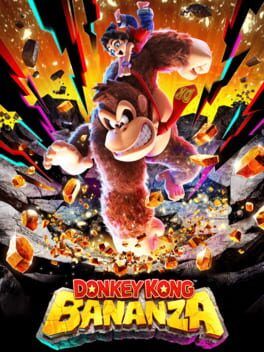
Nintendo has started to talk about Donkey Kong Bananza not just as a hit in its own right, but as a kind of public prototype for whatever comes next from the Super Mario Odyssey team. For an industry that studies Nintendo from the outside, this is a rare moment of clarity: the studio is quietly saying that Bananza’s wildest ideas are not an endpoint, but an R&D phase.
Producer Kenta Motokura has already framed the game this way, spelling out that some ideas from Donkey Kong Bananza may serve as “future hints” for the team’s next major project. That connects Bananza directly to the lineage that runs from Super Mario Galaxy through Odyssey and into this new era on Switch 2.
For developers, publishers, and platform holders trying to understand how Nintendo iterates on its flagship franchises, Bananza is worth a closer look. Its standout mechanics and structural swings do more than refresh Donkey Kong. They expose how the Odyssey team is thinking about player expression, systemic chaos, and spectacle in a world where open exploration is now the default expectation.
From cap throws to controlled chaos
Super Mario Odyssey turned Mario’s hat into a multi tool that collapsed movement, combat, and possession into a single expressive verb. Donkey Kong Bananza applies that same philosophy to destruction. The headline pitch is simple: explore a vast underground world by smashing through it. That smash is Bananza’s Cappy.
The underground caverns are layered like a sandbox puzzle box. Every wall, floor, and route you break reshapes traversal, combat encounters, and even secrets. The team is not just decorating levels with breakable objects. They are building stages that assume the player will punch holes straight through the geometry, then asking level design to survive that chaos.
For Nintendo’s next big project, that suggests a continued move toward mechanics that blur the line between traversal tools and world editing. We have already seen this tendency in Zelda’s recent focus on systemic interaction and construction. Bananza extends the idea into mascot platforming, where the verbs need to read clearly to all ages while still generating surprising outcomes.
Elephant Bananza and the value of going “too far”
In interviews around GDC and through coverage on outlets like GamesRadar, Game Informer, and Nintendo Everything, the team has zeroed in on the Elephant Bananza transformation as both a triumph and a cautionary tale. Lead programmer Tatsuya Kurihara has admitted that this ultra destructive form “probably went too far” in how thoroughly it trivializes certain obstacles and enemy setups.
What matters is why they let it go that far. Kurihara and others stress that it is fun, it feels good, and that is what matters most. The philosophical takeaway is that Nintendo is willing to let a mechanic break local balance if it produces a memorable sensory payoff. Rather than nerfing Elephant Bananza until it fits neatly into every encounter, they kept the power fantasy intact and adjusted everything around it.
From an industry perspective, that is a notable counterpoint to the current live service balancing meta. Where many studios sand away extremes to preserve competitive integrity and long tail retention, Nintendo is foregrounding big swing mechanics as short term experiential peaks. The lesson for the next project is clear. Expect at least one headlining mechanic that seems ludicrous on paper, wins over players through feel, and then becomes a signature of that game’s identity, even if it bends the rules.
The Odyssey team’s evolving design pillars
Looking across Super Mario Odyssey and Donkey Kong Bananza, several design pillars start to stand out. These are not official commandments, but they line up with how Motokura and his colleagues talk about their work, and they are the clearest roadmap we have for what comes next.
First is what you might call frictionless expression. Both games treat movement options as toys rather than technical challenges. Odyssey’s cap jumps, dives, and captures gave even novice players a way to improvise stylish routes without needing speedrunner level inputs. Bananza’s destruction tools and forms follow the same rubric. They launch players into new spaces with minimal setup, and the game is happy to let a “wrong” move turn into a shortcut.
Second is playful rule breaking. There is a sense that every world the team builds must contain at least one way for the player to do something the level technically was not built for. In Bananza, that shows up in how transformations interact with the layered underground spaces. Speedrunners have already found ways to chain abilities and physics quirks to skip huge sections of the game. The developers have publicly acknowledged that they are watching these runs with fascination, rather than rushing to close every exploit.
Third is maximalist theming. Odyssey’s kingdoms were miniature theme parks, each with a clear mechanical hook and aesthetic identity. Bananza does the same with its biomes and with the tonal swing of its transformations, from goofy animal forms to heavy impact traversal tools. The next project is likely to continue that direction, with fewer, denser sandboxes stitched around one mechanical throughline that can support multiple readings, from pure platformer challenge to creative play.
What Bananza’s structure hints about Nintendo’s future worlds
Donkey Kong Bananza is pitched as a 3D platformer, but it quietly borrows from open world structure. Its underground world is not a single seamless map in the Western sense, yet it is layered and interconnected enough that players talk about “route planning” and “builds” in a way that would have sounded strange for a Donkey Kong game ten years ago.
One of the most interesting structural choices is how the game encourages revisiting old spaces with new destruction options. Early caverns tease routes you cannot yet access, not through visible locked doors, but through breakable layers that are clearly stronger than your current form. Returning later and tearing straight through them has the same emotional cadence as re entering an early zone in a Metroidvania with a late game tool.
This suggests that the Odyssey team is comfortable pushing further into soft gated, reconfigurable worlds. For Nintendo’s next project, we should expect more environments built around stackable abilities that permanently change how players read and traverse familiar terrain. That could mean a Mario game where captures or suits reshape levels on repeat visits, or an entirely new IP that applies Mario’s readability to a more systemic map.
Reading between the lines of Motokura’s comments
Motokura has been clear that not every Bananza idea will survive into the team’s next work. He has framed the standard as “what will feel fresh to a player in a new title,” not what can be reused as is. That answer matters. It tells us that internal reuse at Nintendo is not a matter of template swapping, but of harvesting underlying sensations.
In Bananza, those sensations include the joy of collapsing a carefully constructed dungeon into rubble with a single transformation, the surprise of discovering a new route by accident, and the satisfaction of combining movement and power into a clean, readable action. Even if the literal Elephant Bananza never returns, the design intent behind it could be reexpressed as a new flagship mechanic that lets players rewrite the map in one bold gesture.
For fans, this means that every seemingly one off gimmick in Bananza may be a sketch for something larger. For developers, it is a reminder that Nintendo uses its spinoffs and lateral franchise moves as experimentation labs where failure is allowed and even welcomed, so long as the result teaches the team something about how people like to move, break, and rebuild virtual spaces.
Why Nintendo watchers should keep paying attention
The heightened attention on Bananza’s more controversial ideas, from its overpowered transformations to its generous co op and accessibility settings, has sometimes overshadowed just how deliberate this game is as a platform for experimentation. When designers at Nintendo say something “went too far” while smiling about how fun it feels, they are signaling that they now have a new boundary to push up against.
If you work in game development, Bananza is a case study in how to run big budget experimentation without losing clarity for players. Its core verbs remain simple and readable even as they produce complex, sometimes unintended outcomes. For marketers and platform strategists, it is a preview of how Nintendo thinks about flagship launches in a landscape where open world systems and user generated chaos are no longer niche.
Most of all, Bananza confirms that the Odyssey team is not done reinventing its own foundations. The next time Nintendo teases a new project from this group, pay close attention to the verbs they spotlight in trailers, the physicality of their signature transformations, and how willing they are to break their own level design. The seeds were planted in Super Mario Odyssey and fertilized in Donkey Kong Bananza. Whatever sprouts next is likely to be stranger, louder, and even more player driven.