

A hands-on style preview of Do You Even Forklift, diving into its physics-first forklift puzzles, Switch-specific additions, and why quirky sims keep thriving on Nintendo hardware.
A forklift, a horn button, and a lot of broken crates
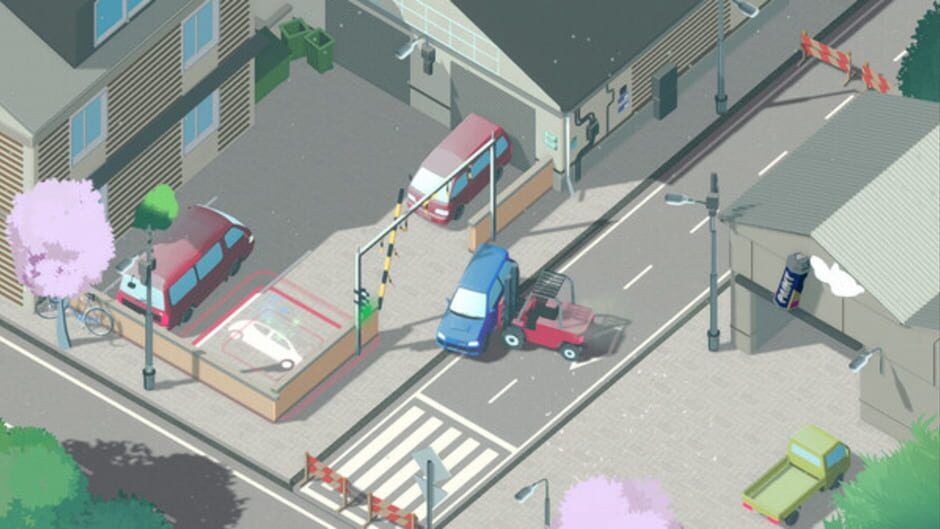
Do You Even Forklift does not look like the next breakout Switch hit at first glance. It is a game about driving a stubby forklift through cluttered depots and tiny backstreets in a stylized slice of Japan. There is no combat, no skill trees, no sprawling map. Instead, the heart of the game is the moment your forks slide under a pallet, the physics engine wakes up, and whatever is stacked on top starts wobbling in ways that are both precarious and hilarious.
That simple interaction is what makes this physics-driven arcade puzzler so promising on Nintendo Switch. It leans into chaos, but wraps it inside compact, puzzle-like stages and a cozy, Ghibli-tinged presentation that feels perfectly at home on Nintendo’s hybrid.
Physics first, puzzle second
At its core, Do You Even Forklift is a logic puzzler that trusts physics to be the ruleset. Levels typically begin with a clear objective, like moving a stack of crates into the correct bays, loading a car onto a transporter, or clearing a blocked alley filled with vending machines and ramen pots. The tools to accomplish these goals are simple. You can drive, lift, tilt, and rotate your forks, sometimes swap to other vehicles, and lean on contextual interactions in the environment.
The challenge emerges from how finicky all of this feels once real-time physics enters the picture. Weight distribution matters. If a car is balanced too far forward, it tilts off your forks as you crest a ramp. Stacked boxes slide if you brake too sharply. A bump into a fragile decorative object can start a slapstick chain reaction. Many puzzles are effectively physics Rube Goldberg machines where a single bad angle sends your plan collapsing in slow motion.
Stages appear to be built less like rigid Sokoban grids and more like dense dioramas, with multiple viable solutions. You might approach a parking-lot puzzle the "intended" way by carefully maneuvering every car into its slot, or you might decide it is faster to shove a junker out of bounds and squeeze through the gap. The designers clearly expect players to experiment, fail, and improvise, which is exactly when the game is funniest.
Why quirky sims work so well on Nintendo hardware
Quirky, physics-heavy simulations have carved out a reliable niche on Nintendo platforms over the last decade. Games like Human: Fall Flat, Untitled Goose Game, Good Job, Moving Out, Goat Simulator 3, and even Katamari Damacy Reroll have all tapped into a similar appeal. They are approachable, mechanically readable, and built around toy-like interactions that produce emergent slapstick.
Switch in particular is fertile ground for this style of game. The hardware favors strong art direction over raw fidelity, which Do You Even Forklift embraces through a soft, anime-inspired aesthetic and compact environments. The console’s pick-up-and-play nature also suits physics romps that shine in short bursts. It is easy to picture someone squeezing in a few forklift puzzles on a commute or passing the system around to show off a ridiculous crash.
There is also a cultural fit. Nintendo players have long embraced games where mundane jobs and everyday actions turn into playful systems, whether that is managing a shop in Recettear, watering plants in Animal Crossing, or delivering packages in Death Stranding’s cloud version. Turning warehouse work into a slapstick puzzle box fits neatly into that tradition.
Switch-specific polish and additions
Do You Even Forklift was born on PC and at game jams, but the Switch release is not a bare-bones port. The console version is planned to feature expanded levels, cleaner pacing, and extra challenges tailored for controller play. The developers have talked about reorganizing and extending certain stages so they ramp more smoothly in difficulty, with early areas that double as tutorials and later ones that escalate into elaborate multi-step jobs.
On the control side, the game is clearly designed around a gamepad and that benefits Switch directly. Fork height and tilt are mapped to separate inputs, so you can perform small corrective nudges while keeping the vehicle moving. It feels closer to controlling a character in a 3D platformer than steering a tank, which makes the moment-to-moment action more readable on the handheld screen.
The Switch version also emphasizes clarity. Interface elements are large, contrasts are strong, and camera angles are tuned to avoid tiny objects getting lost in the scenery. Combined with the bright, saturated color palette and clean outlines, it is the kind of game that still looks sharp in handheld mode where some more detailed titles can turn muddy.
One tiny but telling detail is the dedicated horn button. Tapping it makes the forklift beep just for the fun of it. On a system where couch co-op chaos and TikTok-friendly clips have helped many indies go viral, that kind of playful affordance can matter more than it seems.
Puzzle design potential in a world of pallets and potholes
What makes Do You Even Forklift stand out from other physics playgrounds is how it leans into structured puzzle design instead of pure open-ended chaos. There are more than thirty handcrafted levels planned, many of which layer in optional objectives and hidden gags.
A simple delivery job might start with the basic requirement to move a stack of ramen crates from a truck into a shop storeroom. Optional goals could ask you to complete the task without dropping a single box, or to finish within a tight time limit, or to discover a bonus route by noticing a collapsible fence. Because physics governs everything, shortcuts often involve bending, rather than breaking, the rules, such as nudging a van to create a makeshift ramp.
Later scenarios introduce cramped urban streets, multi-level parking structures, and environmental hazards. Potholes destabilize your load, narrow alleys force you to reverse with precision, and cluttered sidewalks force hard choices about what to move and what to knock over. The developers also tease branching story beats, where the way you solve a task can slightly alter what happens next, giving the campaign some replay value beyond chasing high scores.
The art direction amplifies all of this. The world draws on Japanese car culture and small-town streets, filtered through an almost Ghibli-like softness. Neon signs, convenience-store facades, rusty guardrails, and overgrown backlots give each puzzle a distinct sense of place. That not only looks charming, it also helps players parse the environment quickly. You start to recognize load-bearing structures, destructible props, and interactable objects at a glance, which is vital when half your crates are already swaying.
Comparing it to other viral physics indies
On the spectrum of physics games, Do You Even Forklift sits somewhere between the structured puzzle focus of Good Job and the loose, chaos-first mentality of Goat Simulator. Like Good Job, each mission is a workplace scenario that can be solved cleanly with some planning, but the game never punishes you too harshly when things go wrong. Broken props, scattered boxes, and toppled cars are part of the fun, not a hard fail-state.
From Human: Fall Flat and Gang Beasts it borrows the idea that slightly awkward controls can be a feature. The forklift is not a precision racing machine. It has weight and momentum, and part of the joke comes from trying to execute delicate maneuvers with a tool that was never meant for such finesse. The difference here is that the camera and input scheme are cleaner, which should make it less frustrating for solo players.
Untitled Goose Game and Katamari Damacy offer another interesting comparison. Those games thrive on turning mundane spaces into playgrounds for mischief. Do You Even Forklift does something similar with parking lots and loading docks. You are technically doing a job, but the joy comes from how you perform it, whether you are stacking vehicles in absurd formations or threading a pallet of fragile goods through a gauntlet of wobbling obstacles.
The key test will be how consistently the game can surprise players over the full campaign. The best physics indies keep introducing fresh twists without losing their core identity. Early footage and descriptions of Do You Even Forklift suggest there is room to grow, from introducing alternative vehicle types to remixing past locations with new objectives and environmental modifiers.
Why this could be a perfect Switch fit
Between its modest specs and handcrafted stages, Do You Even Forklift is a natural match for Switch hardware. The visual style is stylized instead of realistic, which tends to age well and helps performance stay smooth. Levels are bite-sized enough that a single run can fill the gaps in a commute or serve as a quick cool-down between longer sessions with bigger games.
Most importantly, the humor is immediate. You do not need to read a text box or understand a deep ruleset to appreciate the comedy of a carefully stacked tower of vending machines collapsing in slow motion because you nicked the base with your forks. That sort of instant feedback is exactly the kind of experience that players enjoy capturing and sharing, which has been a huge driver behind the success of other viral physics indies on Switch.
If the final release delivers on its promise of polished controls, inventive level design, and plenty of room for creative problem solving, Do You Even Forklift has every chance to become the next quirky cult hit in Nintendo’s physics playground pantheon.