
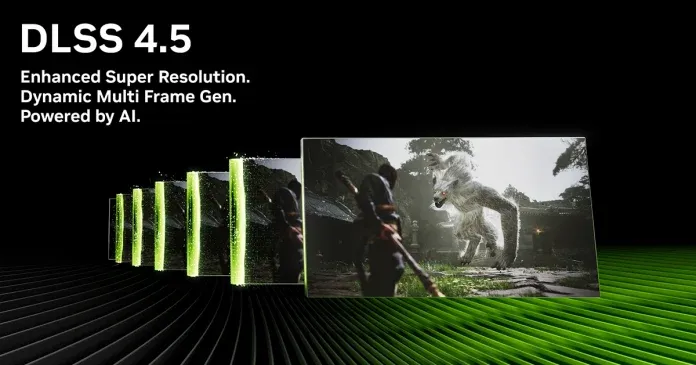

Nvidia DLSS 4.5 Ray Reconstruction is available now for desktop GeForce RTX users. Here is what changes, where image quality gains should be clearest, and why path tracing still needs careful settings choices.
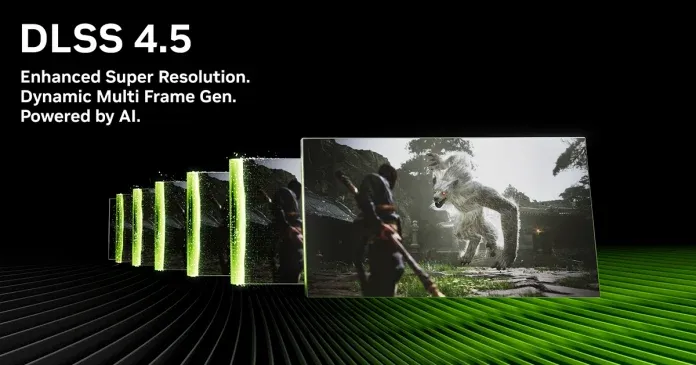
Image: talkesport.com
Nvidia’s new denoiser is live, but the path-tracing puzzle is not solved
Nvidia DLSS 4.5 Ray Reconstruction is available now for desktop gamers, giving GeForce RTX graphics card owners a new AI denoising model for ray-traced and path-traced games. Nvidia announced the release during Gamescom 2026, and VideoCardz reports that the update is available through the NVIDIA app Early Access channel for supported games.
The tension for PC players is straightforward: DLSS 4.5 Ray Reconstruction is a concrete image-quality upgrade, but it does not turn path tracing into a free setting. Nvidia says the model improves lighting accuracy, temporal stability and motion clarity. Rock Paper Shotgun, after attending Nvidia’s pre-Gamescom briefing, reported that Nvidia demonstrated the change in Alan Wake 2 using a scene with a shutter shadow and light reflecting off trash bags, where the shadow appeared less blurry and the ripples in the bags were more visible. PC Gamer’s headline assessment is similarly measured, calling DLSS 4.5 Ray Reconstruction a definite improvement while warning that path-traced fidelity is still not a fully solved issue.
That is the useful frame for anyone about to open Cyberpunk 2077, Alan Wake 2, Indiana Jones and the Great Circle, Portal with RTX, or another supported title: this Ray Reconstruction update is best understood as a better reconstruction layer, not permission to ignore resolution, frame rate, input feel, or the particular demands of each game’s ray-tracing mode.
What DLSS 4.5 Ray Reconstruction changes under the hood
Nvidia describes DLSS Ray Reconstruction as a neural rendering technique for all GeForce RTX GPUs that improves image quality in ray-traced and path-traced scenes. In Nvidia’s explanation, it replaces traditional hand-tuned denoisers with a supercomputer-trained AI network that generates higher-quality pixels in the noisy areas of a ray-traced frame where rays were not sampled. GamingOnLinux quotes Nvidia saying the system unifies denoising and Super Resolution into a single model, using temporal data, spatial data and game-engine information to reconstruct sharper and more stable high-resolution images.
The DLSS 4.5 Ray Reconstruction update is built on Nvidia’s second-generation Transformer architecture. Ike Nnoli, Nvidia’s senior product marketing manager, told Rock Paper Shotgun during a pre-Gamescom press briefing that the model builds on the Super Resolution second-generation Transformer architecture introduced with DLSS 4. According to Nnoli, the model has deeper spatial awareness and additional developer controls, which should produce better lighting accuracy, responsiveness and clearer motion in ray-traced games.
The numbers Nvidia is giving developers and hardware-watchers matter because they sketch the ceiling of the change. VideoCardz, citing Nvidia, reports that the new model has 35% more compute capability and processes 20% more parameters than the previous version while maintaining similar performance. Nvidia’s RTX Remix post gives the same figures and adds that the model was trained on a larger dataset, with finer control over temporal accumulation. Those details do not guarantee a visible upgrade in every scene, but they do explain why Nvidia is positioning DLSS 4.5 Ray Reconstruction as a quality step rather than a compatibility checkbox.
Where the image-quality gains should be easiest to see
The clearest gains should appear in scenes where ray tracing and path tracing traditionally struggle to converge cleanly: soft shadows, indirect lighting, reflective objects, dark interiors with small light sources, and motion through heavy lighting detail. Nvidia’s own Alan Wake 2 example, as described by Rock Paper Shotgun, focused on exactly that kind of stress test. A window shutter cast a shadow, while nearby trash bags caught reflected light. The reported improvement was not a dramatic art-direction overhaul. It was sharper shadow definition and more legible material detail on the bags.
That is the important distinction. Ray Reconstruction is trying to recover a cleaner image from incomplete ray information. When a game is already rendering a simple, well-lit scene with limited ray-traced effects, the upgrade may be subtle. When a game leans into path tracing, glossy surfaces, dense contrast and moving light, the new model has more work to do and more opportunity to show its value.
This is why the initial slate of examples matters. Nvidia and VideoCardz identify support across 30 games through the NVIDIA app override, including Alan Wake 2, Cyberpunk 2077, Indiana Jones and the Great Circle, Portal with RTX, DOOM: The Dark Ages, Hogwarts Legacy, Star Wars Outlaws and Marvel’s Spider-Man 2. The list also includes future or upcoming titles named by Nvidia’s support chart, such as Resident Evil Requiem and PRAGMATA. Nvidia separately says RTX Remix mods can now use DLSS 4.5 Ray Reconstruction, and its RTX Remix post names Alan Wake 2, Indiana Jones and the Great Circle and PRAGMATA as examples of games where the update improves ray-traced and path-traced image quality.
For players, the best test is not a static screenshot in a bright outdoor area. Watch moving shadows, fine reflections, wet or plastic materials, volumetric-looking darkness, and fast camera movement through a richly lit scene. Those are the spots where a better denoiser and stronger temporal stability should be most visible.
How to enable it, and why availability is still a settings game
The update is available now, but it is not necessarily a one-click global change for every PC game. VideoCardz reports that users can enable DLSS 4.5 Ray Reconstruction by opting into Early Access releases in the NVIDIA app under Settings and About. For supported games, the new model can then be selected through Graphics, Driver Settings and DLSS Override model presets. Nvidia recommends choosing either Recommended or Preset F, according to VideoCardz.
That matters because DLSS 4.5 Ray Reconstruction is arriving partly as a driver-side override for supported titles, not solely as a patch that every developer has already surfaced inside an in-game menu. TweakTown similarly reports that the latest NVIDIA app update lets GeForce RTX users test DLSS 4.5 Ray Reconstruction in 30 games through DLSS Override. If a game is unsupported, or if a player is not using the NVIDIA app Early Access path, the experience may differ.
Nvidia’s broader Gamescom announcement also ties DLSS 4.5 controls to GeForce NOW, where GamingOnLinux reports that new DLSS 4.5 controls will soon give members more choice over how supported games look and perform with DLSS Super Resolution, Dynamic Frame Generation and Ray Reconstruction. That is a cloud-gaming development rather than the same desktop rollout, but it reinforces the pattern: Nvidia is turning DLSS into a stack of adjustable systems. Super Resolution, Frame Generation and Ray Reconstruction each change a different part of the image-and-performance equation.
On desktop, the practical advice is to treat the new model as part of your game profile. Confirm the title is supported. Enable the recommended preset first. Compare the same scene with the previous model if the app allows it. Then adjust ray tracing or path tracing quality, output resolution and frame generation settings around the result rather than assuming the new denoiser should carry every visual option at maximum.
Path tracing still has an economy, and every setting spends from it
Path tracing PC gaming is a resource economy. Rays, resolution, reconstruction, latency and frame rate all compete for the same system budget. DLSS 4.5 Ray Reconstruction improves how noisy ray-traced information is cleaned and rebuilt, but Nvidia’s own description still begins from the reality that rays were not sampled everywhere in the frame. The model is reconstructing missing information from spatial, temporal and engine data. That is powerful, but it is still a recovery process.
This is where the meta shifts for high-end PC players. In older rasterized games, the default enthusiast move was often simple: push resolution, max the preset, then trim shadows if the frame rate collapses. With ray tracing and path tracing, the smartest setting choice is less linear. A higher internal resolution can feed the reconstruction model cleaner input, but it costs performance. A heavier path-tracing mode can produce richer lighting, but it also increases the need for denoising. Frame generation can improve apparent smoothness, but it does not erase the need for a responsive base frame rate.
PC Gamer’s cautious framing is useful here. The outlet characterizes DLSS 4.5 Ray Reconstruction as an improvement while saying path-traced fidelity is still not completely solved. That should not be read as a dismissal. It is the correct buying-guide posture for current path tracing: great when tuned well, uneven when forced beyond a system’s balance point.
For GeForce RTX owners, the best first move is to use DLSS 4.5 Ray Reconstruction to raise image stability before raising every ray-tracing slider. In a demanding title, you may get a better final image from a slightly reduced path-tracing setting with cleaner reconstruction than from a higher setting that produces more instability, smear or low base performance. The sources here do not provide independent benchmark tables, so any exact performance claim would be premature. The confirmed claim is narrower and still meaningful: Nvidia says the new denoiser is more capable while maintaining similar performance to the previous model.
The rollout points to Nvidia’s long game for RTX on PC
Nvidia is not treating DLSS 4.5 Ray Reconstruction as a one-game feature. Its Gamescom material links the update to supported desktop titles, future RTX releases, RTX Remix mods and GeForce NOW controls. Rock Paper Shotgun reports that DLSS 4.5 Ray Reconstruction will arrive with path tracing in IO Interactive’s 007 First Light on September 15 and in Control Resonant when that game releases on September 24. Nvidia’s Gamescom page also highlights Control Resonant path tracing as a PC-exclusive enhancement and says 007 First Light’s path-tracing update launches September 15.
The RTX Remix angle may be the sleeper development. Nvidia says modders can now add DLSS 4.5 Ray Reconstruction and Multi Frame Generation to their RTX Remix creations, with the company announcing a new Painkiller RTX update and spotlighting The Elder Scrolls III: Morrowind RTX. For older games rebuilt around path tracing, denoising quality can be central to whether the mod feels cohesive or visually noisy. If DLSS 4.5 improves lighting accuracy and temporal stability as Nvidia claims, Remix projects may benefit from the same kind of cleaner shadow and material handling that Nvidia showed in Alan Wake 2.
There is also a communication challenge. Rock Paper Shotgun notes that Nvidia has not always made its graphics technology easy to understand in plain terms, and the industry’s broader AI conversation can blur the difference between neural image reconstruction and generative content manipulation. In this case, Nvidia’s described technique is machine-learning-based reconstruction of ray-traced frames. It is not presented in the source material as a tool that invents new game assets or changes character art. The relevant player question is therefore narrower: does the new model preserve the scene more cleanly, with fewer temporal artifacts and better lighting detail?
A sensible upgrade path for RTX players today
If you own a GeForce RTX GPU and play supported ray-traced games, DLSS 4.5 Ray Reconstruction is worth testing now, especially in visually dense games that already benefit from DLSS. The strongest confirmed advantages are improved lighting accuracy, better temporal stability, clearer motion in ray-traced and path-traced content, and a more capable denoiser that Nvidia says maintains similar performance to the previous model.
If you are chasing the cleanest possible image, start with Nvidia’s recommended model preset or Preset F through the NVIDIA app Early Access route reported by VideoCardz. Use a repeatable test area in a supported game. Look for shadow softness, shimmering, reflected light, ghosting during camera movement and fine surface detail. If the improvement is visible, then decide whether to spend the recovered quality budget on higher ray tracing, higher output resolution or steadier frame pacing.
If your system already struggles with path tracing, this update should be treated as a refinement rather than a rescue plan. DLSS 4.5 Ray Reconstruction can improve the image built from ray-traced data, but it does not remove the cost of generating that data in the first place. The sharper long-term strategy is to tune for the scene you actually play, not the preset name you want to claim. For current RTX PC gaming, that is the balance point: Nvidia DLSS 4.5 gives the reconstruction layer a stronger hand, while path tracing still rewards players who make careful, game-by-game settings choices.