
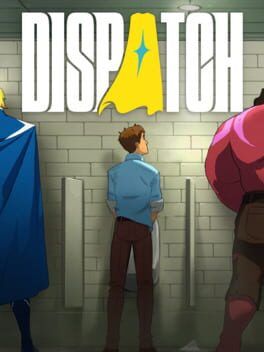
AdHoc Studio’s HR Violations update for Dispatch restores most of the censored content on Switch and Switch 2, but “hard requirements” from Nintendo highlight how platform policies still shape what players can see – and how much control developers really have.
Dispatch was already a fascinating game before anyone started counting pixels. AdHoc Studio’s superhero workplace drama mixes branching narrative, office comedy and crisis-management into something that feels like a cross between Telltale adventures and a TV writer’s room. It is loud, messy and very adult, full of sex jokes, graphic violence and deeply flawed people who also happen to be capes.
On PC and PlayStation 5, that tone arrived intact. On Nintendo Switch, it did not. The launch version quietly stripped out visible genitals, blurred suggestive scenes, muted erotic dialogue and even covered up more mundane nudity that still sat within the game’s Mature rating elsewhere. It was not merely a region rating tweak, it was a version of Dispatch where some of its most abrasive gags and uncomfortable character beats had been sanded down in a way players immediately noticed.
That discrepancy is what set the stage for the HR Violations update. Rather than a simple bug-fix patch, AdHoc framed the new content as an in-universe HR training gone wrong. The free DLC, available on all platforms, unlocks a revised set of content filters that finally gives Switch owners far more control over what they see. At the same time, it quietly exposes how much of the original censorship was preventable studio compromise and how much remains locked behind platform policy.
The update’s most visible change is that Switch players outside Japan now have access to the same “partial to fully uncensored” spectrum that PS5 and PC users enjoy. HR Violations introduces a suite of options that can be toggled from a dedicated menu rather than being baked into the build. At one end of the scale is Full Coverage, which blacks out or otherwise obscures explicit visual and audio content. At the other end are looser presets that restore visible breasts and butts, bring back obscene hand gestures and lift many of the previous audio mutes.
Importantly, AdHoc does not present these as a single on/off switch. Instead you are choosing between different censorship styles. A more traditional mode leans on pixelation and blur, while a new chaotic option replaces sensitive imagery with absurd gags that fit Dispatch’s sense of humor. Toxic in jorts became a shorthand among players for the most ridiculous setting, with the studio itself leaning into the meme in patch notes that joke everyone deserves a chance to see the character’s questionable fashion choices.
On PS5 and PC in territories outside Japan, the default remains the closest thing to a director’s cut. Those versions are essentially uncensored unless players deliberately walk back toward stricter settings. The HR Violations update is framed there as optional and comedic rather than corrective. Parity is more complicated on Nintendo hardware. On Switch and Switch 2 in North America, Europe, Australia and New Zealand, you can now see breasts, butts and rude gestures if you choose, but genitals remain off-limits. One key erotic dream sequence that leans heavily on audio also stays muted in line with what AdHoc now calls hard requirements from Nintendo.
The real breaking point came from how the original censorship landed. Players quickly noticed missing lines, strangely static cameras and awkward cuts in the Switch version. Scenes that had been allowed to breathe elsewhere felt truncated, jokes lost their punch and certain character arcs lost some of their intended bite. Social feeds filled with side-by-side comparisons and questions about whether the studio had self-censored to get onto Nintendo hardware or whether the platform holder had forced deeper cuts behind the scenes.
AdHoc’s initial silence did not help. The studio did not immediately spell out where the changes came from, leading to the worst possible outcome: speculation. Some fans accused Nintendo of pushing back toward a more conservative content stance after years of seeming to relax. Others put the blame squarely on AdHoc for allegedly shipping a compromised version just to hit a date. Import threads and comment sections oscillated between accusing the platform and accusing the developer, with little hard information either way.
The HR Violations update functions partly as an olive branch. In its messaging around the patch, AdHoc acknowledges that the Switch build players got at launch missed the mark. The team says the success of Dispatch gave them the financial breathing room to spend more time on the versions they should have shipped in the first place. That is a candid admission that initial decisions were at least partly driven by production constraints rather than creative desire. It also signals that the studio heard the feedback and, where it had freedom to change, did so.
Underneath the jokes and lighthearted tone of the patch notes is a more serious explanation of what developers are wrestling with. AdHoc has been clear that a portion of the original cuts were a matter of juggling multiple rating boards and regional sensitivities within the Switch ecosystem. A single codebase that could pass in every territory, including stricter markets like Japan, inevitably pulled the global build toward the lowest common denominator. The goal of HR Violations was to break that compromise apart so that, where policies allow, players make the call instead of a one-size-fits-all submission.
Even after this work, full parity remains out of reach on Nintendo’s platforms. AdHoc uses deliberately cheeky phrasing about hard requirements from Nintendo, but the implication is plain. Some content cannot be restored on Switch, even behind an optional toggle, if the studio wants to remain within the guidelines it agreed to. Genitals and certain explicit audio are the red lines most outlets highlight. In practice, this means that a scene that plays one way on PS5 or PC still has to be re-cut or partially obscured on Switch, regardless of how mature-rated the game might be or how clear the opt-in language is.
This puts developers in a tricky position. When the same story is being told across PC, PlayStation, Xbox and two generations of Nintendo hardware, they have to decide early whether to author multiple cuts or water down the highest-content version to match the strictest platform. Dispatch’s initial Switch release was effectively a case study in choosing to ship a single, more restricted build everywhere on that hardware and letting the differences slide. HR Violations is the course correction, but one that required extra budget for new art, new UI work and multiple submission rounds.
What separates Dispatch from many other cross-platform titles is how visible its censorship is. The game’s adult tone is not incidental flavor but central to its themes about workplace power, exploitation and the messy ways sexual dynamics overlap with hero worship. When a key dream sequence is stripped of sound, it is not just a missing joke, it is a missing characterization beat. When bodies are smoothed into formless blobs in a scene that is supposed to be uncomfortable, the writing is carrying the weight alone.
From a player-experience standpoint, the HR Violations update does two things at once. It meaningfully improves the Switch and Switch 2 versions by putting more agency in players’ hands, letting them choose how much of Dispatch’s crassness they want to see without resorting to buying the game again elsewhere. At the same time, the detailed breakdown of what can and cannot be restored makes Nintendo’s invisible rules suddenly feel concrete. When patch notes have to spell out that breasts are now allowed but genitals never will be, the contours of platform curation come into focus.
It is also a reminder that rating boards are only one part of the gatekeeping process. Dispatch is rated for adults, yet Nintendo’s own internal bar for explicit content still diverges from what the ESRB or PEGI might theoretically permit. Historically, that tension has produced inconsistencies where some titles with sexualized content slip through with fewer changes while others, particularly narrative-driven games that linger on messy intimacy, run into friction. The HR Violations patch puts that friction front and center instead of letting it stay buried in submission paperwork.
For developers, the episode carries lessons beyond Dispatch itself. If your story depends heavily on explicit material, you either accept that platform versions will differ, or you build flexible systems that let players and regions choose what they are comfortable with. AdHoc’s new filter presets are one answer to that problem, though they come with cost. Every new censorship style requires testing, art support and content review with each platform holder. For smaller studios, that can be the line between launching simultaneously everywhere or delaying versions to get the options right.
For players, the takeaway is both encouraging and frustrating. Dispatch’s community pushed back hard enough that AdHoc reallocated resources to address the Switch version. The result is a better game on that platform and a clearer understanding of how its content is being managed behind the scenes. But it also illustrates the limits of that advocacy. No amount of feedback will relax platform rules mid-generation, so some gaps between versions will simply persist.
Viewed in the longer history of Nintendo’s relationship with mature games, Dispatch ends up as a snapshot of the current middle ground. The company clearly has room today for adult comedy about sex and violence, provided it is framed correctly and hardened lines around the most explicit imagery are respected. That is a long way from the more aggressively sanitized days of earlier hardware, yet not as laissez-faire as PC storefronts. HR Violations makes that balance legible in a way few other releases have.
In a sense, dispatching superheroes is the easy part. The harder job is dispatching the same unruly, adult story to a mosaic of platforms that all draw the line in slightly different places. With HR Violations, AdHoc Studio has shown one way to do it while owning up to missteps, listening to player feedback and pushing back against the idea that censorship must always be binary. The result is a Switch version that still is not identical to its peers but finally feels like it is in on the same joke.