
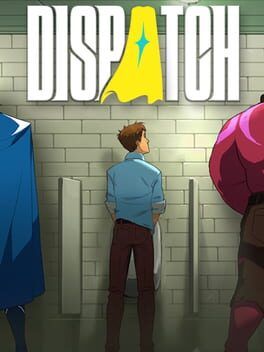

How AdHoc Studio’s superhero call‑center hit turned weekly episodes, firm endings, and sharp choices into a Game of the Year contender, and what that says about player appetite for finite, story‑first experiences in a forever‑service era.
In 2025, most big games still want you to log in forever. Battle passes tick down, dailies reset, and “seasons” blur together until individual stories feel interchangeable. Dispatch could not be more different. AdHoc Studio’s superhero workplace comedy is structured like a TV miniseries, tells you exactly when to stop playing, and then actually ends.
That decision did more than define one game. In a year dominated by forever games, Dispatch quietly became a proof of concept for the return of tightly scoped, episodic, narrative‑first design. Its success and award run, from Shacknews’ Best Narrative of 2025 to a top‑five Game of the Year slot at Push Square, reveal a player base that is hungry for finite experiences again.
A superhero call center that plays like prestige television
Dispatch is AdHoc’s debut, but the studio’s DNA goes back to Telltale, Night School, and Ubisoft. You feel that heritage from the first episode. The pitch is immediately distinctive: instead of suiting up as a cape, you play Robert Robertson III, a washed‑up ex‑hero who becomes a dispatcher for SDN, a private superhero security firm in a heightened Los Angeles.
Your job is to sit in a call center and send other people to save the day. That sounds mundane, yet AdHoc leans into it. Each episode opens with a short setup, then hands you control of SDN’s daily “board,” where you route a rotating cast of reformed supervillains to emergencies across the city. Between shifts, you navigate Robert’s tangled relationships, manage the combustible Z‑Team, and try to keep both the city and your crew from falling apart.
Tonally, outlets like GameSpot have compared it to The Office colliding with The Boys. The absurdity of superhero corporate culture is played for laughs, but the showrunner‑style focus on character makes the humor land without undercutting the stakes. It feels like prestige TV you poke at rather than another sandbox to grind.
Weekly episodes with a hard stop
Plenty of narrative games claim to be “like a TV show.” Dispatch commits to the bit structurally. AdHoc shipped eight episodes within three weeks. The cadence was simple and understandable: two episodes on launch day, then two more each week until the finale in mid‑November.
Each chapter runs about an hour and follows a clear rhythm. A cold open sets the week’s conflict, the middle hour is anchored by the call‑center management sim and its crises, then a big character beat lands right before the credits and a licensed track kicks in. The moment the song hits, that session is over. You are meant to walk away and think about what you just chose.
In an industry trained to fear gaps in engagement, that is almost radical. GameSpot’s feature on Dispatch framed this as its most refreshing quality: it respects your time and attention. Instead of surfacing dailies or streaks, it gives you an ending every night and a natural point to stop.
That structure does more than manage fatigue. It rebuilds trust in an episodic format that was badly damaged in the 2010s. Players burned by long delays between Telltale episodes or series that never finished have grown wary of buying into chapter‑based games. AdHoc tackled that head‑on. Every interview leading up to launch foregrounded the release schedule. IGN, GameHub, and others emphasized that the whole season was already built and would roll out over a month, not years.
That promise was kept. Dispatch did not ask players for an open‑ended commitment or faith in a nebulous roadmap. It asked for eight nights and delivered exactly eight.
Choice‑driven design without the service grind
Structurally, Dispatch evokes television, but the way you interact with it is pure interactive narrative. Dialogue choices define Robert’s tone as a leader, a friend, and an ex‑hero. Who you send on which job, who you bench, and who you trust with risky assignments shapes both the city’s safety meter and each character’s arc.
Crucially, these systems are not there to manufacture endless replay loops. AdHoc could have bolted on roguelite modes or weekly score challenges and left Dispatch running as a content treadmill. Instead, the management layer mostly exists to force you into uncomfortable trade‑offs inside a single, authored run.
The Z‑Team, the group of ex‑villains you are tasked with rehabilitating, underlines that intent. They start as abrasive, bickering liabilities. Across the season, they become a messy family whose well‑being you genuinely care about. That arc only hits because the game is finite. You are not optimizing a roster forever. You are shepherding a broken crew through eight very bad weeks.
By the finale, decisions around keystone characters like Invisigal and Blonde Blazer carry real weight. Shacknews describes some late‑season branches as “impossible” choices, precisely because you have spent just enough time with these people to understand their damage and potential. There is no meta progression to blunt those calls, no idea that a future patch will give you more chances. The story ends, and you live with what you did.
That finality runs counter to the dominant design of live services, where systems are tuned to keep doors open indefinitely. Dispatch is tuned to close them.
Counter‑programming to the forever‑service model
When GameSpot frames Dispatch as a game that “tells you when to stop,” it is really diagnosing a broader fatigue. In 2025, almost every genre has been reshaped by retention thinking. Action RPGs add seasons, racers lean on battle passes, even narrative‑heavy games arrive with promises of roadmaps and expansions.
Dispatch’s value proposition is the opposite. It sells itself as a complete season. No roadmap, no DLC slate, no multi‑year monetization plan. Instead of asking how it can keep players engaged for 500 hours, AdHoc focused on making eight hours feel essential.
Industry‑wise, there are a few reasons this matters.
First, it reminds publishers that not every hit needs to be a platform. Dispatch’s performance, with reports of roughly two million copies sold for a new IP, came without the marketing muscle or post‑launch machine of a major AAA live service. Its success was carried by word of mouth, critical acclaim and the weekly discourse cycle each episode created.
Second, it shows that appointment gaming does not require live operations. The “Wednesday Dispatch” ritual that sprung up on social media looked a lot like the viewing culture around shows such as The Last of Us or Succession. But AdHoc did not need limited‑time events or login rewards to create that stickiness. The cliffhangers and character arcs did the work.
Third, it quietly challenges the assumption that players only want value measured in raw hours. GameSpot’s essay makes this explicit, praising Dispatch for being exactly the right length instead of chasing bloat. In a landscape where marketing often leans on map size and playtime, seeing a widely celebrated Game of the Year contender proudly bill itself as “eight episodes and done” sends a different signal.
GOTY accolades as a barometer of appetite
Awards do not always reflect market demand, but the specific categories Dispatch has cleaned up in are telling. Shacknews naming it Best Narrative and Push Square ranking it among the top five games of the year emphasize craft over scale. The praise centers on its writing, pacing, character work, and structural clarity.
These outlets could have handed those slots to safer, larger live services. Instead, they highlighted a single‑season experiment from a new studio. That is not just a win for AdHoc. It is an endorsement of a model that currently sits outside the blockbuster mainstream.
Look at the language critics use. Shacknews talks about Dispatch “reinvigorating the interactive narrative genre” and pushing players to find the good in themselves and others. Push Square calls it one of the year’s biggest surprises and points to its “smart evolution” of the classic Telltale formula. GameSpot casts it as a relief from the pressure of never‑ending games.
Underneath the individual superlatives is a common thread: satisfaction. Reviewers keep circling back to how self‑contained Dispatch feels, how cleanly its arcs resolve, and how manageable its scope is. Those are the exact qualities that live‑service roadmaps tend to erode.
The quiet return of episodic design
Episodic games never disappeared entirely, but they fell out of fashion once studios struggled to hit schedules and business models shifted toward always‑on products. For a while, “episodic” became shorthand for unreliable. Dispatch is part of a small but notable correction.
Several design choices make its approach stand out.
AdHoc shipped the season fast. That addressed the biggest historical pain point of episodic games: waiting months between chapters or, worse, never getting an ending. It also used the format to sharpen pacing. Knowing every player would hit each beat within the same three‑week window, the writers could build callbacks and running jokes without worrying about long gaps diluting impact.
The studio also picked a premise that thrives in a chapterized structure. A superhero call center naturally lends itself to “case of the week” stories, where a particular crisis or client defines an episode while larger arcs simmer in the background. That mix of episodic and serial storytelling is straight out of television, and players instinctively understand how to engage with it.
Finally, AdHoc did not treat the format as a cheap cliffhanger factory. Each episode feels like a complete story with its own emotional arc, not just a prologue to the next content drop. The season finale is decisive in a way that a live‑service expansion rarely is. The sense that “this is it” gives Dispatch a narrative punch many larger games lack.
Taken together, these choices hint at how episodic design could re‑enter the mainstream: not as a half‑step toward games as services, but as a separate track focused on story, cadence, and closure.
What Dispatch signals for the next wave of story‑first games
Dispatch will not topple the live‑service model. Battle passes are not going anywhere, and most big publishers still view games as recurring revenue streams. But its success offers a few concrete lessons for studios interested in building finite, narrative‑driven projects that can still cut through the noise.
Tight, communicated cadence builds trust. Players are far more willing to buy into an episodic series when they know exactly when each part is coming and that the ending already exists. Dispatch’s marketing and interviews hammered this point, and it paid off in enthusiastic weekly engagement instead of skepticism.
Finite experiences can still drive community. The water‑cooler effect around each new episode shows that you do not need endless content to generate ongoing conversation. You need shared timing and strong storytelling. That is a promising blueprint for smaller studios that cannot afford multi‑year live operations.
Character‑driven design is a viable differentiator. In a market crowded with mechanically dense, progression‑heavy games, Dispatch leads with its ensemble, its workplace drama, and its choices. For many players, that was enough to make it a must‑play season even against more feature‑packed competitors.
Most importantly, there is an audience that wants to be done. The warm reception to a game that confidently ends after eight episodes, with no sequel tease baked into a live‑service roadmap, suggests a growing appetite for stories that respect limits. For older players with jobs and families, or anyone juggling multiple hobbies, the promise of “you can actually finish this” is powerful.
As more studios of former Telltale and Night School talent look for sustainable paths forward, Dispatch offers a persuasive template. Use episodic structure intentionally. Announce a schedule you can hit. Make meaningful choices, not meta‑progression hooks, the center of engagement. Then tell a story bold enough to end.
In a year crowded with games designed to be routines, Dispatch stood out by feeling like an event. Its superhero call center was never meant to be a new home. It was meant to be a season you remember. The accolades and player response suggest that in 2025, that is exactly what many people were looking for.