
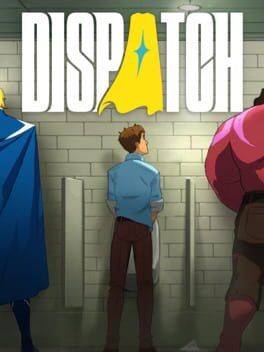

How AdHoc Studio’s sharp narrative, meticulous craft and standout performances turned Dispatch into one of the defining winners of the 2026 BAFTA Games Awards.
In a BAFTA year framed by the juggernaut presence of Clair Obscur: Expedition 33, it might have been easy for everything else to be reduced to footnotes. Instead, Dispatch stepped into the spotlight and quietly became the other story of the night. Where Expedition 33 walked away with Best Game, Dispatch carved out a different kind of sweep, emerging as a breakout winner in the areas that most clearly define its personality: Animation, Audio Achievement and a Performer in a Supporting Role win for Jeffrey Wright as Chase.
What makes Dispatch interesting in the 2026 awards conversation is that its success did not come from dominating the headline categories. It came from BAFTA voters rallying around the specific craft decisions that make the game feel unlike anything else released in the last year. Critics had already been circling those exact strengths in their reviews, which meant the BAFTA haul felt less like a surprise and more like a formal acknowledgment of what players had been talking about since launch.
Dispatch is a tightly focused narrative game from AdHoc Studio, structured around a superhero dispatch office that looks more like a messy workplace comedy than a traditional power fantasy. On paper it sounds like a tonal juggling act. In practice, that contrast is precisely why it resonated. It wraps strategy and point and click adventure elements around a character driven story about who gets sent into danger, who stays behind and who is stuck managing the fallout in the office. The powers and crises on the streets matter, but the real drama is in the conversations, glances and half finished sentences that play out between missions.
The Animation award is a good lens on why the game connects. Dispatch is not chasing photoreal spectacle. Instead, it leans into stylized character work that exaggerates posture, micro expressions and timing to sell the awkward, often funny tension of its cast. Animation in Dispatch is storytelling. A weary hero half slumping into a chair before forcing themselves upright tells you as much about burnout as a page of dialogue. A nervous tap of a pen or a sideways look during a performance review becomes a punchline or a gut punch depending on the scene. Critics repeatedly highlighted how these little details made the game feel alive, and BAFTA’s recognition essentially validated that the animation team was doing far more than just making characters move.
Audio Achievement is where Dispatch cements its atmosphere. AdHoc builds the world almost entirely through what you hear, not what you see. Office ambience shifts from low key chatter and humming lights to tense, oppressive silence as a mission goes sideways. The radio calls that filter in from the field are mixed to sound just distant enough to feel real, with clipped transmissions breaking over static at the worst possible moments. Music is deployed sparingly, sliding between dry, almost sitcom like cues during daily routines and more anxious, pulsing motifs when the consequences of a bad call start to close in.
It is an approach that gives weight to the core mechanic of deciding who to send where. Every click, every line of overheard dialogue, every uncertain pause on the comms reinforces the sense that you are making choices in an imperfect system. For critics, that cohesion between design and audio direction was a major talking point. The BAFTA for Audio Achievement feels like a direct endorsement of how the soundscape is doing narrative heavy lifting rather than just sitting on top of the game.
The most visible prize though is Jeffrey Wright’s win for Performer in a Supporting Role, and it might be the single clearest explanation for why Dispatch broke out of the pack. Wright’s character, Chase, is not the all seeing leader archetype that a dispatch officer might have been in a more conventional superhero story. He is someone caught between the administrative logic of the job and the human cost of the decisions he is complicit in. Wright plays Chase with a kind of controlled weariness, layering warmth and dry humor over flashes of frustration and doubt.
Moments that critics kept coming back to are not the big monologues, but the small, conflicted reactions. A barely audible sigh before authorizing a risky deployment, a forced attempt at office banter after a mission that went badly, the slight shift in tone when talking to different members of the team. Wright sells the idea that Chase has seen every kind of disaster and has long since lost any illusions about how much he can fix, yet he keeps trying anyway. In reviews and retrospective pieces, writers consistently singled out his performance as the emotional center of the game. BAFTA’s award simply crystallized what had already become a consensus: Dispatch does not work nearly as well without that grounded, human presence.
What turns this cluster of craft focused awards into an actual success story is how AdHoc Studio has framed and built on them. Dispatch launched as a cleverly marketed, slightly odd pitch, sold on its premise of superhero crisis management from behind a desk. Post launch, the studio pivoted the conversation toward the ensemble, the performances and the production design. Developer diaries leaned into how animators and sound designers built scenes to feel like episodes of a workplace show, and interviews emphasized the back and forth with actors in the booth to nail timing and subtext.
By the time BAFTA nominations were announced, critics already had a vocabulary for why Dispatch was special. It was the game that made a dispatch office compelling by treating every member of the team as a fully realized person and every mission as an ethical knot rather than a checklist objective. When the nominations lined up almost perfectly with the areas reviewers had praised, it created a feedback loop. AdHoc’s awards season messaging did not need to reinvent Dispatch. It just amplified what had already taken hold organically.
There is also a broader context to its breakout. The 2026 BAFTAs were notable for spreading recognition across the field instead of letting a single title sweep. Expedition 33 took Best Game and Debut, Ghost of Yotei claimed technical and music honors, and several other titles picked up their own specialist wins. In that environment, Dispatch’s triple win stands out because it defines such a clear profile for the game. You can describe it in one sentence: this is the BAFTA winner for Animation, Audio Achievement and a supporting performance from Jeffrey Wright. For a mid scale project competing against blockbuster budgets, that kind of identity is enormously valuable.
Critically, the game’s strengths are also easily legible to players watching from the outside. Clips shared on social media after the ceremony focused on animated exchanges in cramped offices, tense audio snippets from missions and scenes anchored by Wright’s delivery. None of it required deep mechanical explanation. You could see and hear why BAFTA voters cared. That clarity makes Dispatch feel like a discovery waiting for anyone who missed it at launch rather than an insiders only critics’ darling.
For AdHoc Studio, the result is a genuine awards season arc. Dispatch began as a smart, quirky narrative adventure with good word of mouth. It has ended awards season as one of BAFTA 2026’s key reference points, a game other developers cite when talking about character animation, soundscapes and performance direction. The wins did not rewrite what Dispatch is, they simply brought the best parts of it into sharper focus. In a year dominated by a few huge releases, that might be the most meaningful accomplishment of all: turning a distinctive, craft driven game into one of the defining stories of the show without ever losing sight of what made it resonate in the first place.