
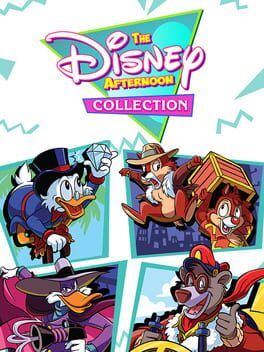
Capcom and Digital Eclipse are bringing The Disney Afternoon Collection to Nintendo Switch and Switch 2 with two newly added SNES cult favorites, Goof Troop and Bonkers, plus modern features like rewind, Time Attack, Boss Rush and an exhaustive Museum for a new generation of Disney fans.
For almost a decade, there has been one glaring hole in the Switch’s retro library. Capcom’s The Disney Afternoon Collection brought a run of beloved NES Disney platformers back on PS4, Xbox One and PC in 2017, yet somehow skipped Nintendo’s hybrid entirely. That absence finally ends on February 26, when the collection arrives on both Nintendo Switch and the upcoming Switch 2 in an expanded form that not only preserves a specific slice of 8 and 16 bit history, but meaningfully improves it.
Most importantly for long time fans, this is not just a straight port of the 2017 release. The Switch versions add two SNES era cult favorites that have never been rereleased before, turning what was already a great time capsule into a more complete snapshot of the Disney Afternoon era.
The full game list on Switch and Switch 2
The Disney Afternoon Collection on Switch gathers eight Capcom developed titles based on the cartoons that defined weekday television for a generation. Six of these are the NES games that anchored the original compilation, now joined by two SNES newcomers:
Chip 'n Dale Rescue Rangers (NES)
Chip 'n Dale Rescue Rangers 2 (NES)
DuckTales (NES)
DuckTales 2 (NES)
Darkwing Duck (NES)
TaleSpin (NES)
Bonkers (SNES, new for this release)
Goof Troop (SNES, new for this release)
The first six games are pure late NES Capcom, built on tight platforming, expressive sprites and deceptively tricky level design. For anyone who grew up renting these cartridges, the rhythm of bouncing Scrooge’s cane through DuckTales’ caverns or tossing crates as the Rescue Rangers will come flooding back the moment the title screens appear.
The real headline for returning players though is the addition of Bonkers and Goof Troop. Both were missing from the original Disney Afternoon Collection and have been stuck on original hardware since the 90s, which makes their arrival on a modern system feel like proper preservation rather than just nostalgia pandering.
The two new SNES stars: Goof Troop and Bonkers
Goof Troop on SNES has long had a quiet cult following, partly because of its surprising lineage. It is a top down, puzzle driven co op adventure where Goofy and Max push blocks, fling pots and coordinate to clear enemy filled rooms. Under the surface, it shares design DNA with classic survival horror. Resident Evil’s Shinji Mikami worked on the game early in his Capcom career, and you can feel that in the way rooms are laid out to force communication and planning.
On modern Switch hardware, Goof Troop is an ideal couch co op game. The screen is always shared, communication is constant and the stakes are just high enough that helping a younger sibling or child through a room feels rewarding instead of stressful. For parents who remember coming home from school to Goof Troop on TV, sharing this specific game with a new generation on a handheld console is exactly the kind of scenario collections like this are built for.
Bonkers is the stranger, more exciting archival pick. Based on the later Disney Afternoon series about a toon cop patrolling a cartoon version of Los Angeles, the SNES game is a colorful action platformer that moves through movie themed stages and slapstick set pieces. Unlike the NES titles, Bonkers never got the same word of mouth, largely because it arrived late in the SNES cycle and then quietly vanished from circulation.
Putting Bonkers alongside heavy hitters like DuckTales immediately reframes it for curious players. On Switch, it becomes easy to hop from one game to the next and see how Capcom handled Disney licenses differently on NES and SNES. That contrast gives the collection more texture, turning it into a small playable museum of how licensed games evolved across a hardware generation.
Modern modes that make old games feel new
If you missed these games the first time around, it can be intimidating to drop straight into late 80s and early 90s difficulty spikes. Digital Eclipse anticipated that concern when it first built The Disney Afternoon Collection, and all of those accessibility minded features carry over to the Switch releases.
Boss Rush takes the most dramatic encounters from each game and strings them together into focused gauntlets. For nostalgic players, it is an excuse to sprint through highlight reels of mechanical memories without replaying entire campaigns. For newcomers, it doubles as a training mode that teaches patterns quickly by putting you right back into another boss immediately after the last.
Time Attack remixes these classics into speedrun friendly challenges. Each game gets specific time based objectives, with online leaderboards letting players compete for the best runs. This gives the collection a surprising amount of replay value. Veterans who grew up renting DuckTales can now try to route the Amazon in the fastest possible way, while curious younger players can discover why these old games are beloved in the speedrunning community.
The Museum mode is the heart of the preservation effort. Rather than just tossing in a few pieces of key art, Digital Eclipse typically digs into box art from different regions, design documents, character sheets and marketing materials. Screens and concept sketches are presented at high resolution so you can zoom in and see details that were never visible on a CRT. For anyone who obsessed over these shows as kids, paging through hand drawn character poses and background paintings turns the collection into a coffee table art book you can interact with.
The rewind feature is the most transformative addition for players who are new to unforgiving NES platformers. At any point, you can roll back play by a few seconds to undo a missed jump, a random hit or a bad bit of enemy placement. It preserves the rhythm and feel of the original games while taking the edge off their harshest moments. That means a younger Switch owner can slowly learn to handle DuckTales’ mine cart sections or Darkwing Duck’s trickier enemies without walking away in frustration.
Together, these modes thread a careful needle. They respect how these games originally played, but they also recognize that a modern audience expects more flexibility. You can still choose to play these titles straight, no rewind and no assists, but the collection never forces you to.
Nostalgia, portability and the kids who will meet DuckTales for the first time
On Switch and Switch 2, the context around The Disney Afternoon Collection changes in important ways. In 2017, it was a smartly made nostalgia package sitting alongside a handful of other retro compilations. In 2026, it finally lands on a portable system that many families already treat as their primary Nintendo platform.
For players who remember catching these shows between homework and dinner, there is an obvious pull to having them all living on a cartridge or a download that travels with you. Handheld play fits especially well with these games’ short levels and clear stage structures. It is easy to knock out a DuckTales stage during a commute, or work through a handful of Goof Troop puzzles with a friend during a lunch break.
For younger players whose first Zelda was on Switch and whose first Mario might have been Odyssey, this release is a snapshot of a different era of licensed games. There are no skill trees or dialog wheels here. Controls are simple, feedback is immediate and the focus is on precise jumps, pattern recognition and learning through doing. The built in rewind, Time Attack challenges and boss modes bridge that design gap just enough to make these older games feel approachable and engaging rather than archaic.
Parents who grew up in front of the original Disney Afternoon TV block are in a unique position here. This collection makes it possible to sit down with kids and say not just "I used to watch this," but "I used to play this," then hand over a Joy Con and prove it.
Sidebar: Digital Eclipse and the art of preservation focused collections
Digital Eclipse has quietly become one of the most important names in classic game preservation on modern hardware. The studio has specialized in compilations that go beyond simple ROM dumps, treating each release as part historical document and part playable museum exhibit.
Across projects like The Disney Afternoon Collection, Mega Man Legacy Collection, the Teenage Mutant Ninja Turtles Cowabunga Collection and the Atari 50 interactive documentary, the team has built a reputation for pairing accurate emulation with exhaustive extras. Their work often includes carefully curated art galleries, developer interviews, timelines and design notes, all wrapped in modern features such as save systems, display options and accessibility toggles.
The Switch version of The Disney Afternoon Collection fits neatly into that philosophy. By adding Bonkers and Goof Troop rather than simply mirroring the 2017 lineup, Digital Eclipse and Capcom are filling gaps in what is otherwise a lost library of licensed games. For players, that means a fun nostalgia trip. For game history, it means two more difficult to access titles are finally available in a legal, well preserved form.
With Switch and Switch 2 support confirmed and a February 26 launch on the horizon, The Disney Afternoon Collection’s belated Nintendo debut feels less like a basic reissue and more like a course correction. It is a second chance for a generation of fans to revisit their after school favorites, and a first chance for a new audience to discover why, for a brief stretch of time, DuckTales and Darkwing Duck quietly ruled the platformer world.