
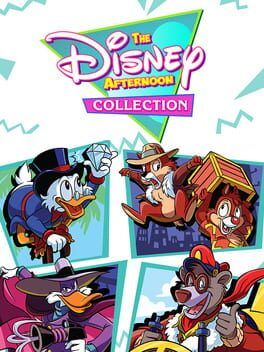
ESRB ratings point to The Disney Afternoon Collection finally heading to Nintendo Switch and Switch 2, with Atari stepping in as publisher. Here is why this nostalgic Capcom compilation matters for preservation, why fans have wanted it on Nintendo for years, and what enhancements could make this the ultimate version if confirmed.
The afternoon block might have moved on, but for a certain slice of players the words "Disney Afternoon" still smell like homework avoided and cereal eaten far too late in the day. Back in 2017, Capcom and Digital Eclipse bottled that feeling with The Disney Afternoon Collection, a compilation of six NES platformers based on some of the best cartoons of the late 80s and early 90s. There was just one catch: it skipped Nintendo hardware entirely.
Fresh ESRB ratings have finally changed that story. The Disney Afternoon Collection has now been rated for both Nintendo Switch and the upcoming Switch 2, with Atari listed as the publisher. It is not an official announcement yet, but it is the clearest signal so far that this overlooked set of classics is getting a second shot, this time on the platform where many fans always felt it belonged.
What was in the 2017 Disney Afternoon Collection?
The original release pulled together six Capcom NES titles that turned syndicated cartoons into tight, often brutally tricky action games. The lineup covered most of the core Disney Afternoon heavy hitters:
Chip 'n Dale Rescue Rangers and its sequel Chip 'n Dale Rescue Rangers 2 translated the chipmunk duo's co-op chaos into clever side-scrolling stages. Levels let you pick up and throw crates, enemies and even your co-op partner, which gave the games a frantic, slightly slapstick energy that felt true to the show. Rescue Rangers 2 was rarer on original hardware, so its presence in the collection helped preserve a game many fans only knew from magazine screenshots.
DuckTales and DuckTales 2 are arguably the headliners. Scrooge McDuck's cane pogo remains one of the most satisfying moves in 8 bit platforming, and the original DuckTales in particular has long been held up as one of Capcom's best licensed games. The sequel arrived late in the NES life and became notoriously expensive on the collectors' market. Having both in one modern package was a small preservation miracle in its own right.
Darkwing Duck and TaleSpin rounded out the set. Darkwing is often described as a cousin to the Mega Man games, with tight level design and a focus on pattern based boss encounters. TaleSpin shifts gears entirely into side scrolling shooter territory, where you pilot Baloo's plane, the Sea Duck, through scrolling stages filled with enemies and obstacles. The quality is uneven across the six, but taken together they chart a fascinating slice of Capcom's licensed output and show how flexible the studio was within NES limitations.
Digital Eclipse wrapped all of this in the kind of historically minded package the studio has become known for. The collection offered a Museum mode packed with concept art, character designs and music, effectively serving as a small archival exhibit for a specific moment in Disney and Capcom history. Optional CRT style filters and aspect options let players approximate how the games looked on living room televisions, while modern features like Rewind made their old school difficulty a lot more approachable.
Why fans have wanted a Nintendo version for years
On paper, the original platform choices made sense. In 2017 Switch was still new, and the collection targeted PlayStation 4, Xbox One and PC. In practice, it felt like an odd omission. These were NES games, born on Nintendo hardware and woven into the childhoods of players who grew up juggling an NES cart after watching the show that afternoon.
By the time the collection launched, Switch had already shown itself as a natural home for retro compilations. Its pick up and play nature, portable screen and focus on local multiplayer made it an ideal fit for short burst platforming and co-op couch sessions. For a lot of players, Rescue Rangers in particular is a game associated with sharing a sofa and laughing at each other's mistakes, something that maps neatly onto handheld local co-op with detachable Joy Con.
There is also a preservation angle unique to Nintendo's ecosystem. Between the NES and SNES apps, legacy collections and a growing library of retro remasters, Switch has become a sort of informal hub for classic console history. Having the Disney Afternoon titles available there is not just a nostalgia play, it is a way to keep a specific category of licensed games accessible as original cartridges become harder and more expensive to track down.
That is part of why the absence stung. Many fans assumed a Switch port would arrive eventually, especially given Digital Eclipse's work later appearing on Nintendo systems through other collections. Years passed without movement, and The Disney Afternoon Collection slipped into that awkward category of "modern" releases that were suddenly unavailable on any current Nintendo platform.
Atari as publisher: what could that mean?
The ESRB ratings list Atari as the publisher for the upcoming Switch and Switch 2 versions, a notable change from the original Capcom published release. Over the last few years Atari has pivoted from being just a retro brand into a more active curator and publisher of classic focused projects. It has acquired studios and catalog rights, and it has put its name behind several retro collections and remasters.
Atari stepping in here likely speaks to two things. First, it suggests some form of licensing shuffle behind the scenes, with Capcom's original collection being relicensed for a fresh round of platforms. Second, it aligns with Atari's recent strategy of attaching itself to preservation minded releases that target a nostalgia driven audience.
What it does not necessarily guarantee is new content. Often, when a collection reappears under a different publisher, it arrives largely intact, with quality of life updates and platform specific tweaks rather than dramatic overhauls. Atari's involvement will raise questions about whether Digital Eclipse is still directly attached, or whether the port work is being handled elsewhere under license. Given Digital Eclipse's track record and the care they typically bring to archival features, fans will be watching closely for confirmation of the developer.
Still, Atari's recent investments in retro infrastructure and branding could be a positive sign. A publisher that is actively courting classic game audiences has a clear incentive to position this Switch release as more than a basic reissue.
What would make this the definitive version on Switch and Switch 2?
The 2017 collection already included several important enhancements. Rewind functionality allowed players to roll back mistakes rather than burning through lives, while Boss Rush and Time Attack modes added replay value with online leaderboards. Visual options, including scanline and CRT style filters, helped bridge the gap between modern displays and nostalgic memory.
To turn the Switch and Switch 2 versions into the definitive way to experience these games, Atari and its development partners would ideally build on those foundations rather than simply replicate them.
Rewind is non negotiable at this point. These are hard NES games, and their difficulty can feel punishing to players coming in fresh. A smooth, low latency rewind with granular control would preserve their original design while keeping frustration in check. Coupled with save states or suspend points integrated cleanly into the UI, that would make short portable sessions feel natural.
On the visual front, expanded display options would go a long way. The original filters did a solid job of introducing scanlines and a hint of CRT softness, but the Switch audience has grown used to highly configurable retro collections. Tuning options for sharpness, curvature and color profiles would let purists chase a specific look, while a clean pixel perfect mode would cater to handheld and OLED users who want crisp edges and vibrant color.
Online features are where this new release could most clearly stake its claim. Retaining the original online leaderboards for Boss Rush and Time Attack would preserve a core piece of the 2017 collection. Improving their reliability, expanding them with per stage or per difficulty boards and surfacing them more prominently in game would help keep players engaged beyond a single nostalgic playthrough.
Online co op, while admittedly more ambitious, would be a headline addition if Atari chose to invest in it. Chip 'n Dale Rescue Rangers in particular shines in multiplayer, and the ability to play through the campaign with a friend online would dramatically expand its reach. Even limited online support, such as friend only sessions or rollback assisted play for just the Rescue Rangers titles, would send a clear signal that this is more than a bare port.
For Switch 2, there is room to imagine enhancements that take advantage of stronger hardware. Extremely low input latency is especially important for precise platformers, and a careful approach to emulation or simulation could yield tighter controls than non specialized ports. 4K capable output with well tuned scaling would also help the collection look better on modern televisions while preserving the original pixel art.
Finally, the Museum mode is an obvious candidate for expansion. Since 2017, there has been even more interest in game preservation and documentation. Adding new interviews, higher resolution scans, marketing materials and design documents would deepen the historical context. A timeline view connecting the games to key moments in Disney Afternoon broadcast history, or to other Capcom releases of the era, could make the package feel like a mini interactive documentary.
Nostalgia as preservation, not just a sales pitch
It is tempting to view a project like this purely as a nostalgia product. There is no doubt that much of its appeal rests on the power of a title screen jingle or the first few notes of the DuckTales "Moon" theme. Yet there is a more practical preservation function here that should not be overlooked.
Licensed games are some of the most fragile pieces of gaming history. Rights change hands, contracts expire and platforms move on. The fact that both DuckTales 2 and Chip 'n Dale Rescue Rangers 2 can be legally purchased and played on modern hardware at all is already noteworthy. Bringing them to Switch and Switch 2, platforms with long tails and expansive audiences, gives them a better chance of remaining playable for the next generation.
If the ESRB ratings do lead to a full announcement, the hope is that Atari and its partners treat The Disney Afternoon Collection as more than a quick catalog play. The groundwork laid in 2017 is strong, with respectful emulation, thoughtful extras and a stable of games that still hold up mechanically. With a bit of care, this belated Nintendo debut could transform an overlooked compilation into a definitive Saturday afternoon time machine.
For now, the ratings are a tantalizing hint that Scrooge, the Rescue Rangers, Darkwing and Baloo are finally taxiing toward a Nintendo runway. For players who missed the collection entirely the first time or have been quietly waiting for a Switch version for nearly a decade, that is reason enough to dust off a few theme songs in anticipation.