
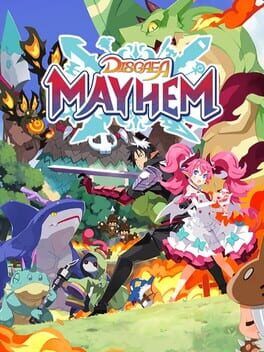
NIS America is bringing Disgaea Mayhem to Switch, Switch 2, PS5, and PC with real-time action combat and sky-high numbers intact. Here is how the new system works, how it should feel on each platform, and what this spin-off might mean for the future of Disgaea.
Disgaea is finally back on Nintendo’s hybrid hardware and PlayStation 5, but not in the way long-time tactics fans might have expected. Disgaea Mayhem, revealed for a Summer 2026 Western release on Switch, Switch 2, PS5, and PC, trades the series’ defining isometric grids and turn order shenanigans for full-bore real-time action RPG combat.
On paper it is the most radical shift the Netherworld has seen since the original launch of Disgaea 3 on PS3. In practice, Mayhem looks more like a deliberate attempt to translate the spirit of Disgaea, with its absurd power curves and comedy, into a format that can live alongside the main tactical series rather than replace it.
What Disgaea Mayhem Actually Plays Like
The key change is immediacy. Instead of planning turns on a grid, you directly control protagonist N.A. in real time, weaving through packs of demons, dishing out combos, and swapping weapons on the fly. Footage and early breakdowns highlight large groups of enemies filling arenas, with N.A. carving through them using sweeping strikes, ranged volleys, and explosive skills.
Seven weapon classes define your toolkit, including the familiar Disgaea staples of swords, guns, fists, axes, and bows, alongside other archetypes that skew toward magic and support roles. You are encouraged to switch between them mid-fight rather than lock into a single loadout. Each weapon type appears to come with its own move set and skill tree, so changing weapons is less about a simple stat tweak and more about snapping into a different rhythm of play.
The combat itself sits in a space between character action and loot-heavy ARPG. Encounters emphasize crowd control and positioning, since enemies arrive in dense clusters and often attack in overlapping patterns. Area denial skills, knock-up attacks, and big circular or linear specials help keep swarms at bay. The Disgaea DNA shows up in how overpowered you can eventually become. Even in the earliest showcase material, damage numbers pour out of enemies in the tens of thousands, with the developers already talking about pushing toward the series’ traditional millions and beyond.
Mayhem keeps inputs relatively simple, relying on a mix of basic strings, directional specials, and cooldown-based skills rather than intricate combo inputs. This approach mirrors how Disgaea’s tactical games condensed complex builds into a handful of flashy techniques triggered from menu commands. Here, those techniques are mapped to buttons, but the fantasy is familiar: earn ridiculous power, then watch entire screens of Netherworld fodder dissolve in one over-the-top super.
How Classic Disgaea Systems Survive The Shift
Although the battlefield is no longer a grid, Mayhem is not abandoning the systems that made Disgaea such a potent grind machine. Instead, it threads them into an action framework.
The Item World returns as an endless dungeon for min-maxers, now approached as a sequence of real-time gauntlets. Diving into an item means fighting through layered floors of enemies, clearing rooms as quickly and efficiently as possible to stack modifiers on your weapons and armor. Where older entries turned these jaunts into tactical puzzles, Mayhem’s Item World looks closer to an ARPG rift mode, built to showcase your latest build while chasing more power.
Reincarnation, another series hallmark, is present as well. Characters can reset back to a lower level in exchange for permanent stat gains and improved growth curves. The loop remains the same: get strong, reincarnate, get even stronger, and repeat until your character sheet looks completely absurd. The difference in Mayhem is that each reincarnation directly changes how smooth and explosive the action feels. Higher stats do not just raise numbers; they enable you to shrug off hits, keep combos going longer, and spam huge skills without fear.
The political layer is reimagined as the Dark Chocolate Assembly, a new confection-themed twist on Disgaea’s long-running senate gag. In previous games, you bribed demons to push bills that adjusted experience gains, shop inventories, or mechanical quirks. Here, licking the chocolate off the system results in similar stat-tuning levers. Pushing bills appears to grant global bonuses, tweak drop rates, and otherwise tilt the underlying math of your build. The goofy naming and snack-centric theming keep the series’ comedic tone intact while slotting cleanly into the new format.
Magichange, the mechanic that allows monsters to transform into weapons, also makes a comeback adapted for real-time play. In tactical Disgaea, Magichange added a layer of positional planning; in Mayhem it acts more like an action-mode power-up where your companion becomes a living weapon that augments your move set for a limited window. Spinning a Prinny into a bomb-like weapon or turning a familiar demon into a colossal sword fits neatly with Mayhem’s focus on fast, explosive engagements.
All of this feeds into the classic Disgaea loop of hitting ever more ridiculous caps. Level ceilings climb toward the usual 9,999 mark, stat totals balloon, and marketing material is already flaunting damage figures soaring past a billion. That sense of scale, more than grid lines, is what the developers seem intent on preserving.
How It Should Play On Switch, Switch 2, And PS5
The most obvious question when Disgaea ditches turn-based tactics for real-time action is whether the series can keep its chaos playable on less powerful hardware. On PS5, Mayhem’s broad arenas, swarms of enemies, and shower of damage numbers should be the least of the system’s concerns. This is squarely in that console’s comfort zone, so the expectation is a crisp frame rate, higher-resolution effects, and shorter loads between stages and Item World layers.
Switch 2 is the wildcard but also likely the lead console for the game’s portable audience. With stronger hardware than the original Switch and a clear focus from NIS on bringing Disgaea back to Nintendo’s hybrid ecosystem, Mayhem is positioned as a showcase of the new machine’s ability to handle busy action scenes in handheld play. Big groups of enemies, snappy weapon swaps, and flashy skills need consistent performance to feel right, and Switch 2 should be the version that balances visuals and fluidity the best in portable form.
The original Switch release is the most interesting test case. Disgaea’s grid-based tactics historically played well on the system because the action was chopped into discrete turns that did not strain the hardware. In Mayhem’s case, NIS is effectively asking the older Switch to keep up with modern action RPG demands. Expect some compromises in resolution and effects, possibly paired with a carefully tuned enemy density and camera system to keep fights readable and responsive. If the team can maintain a steady performance target, Disgaea’s over-the-top presentation should still carry the experience, even if the visuals are slightly pared back.
What does help Mayhem on all platforms is its emphasis on snappy, readable combat over hyper-technical combo design. Because attacks are big and exaggerated, and because the core fantasy is about melting hordes, the game does not need frame-perfect input windows to shine. That makes it inherently friendlier to a range of hardware and controllers, from handheld Joy-Con sessions to PS5’s DualSense.
A Spin-off Or A Sign Of Things To Come?
The obvious fear for long-time fans is that Disgaea Mayhem represents a permanent move away from the grid. There are good reasons to read this project differently.
For one, the branding clearly positions Mayhem as a separate branch rather than Disgaea 8. The naming, focus on a new protagonist in N.A., and the tight loop around real-time action suggest a parallel track that can coexist with the mainline tactical games. NIS has historically experimented with spin-offs to probe new audiences without completely discarding the core formulas that built its fanbase.
The systems preserved in Mayhem also send a message. Item World, reincarnation, Magichange, and the senate-like Assembly are not just flavor; they are the mechanical spine of Disgaea’s identity. Keeping them intact implies that NIS sees the brand’s long-term value in its extreme progression and slapstick Netherworld tone more than in any one combat layout. If Mayhem succeeds, future Disgaea projects are more likely to explore different genres anchored by those systems rather than wholesale abandon tactical play.
At the same time, if Mayhem finds a sizable audience on PS5 and Nintendo platforms, it could influence how the next numbered entry is framed. You can easily imagine a hybrid solution in a future Disgaea that offers both a traditional tactics mode and an action mode using the same underlying math and progression. Mayhem effectively serves as a testbed for whether the series’ dense systems can survive beyond the grid.
There is also a business angle. The action RPG space has broader mainstream reach than hardcore grid-based tactics, particularly in Western markets. By pitching Mayhem as an accessible, fast-paced take on Disgaea, NIS America is effectively extending the brand’s reach without asking tactical purists to abandon their preferences. If the spin-off draws in new players who fall in love with N.A., Princess Tichelle, and the general chaos, some portion of them may eventually bounce over to the numbered entries out of curiosity.
What This Means For Disgaea’s Future
Viewed in context, Disgaea Mayhem looks less like a pivot away from strategy and more like a statement of confidence that the brand can carry multiple play styles. The Western reveal underscores how much of the marketing leans on continuity: familiar demons, reincarnation loops, ludicrous numbers, and a senate system now dipped in chocolate. The combat is new, but the promise is the same one the series has always made: if you are willing to grind, you can break the game in spectacular fashion.
For players on Switch, Switch 2, and PS5, Mayhem is positioned as a fresh entry point. It removes the barrier of grid tactics while retaining the deep buildcraft that keeps fans tinkering for hundreds of hours. For NIS, it is a chance to see whether Disgaea can live as both a mainline SRPG series and an action RPG sub-brand.
If Mayhem lands, expect to see more Netherworld projects that experiment with genre while staying anchored to the same absurd numbers and sardonic humor. The real question is not whether Disgaea will abandon its past, but how many different forms its chaos can take in the years ahead.