
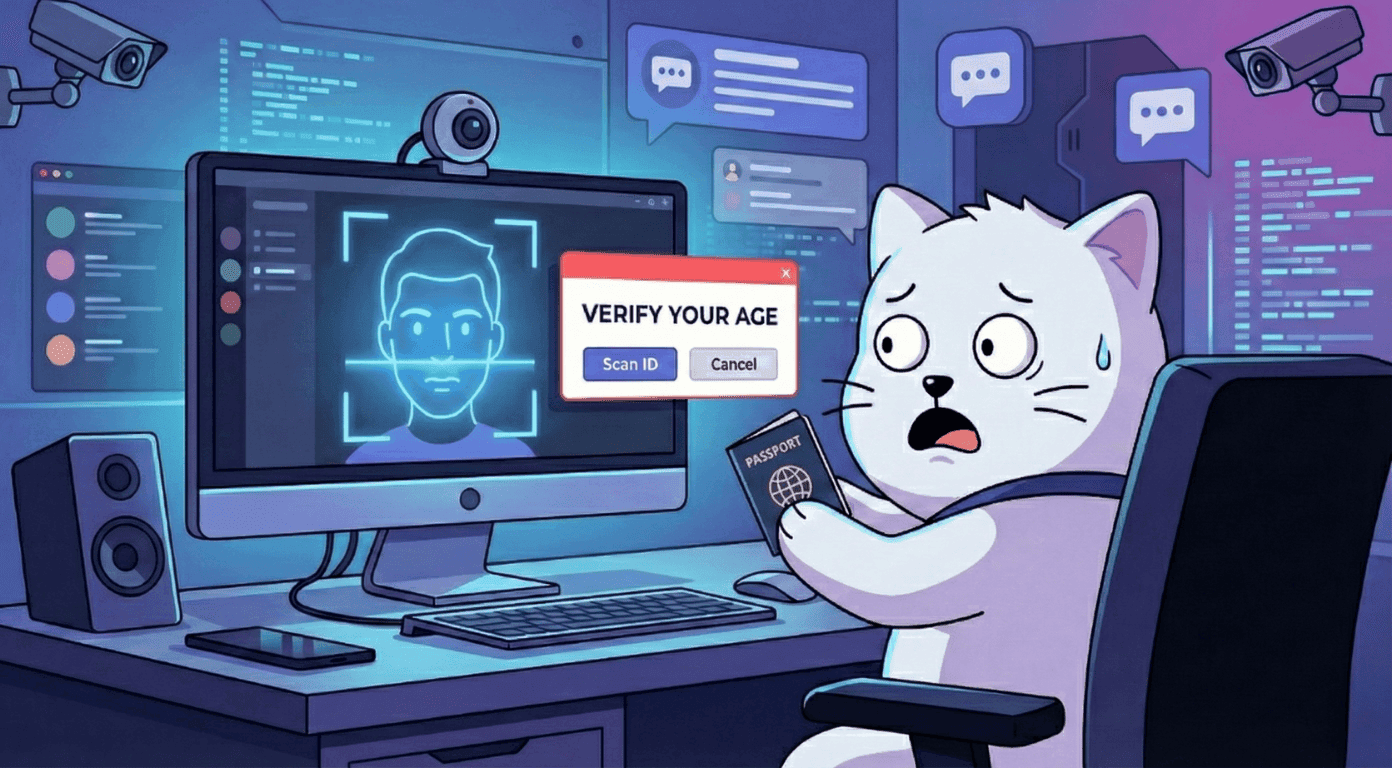

Discord has relaunched global age verification after delaying the rollout over privacy concerns. Here is what changed, how the new age check works, and what players should consider before submitting ID, selfie, wallet, or payment data.
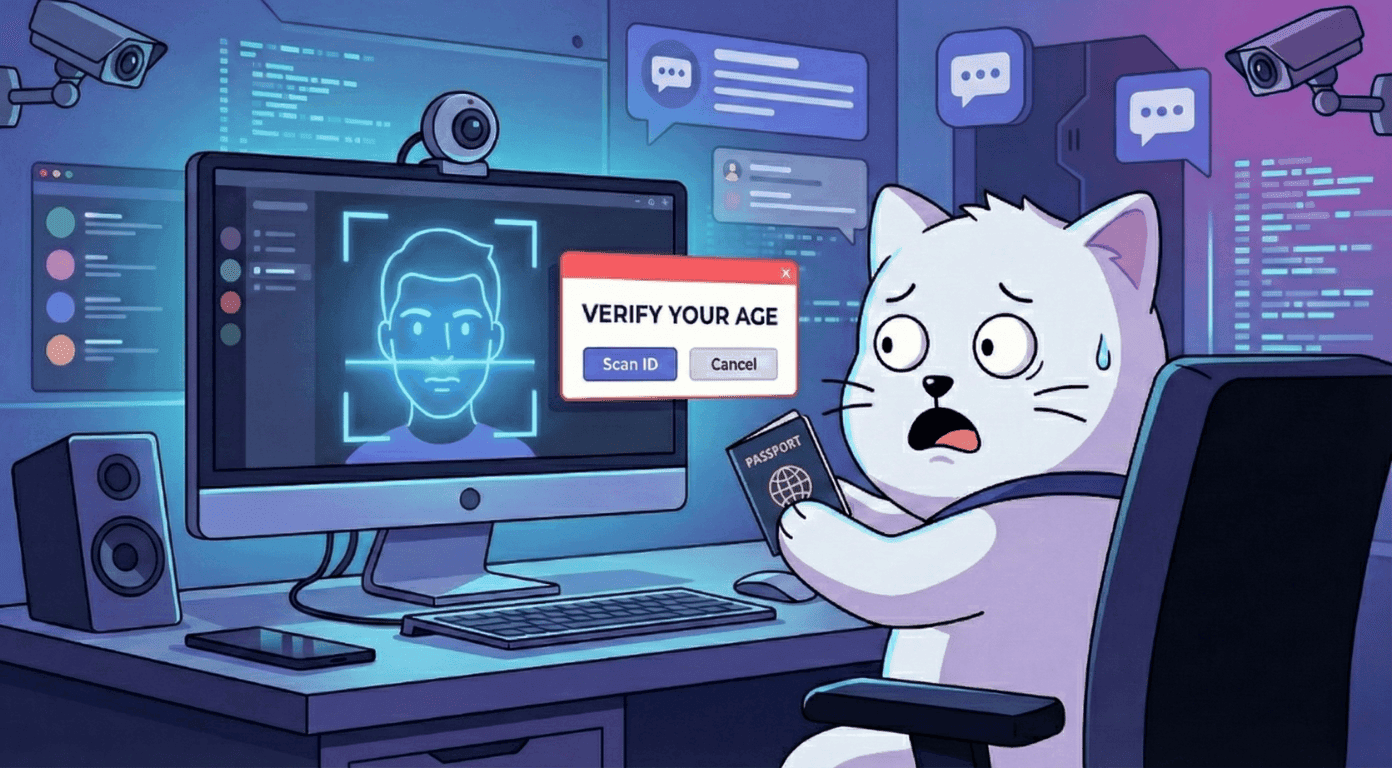
Image: redact.dev
Discord brings age checks back after delaying them over privacy backlash
Discord has relaunched its global age verification program with additional non-biometric options, months after the company delayed the rollout following user backlash over privacy concerns. GamesIndustry.biz reported that Discord’s revised process now lets users verify age through methods such as credit cards, Apple App Store, Google Play Store, Google Wallet, or AgeKey, rather than relying only on video selfies or government ID.
That is the concrete shift in the new Discord age verification plan: the platform is still moving toward broader age assurance, but it is trying to reduce how often users have to hand over the most sensitive data. Discord co-founder and chief technology officer Stanislav Vishnevskiy framed the relaunch as a response to both regulation and distrust, saying in the company update that age assurance attracts “strong opinions and scepticism,” especially when it involves biometric information or ID.
GamingOnLinux reported that Discord had delayed the global rollout in February after backlash, then returned in September with a revised system. The company’s current position, according to the same report, is that “more than 90%” of users will not be asked to confirm their age. That claim is central to the relaunch. Discord is not presenting age verification as a prompt every user must clear on day one. It is presenting it as a background age-group system that should only escalate to a check when the platform cannot confidently place an account.
The new system starts with age-group estimation, not an ID upload
Discord says the new system automatically estimates whether an account belongs to an Adult group, a Teen group, or an Unconfirmed group. GamesIndustry.biz reported that Discord assigns users based on account age or associated servers, while GamingOnLinux cited Discord’s explanation that the company uses account signals such as how long an account has existed and the kinds of servers an account is part of.
The privacy line Discord is drawing is also specific. According to both GamesIndustry.biz and GamingOnLinux, Discord says it does not review messages, calls, or other content to estimate age group. That does not remove every privacy concern, because server membership and account signals can still reveal patterns about a user. But it is materially different from a system that scans private chats, voice calls, or message content for age clues.
Users can check their assigned status in User Settings under Account Status, according to GamingOnLinux. Discord said the rollout was happening over the course of the week, so the status page may not appear for every account immediately. If an account is placed in the Adult group, Discord says nothing changes. If an account is placed in the Teen group, the user can still message friends, join voice calls, and participate in non-age-restricted servers, but added protections restrict age-gated content, spaces, and settings.
For new accounts, GamesIndustry.biz reported that Discord places them in the Unconfirmed group until it has enough information to determine an age group. Users who do not verify can continue using Discord with limitations while the system decides where to place them, though they can also verify their age through settings.
The privacy backlash forced Discord to widen its verification paths
The revised Discord age check is a direct response to the criticism that hit the earlier rollout. In February, GamesIndustry.biz reported that Discord had planned to require age verification for all users starting in March. The company later postponed the broader rollout to the second half of 2026 after privacy concerns, with Vishnevskiy acknowledging at the time that Discord “should have provided more detail” about its intentions and process.
The updated approach adds several alternatives that do not require a government ID or selfie. GamesIndustry.biz listed credit cards, Apple App Store, Google Play Store, Google Wallet, and AgeKey as available methods in Discord’s new update, and said AgeKey does not share personal or private data. Discord’s latest messaging, as quoted by GamesIndustry.biz, argues that launching a global approach with non-biometric options lets the company get ahead of laws that might otherwise push platforms toward less privacy-focused implementations.
Older reporting from Gadget Review described the kinds of checks Discord had already been using in age-gated situations, including video selfie, ID scan, Google Wallet, and credit card checks. The same report said a video selfie method through k-ID was processed on-device, deleted immediately, and resulted in Discord receiving only an estimated age. That detail comes from earlier coverage of Discord’s safety materials, and players should treat the current in-app flow and Discord’s vendor documentation as the live authority before choosing a method.
Discord has also tried to answer one of the biggest process complaints: who actually handles the data. GamesIndustry.biz reported that Discord said it would publicly document every third-party age assurance vendor and make clear who each vendor is, and that the company has since published vendor and method documentation. The practical takeaway is simple: before submitting a Discord ID verification, selfie, wallet credential, or payment-based check, users should read the method-specific disclosure, identify the vendor, and understand what is sent to Discord versus what is processed by a third party.
Regulators are pushing the timetable, but Discord is choosing the implementation
Discord’s relaunch is happening because governments are increasingly requiring platforms to separate teens from adult experiences online. GamingOnLinux quoted Discord saying age assurance laws are expanding, with the company already having to launch solutions in regions including Brazil and Texas. Discord also pointed to policymaker pressure from places including the European Union and Indonesia.
That regulatory pressure explains why Discord is moving again after a delay. It does not settle whether users will trust the design. The strategic tension is that Discord is a global gaming and community platform with local legal obligations. If age laws differ by country or US state, a patchwork system becomes hard to operate at Discord scale. A global age-assurance layer gives the company one framework to manage, but it also turns an account-level privacy decision into a platform-wide policy.
This is where the relaunch resembles a major balance pass in a live service game. Discord is trying to tune for competing objectives: teen safety, adult access, legal compliance, user trust, and low friction. If the system is too aggressive, adults get misclassified and face unnecessary data requests. If it is too loose, regulators may argue Discord is failing to enforce age restrictions. If it relies heavily on IDs or selfies, the privacy backlash returns. If it relies heavily on inference, users will ask what account signals are being judged and how appeals work.
Discord appears to know that the trust test will not be passed through one blog post. GamesIndustry.biz quoted Vishnevskiy saying users should judge Discord by how accurate age-group estimation becomes, how quickly bad calls are fixed, and whether the company keeps publishing data. Discord has also published age assurance data in its 2026 Transparency Report, including information from UK and Australia launches, according to GamesIndustry.biz.
The 2025 ID exposure still hangs over every verification prompt
The strongest reason many players hesitate is not abstract. PCRisk reported that about 70,000 users had government ID photos exposed in a 2025 security incident involving a third-party customer service provider. PCRisk also reported Discord’s position that the provider was not one of its current age verification vendors and that Discord no longer works with that provider.
That distinction matters, but it does not erase the memory of the breach for users being asked to trust another identity flow. Government IDs can include legal name, photo, date of birth, document number, nationality, and other sensitive details. PCRisk noted that even a selfie used for age estimation is close to biometric data in user perception. Once a platform asks for that category of information, the burden shifts to retention limits, vendor safeguards, breach response, and clear documentation.
Discord’s new options are therefore a meaningful improvement only if users can make an informed choice. A credit card check, app-store-based signal, wallet credential, AgeKey flow, selfie estimate, and ID scan do not carry the same privacy tradeoffs. Some may reveal less to Discord but involve another platform. Some may be easier to complete but less available depending on device, region, account setup, or payment access. Some users may prefer a wallet or app-store method to avoid sending ID images. Others may not want to link age assurance to a payment ecosystem.
The safest reading of Discord privacy concerns is not that every verification path is equally risky. It is that users should avoid handing over the most sensitive document unless they need that route and are comfortable with the vendor, the retention policy, and the appeal process. Discord says most users will not need to verify at all, so the first move is to check account status before preparing documents.
How the change affects players, servers, and everyday Discord use
For many adult players, Discord says the intended experience is uneventful. If the system places an account in the Adult group, GamesIndustry.biz and GamingOnLinux both report that normal use continues. That means the highest-friction version of this story may never reach most long-standing accounts.
The impact lands harder on users classified as Teen or Unconfirmed, and on communities that depend on age-restricted channels, adult content controls, stage participation, or direct-message safety settings. Gadget Review reported that verification walls can apply to unblurring sensitive content or disabling content filters, accessing age-restricted channels, servers, and app commands, changing Message Request Inbox settings, and speaking on a Stage channel. Those details came from Discord safety materials cited in that report, and they give server admins a useful checklist for where members may hit friction.
For gaming communities, the operational risk is misclassification. A raid group, modding server, esports community, or creator Discord can lose access continuity if members suddenly hit an age prompt before an event, voice stage, or age-gated channel. Admins should expect questions from users who see blurred content or missing access, and they should avoid improvising their own identity collection. Age verification is Discord’s system, not a job for volunteer moderators.
Players should also be careful with third-party chatter around the rollout. TweakTown reported earlier that Discord was reportedly preparing to reintroduce global age verification under the codename “Tiny Bronco,” while later coverage and Discord’s own update established the actual relaunch details. The confirmed facts are the global age-assurance relaunch, the automatic age-group estimation, the stated non-use of messages and calls for age grouping, the new non-biometric verification options, and Discord’s claim that more than 90% of users will not be asked to confirm age. The unanswered questions are how often the system misclassifies accounts, how fast appeals move, how regional laws change the available methods, and whether Discord’s transparency reporting will be detailed enough for users to evaluate the tradeoff over time.
If you receive a Discord age verification prompt, do not rush through it from a pop-up mindset. Check Account Status in settings, confirm you are in the official Discord app or website, read the listed vendor and method, choose the least sensitive route that works for your situation, and avoid uploading a government ID unless you understand why that method is necessary. For a gaming chat platform that now sits inside PC, console, and community life, the best player strategy is the same one that wins long campaigns: verify the board state before committing your highest-value piece.